
The case of a plasmapheresis centre in Larnaca has highlighted broader questions about patient safety, licensing requirements and regulatory oversight when invasive medical procedures are carried out in facilities with disputed authorisation.
During a meeting of Parliament's Health Committee, healthcare professionals and officials described a system marked by fragmented responsibilities, limitations in enforcement and unresolved legislative issues, while warning that complications from such procedures can potentially endanger lives.
Licensing concerns raised
Speaking on behalf of private hospitals, PASYN President Marios Karaiskakis questioned whether existing legislation is being properly applied.
He argued that when a patient undergoes an invasive procedure and remains at a facility for treatment, this constitutes day-care hospitalisation, which requires specific licences, infrastructure and support services.
According to Karaiskakis, the absence of an overnight stay should not be used as justification for operating outside the regulatory framework governing private hospitals.
The issue gained particular significance following explanations from the police that the investigation into the Larnaca case had raised questions about the legal classification of the premises because patients remained there for treatments lasting several hours.
Approved equipment not enough
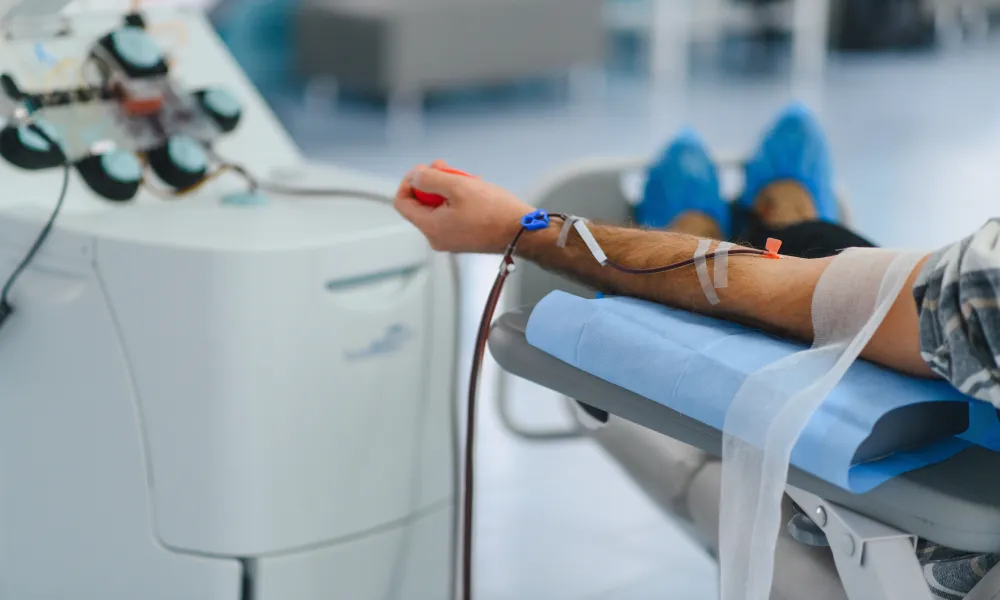
Representatives of the medical and nursing professions stressed that plasmapheresis is a specialised therapeutic procedure with specific medical indications rather than a wellness service.
They said the treatment requires trained personnel, continuous monitoring and the ability to respond immediately to serious complications.
The fact that a machine has received regulatory approval does not automatically make its use safe in any setting, they added.
Concerns over substances administered
Cyprus Medical Association President Petros Agathangelou broadened the discussion beyond medical equipment by raising concerns about the monitoring of medications and substances administered during such procedures.
He warned of potential risks arising from the administration of drugs, vitamins or other substances in dangerous concentrations and called for greater oversight of their origin, storage and use.
Agathangelou stressed that his comments referred to potential risks rather than any established practice at a specific centre.
Fragmented oversight highlighted
Patient Advocate Marios Charalambides described what he sees as the central problem: between seven and eight separate bodies oversee different aspects of healthcare services, without any single authority ensuring overall safety.
He also warned about the promotion of so-called alternative therapies that could steer patients toward unsafe treatment options.
Tracking medical equipment
Representatives of medical technology suppliers pointed to shortcomings in the framework governing equipment registration and sanctions.
One representative noted that suppliers do not always have the ability to monitor where a machine ends up after resale or after changes in the personnel operating it.
The Ministry of Health responded that on-site inspections are carried out, but acknowledged limitations due to understaffing.
Officials also said work is under way to establish a registry of suppliers.
The ministry further informed MPs that information has been collected regarding the location of plasmapheresis machines, although no specific figures were provided.
Calls for greater accountability
During the same committee meeting, MPs requested detailed information on inspections, complaints and prosecutions.
The discussion ultimately centred on a broader question: how many potentially dangerous practices must be reported before authorities are able to identify and address them in a timely manner.