
Cyprus' social partners remain deeply divided over the reform of Provident Funds, one of the most contentious elements of the country's broader pension reform agenda.
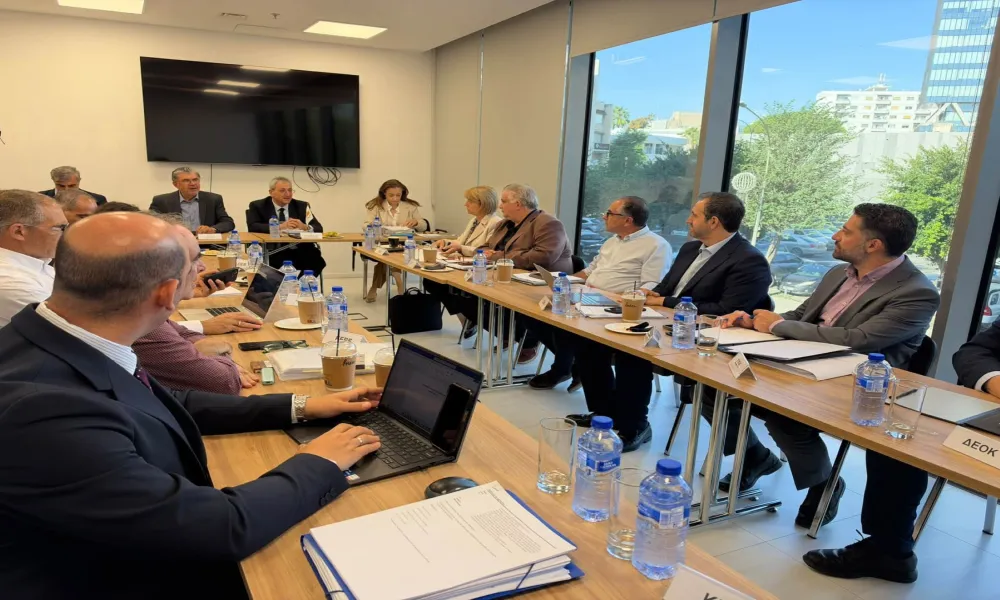
A meeting of the Labour Advisory Body highlighted sharp disagreements between trade unions and employer organisations, not only over whether participation should be mandatory or voluntary, but also over whether existing provident funds should remain outside the new framework or be incorporated into the proposed reforms.
While there is broad consensus on the need to expand pension coverage and improve retirement income, major differences remain over the future of existing schemes. Trade unions insist that acquired rights must not be affected, while employer representatives warn against creating a two-tier system.
Unions defend acquired rights
The trade unions SEK, PEO and DEOK argue that existing provident funds should continue operating under current rules, including provisions for lump-sum payments and borrowing facilities.
At the same time, they support extending coverage to more workers, particularly low-paid employees, seasonal workers and other vulnerable groups.
"For us, pension reform without Provident Funds is not reform," Andreas Matsas, secretary-general of SEK, told Politis.
He stressed that there can be no question of altering or interfering with existing provident funds secured through collective agreements and said the unions had proposed an alternative model to ensure broad coverage of all workers.
Soteroula Charalambous, secretary-general of PEO, said provident funds should be expanded so that every worker can benefit and enjoy adequate income in retirement.
However, she insisted that rights secured through collective bargaining must be safeguarded.
"Partners have expressed their positions and we now expect the government to reveal its own proposals," she said.
DEOK president Stelios Christodoulou argued that the overwhelming majority of workers in Cyprus, especially those on lower incomes, currently do not benefit from provident funds.
He advocated the creation of a new universal provident fund system capable, over time, of supporting monthly pension payments to insured workers.
According to Christodoulou, only about 23% of employees in Cyprus are currently covered by provident funds, mainly through collective agreements or similar arrangements.
Employers oppose a two-tier system
Employer organisations maintain that any reform should remain voluntary and be supported through incentives rather than mandatory participation.
The Cyprus Chamber of Commerce and Industry (KEVE) has voiced concern about the prospect of creating a two-speed system.
"If the objective of reform is to strengthen retirement income through regular pension payments, then the new arrangements should also be considered for existing funds," deputy secretary-general Emilios Michael told Politis.
He argued that retirement adequacy cannot be achieved if substantial reserves continue to be paid as lump sums without mechanisms ensuring they are used for long-term retirement purposes.
Michael also expressed support for the establishment of an independent supervisory authority.
Lena Panayiotou, assistant director-general of the Employers and Industrialists Federation (OEB), said provident funds have a long-established role that should not be ignored.
"It is important to preserve their voluntary nature while also promoting an independent supervisory authority," she said.
According to reports, OEB has also emphasised the need to assess the cost of any new obligations and their impact on businesses, while remaining open to discussing different approaches for existing funds.
Legislative changes required
Sources indicated that the Registrar of Occupational Pension Funds told the meeting that any reform would require amendments to existing legislation or even the introduction of a new unified legal framework.
Reference was also made to European initiatives promoting wider participation in pension schemes through mechanisms such as auto-enrolment.
However, it was noted that maintaining two separate provident fund regimes, as currently being discussed in Cyprus, has not been specifically examined at European level.
An intervention by an actuary from the International Labour Organization (ILO) also attracted attention.
According to Politis, the actuary questioned whether excluding existing provident funds would be consistent with the objectives of the reform.
He reportedly argued that converting current savings into monthly pension benefits could generate immediate gains, whereas applying reforms only to new funds might require as long as four decades before the full benefits become evident.
Government to reveal position on 9 November
Labour Minister Marinos Mousiouttas acknowledged the significant differences between the two sides and said the government would clarify its position on key issues at the next meeting on 9 November.
He reiterated that provident funds are a necessary institution that complements workers' pensions and said the government's objective is to expand the system.
According to Mousiouttas, this expansion could be achieved through either voluntary or mandatory participation.
"We will try to find the golden mean so that neither side feels it has been knocked to the canvas," he said.
"Our effort is, through discussion, dialogue and persuasion, to create something where neither side feels like a winner, but neither feels like a loser."
The minister also revealed that proposals were made for trade unions and employer organisations to participate as stakeholders on provident fund boards, although representatives would not sit on the supervisory authority itself.
Instead, the creation of an advisory body that would inform and advise the supervisory authority is being considered positively.
Asked whether participation should become mandatory, Mousiouttas said the government continues to examine the positions of the social partners and will announce its preferred model, whether compulsory, voluntary or something in between, in the coming period.