
The findings of the Audit Office's reports on school buses, prefabricated classrooms and safety in public schools should not be treated as merely another record of technical or administrative shortcomings.
Instead, they are a reminder that the protection of children constitutes a fundamental right and a non-negotiable obligation of the state.
That is the message delivered by Children's Rights Commissioner Elena Perikleous in comments to Politis.
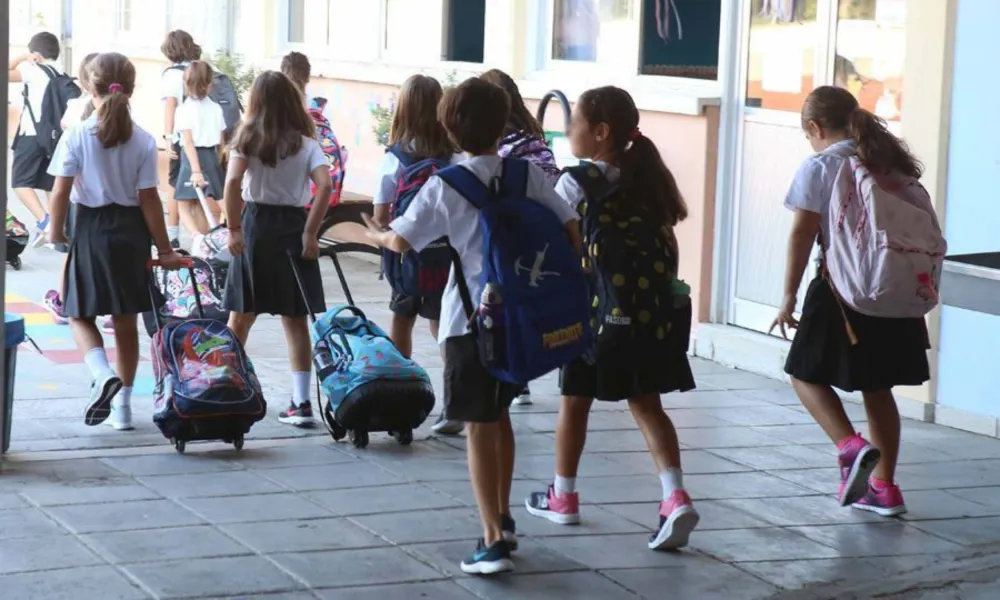
As she points out, every child has the right to attend a school that is safe, functional and suitable for learning, while also having the right to travel to and from school in a manner that protects their life, health and physical integrity. "Safety is not an additional prerequisite of education. It is an integral part of the right to education itself."
‘This is not an administrative issue’
The commissioner notes that the findings contained in the three reports reveal something much deeper than organisational or administrative weaknesses.
According to Perikleous, the longstanding shortcomings in planning, prevention, supervision and accountability have a direct impact on the daily lives and rights of children. "No child should be educated for years in facilities that were designed as temporary solutions, attend a school that does not meet the necessary safety standards, or be transported in a vehicle whose suitability has not been fully ensured," she stresses.
According to the commissioner, the protection of children cannot be confined to addressing problems only after they have been identified.
Instead, it must be built on prevention, ensuring that risks are identified and addressed before they develop into incidents.
Perikleous emphasises that the three Audit Office reports should become the starting point for meaningful interventions and should not be exhausted in a public debate about the shortcomings they record.
As she notes, the state has a duty to invest in safe school infrastructure, effective oversight mechanisms and secure student transportation through long-term planning, reliable data, continuous evaluation and clear accountability by all competent authorities. "Children's safety does not begin at the classroom door, nor does it end with the final school bell," the commissioner concludes. "It begins from the moment a child leaves home and extends through every aspect of school life. That is the responsibility of the state. And that is our obligation towards every child."