
Students may still be in holiday mode, with secondary schools reopening on 7 September and primary schools a week later, but teachers' unions and the Ministry of Education have already taken up positions ahead of an expected legislative battle.
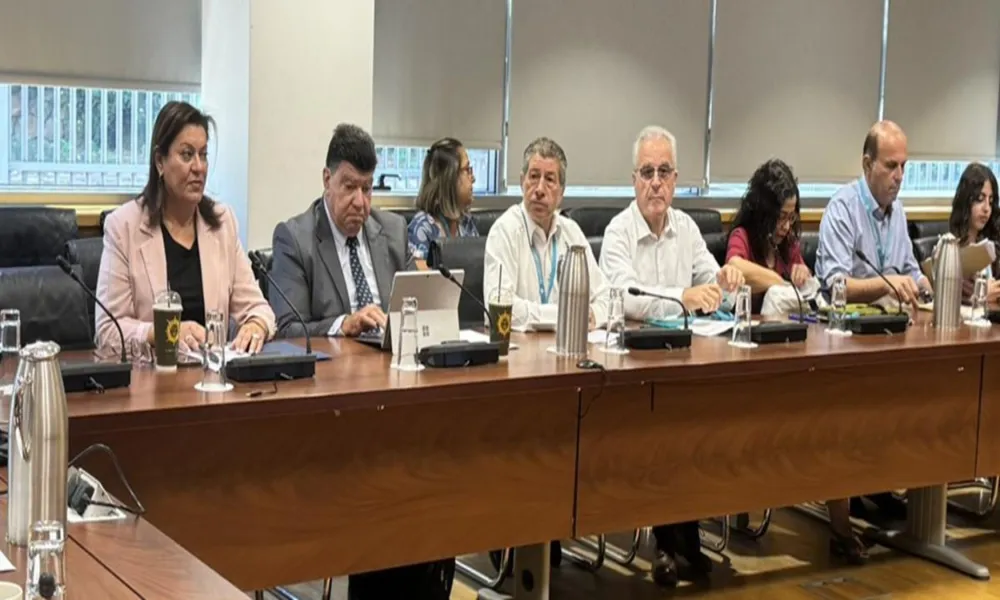
Wednesday's meeting of the House Education Committee, convened to discuss preparations for the new school year, quickly evolved into an early test of the competing positions on teacher recruitment and evaluation.
While tensions remained relatively contained, the disagreements offered a preview of what awaits the committee once the ministry's proposals are formally presented as legislation.
Teacher recruitment sparks debate
On recruitment, AKEL's intention to submit a legislative proposal extending the current system drew an immediate response from Education Minister Athena Michaelidou.
AKEL MP Christos Christofides argued that the combination of the two existing recruitment lists allows new teachers to enter the profession while protecting experienced educators. He warned that the planned changes could lead to chaos in September 2027.
Michaelidou countered that appointment based on a candidate's position on the appointments list had already been deemed outdated in 2015.
A ten-year transition period followed and, in her view, the distortions that emerged require correction rather than extension.
She insisted that teachers who have already served in public schools are not being abandoned.
Responding to supporters of the current system, she asked:
"In which country can you be appointed simply by submitting your degree?"
She also reminded MPs that those who passed the recruitment examinations and are waiting for appointment also have rights that must be protected.
Apart from AKEL MPs, no members of the committee argued against abolishing the appointments list. However, there was broad agreement that parliament would not approve legislation that unfairly disadvantages teachers already working in the system, whether on indefinite contracts or fixed-term arrangements.
Committee chairman and DIKO MP Chrysanthos Savvides said he was prepared to hold daily committee meetings if necessary once the bill is submitted.
"Excellent, but still subject to examination"
OELMEK president Constantinos Constantinou highlighted what he described as a contradiction between the government's praise for experienced teachers and its insistence that they undergo examinations before obtaining permanent positions.
Referring to Michaelidou's earlier comments describing many teachers as excellent professionals, he questioned why they should nevertheless be required to sit examinations before being confirmed in their posts.
He argued that the working document provided to the unions does not adequately protect teachers who have already served for years in public education.
POED president Myria Vassiliou also linked the abolition of the appointments list to the risk of future staffing shortages.
She cited this year's staffing of optional all-day primary schools through the appointments list and argued for retaining both systems while correcting identified distortions.
OLTEK raises concerns
On teacher evaluation, concerns expressed by OLTEK carry particular significance because the organisation was the only union to support the reform package.
Its president, Panayiotis Lysandrou, recalled that OLTEK had backed the participation of school principals in numerical evaluations.
However, principals of technical schools cannot numerically assess roughly half the teachers working at their schools because those teachers formally belong to general secondary education.
They can assess technical-subject teachers but not philologists or mathematics teachers, a distinction OLTEK regards as a downgrading of technical education.
Regarding this year's formative evaluation process, OLTEK requested additional preparation time.
POED, meanwhile, raised concerns about support mechanisms and the dual role of school principals as both mentors and evaluators.
DISY MP Prodromos Alambritis suggested the possibility of a one-year suspension if the necessary preconditions have not been completed.
The minister responded that the relevant legislation exists and will be implemented.
Special education next before parliament
The legislative agenda extends beyond teacher-related issues.
Michaelidou committed to submitting legislation on special education reform to parliament during September.
That will be followed by legislation formally establishing sports schools and music schools.
On air-conditioning, the minister repeated the government's commitment to eventually cover all schools, subject to electrical upgrades and safe operation requirements.
She said detailed figures would be presented on Friday but did not provide a new completion timetable.
The gap between planning and the day-to-day reality faced by schools therefore remains a key issue.
The same concern emerged during discussion of prefabricated classrooms.
POED linked their increased use to educational policies that were not matched by sufficient infrastructure planning.
Michaelidou defended the use of safe prefabricated classrooms for temporary needs and referred to a school infrastructure programme comprising 23 major projects with expenditure exceeding €125 million.