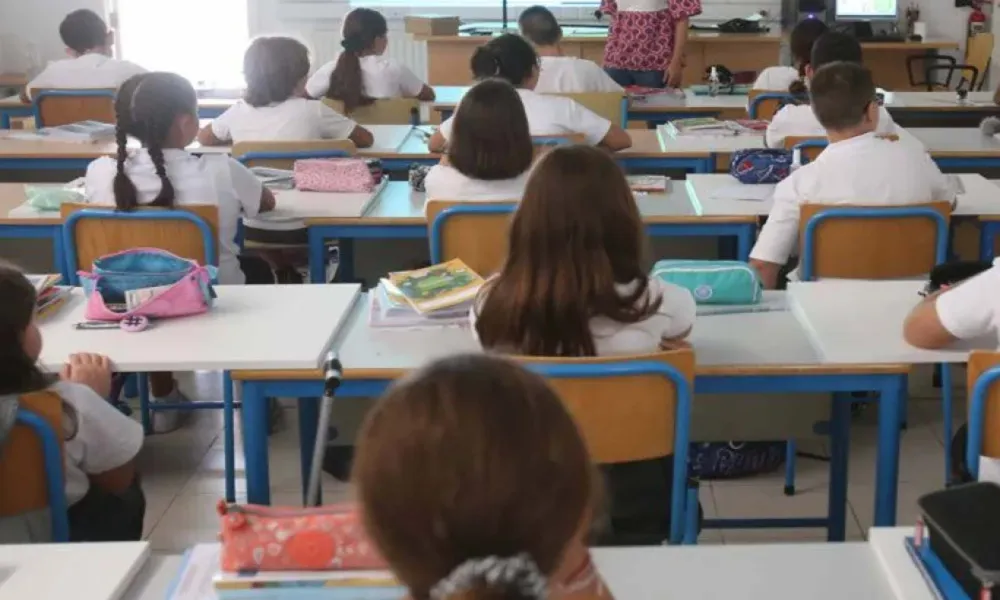



The roughly 469 prefabricated classrooms in use in Cypriot schools correspond, by an indicative calculation, to the needs of about 20 new schools, the House Education Committee heard on Wednesday. MPs, Ministry officials and representatives of teachers, parents and school boards also raised shortages of sports facilities, accessibility gaps and safety concerns, calling for increased funding, stronger Technical Services and long-term planning, CNA reports.
Three main issues before the committee
Committee Chair and DIKO MP Chrysanthos Savvides outlined three main issues: a shortage of school units, sports infrastructure, and accessibility for children with disabilities or mobility difficulties. He said the problem of school units is expected to intensify in pre-primary education as the school-entry age limit is further lowered.
On sports facilities, Mr Savvides said that even sports schools lack the necessary facilities and that some pitches are essentially "fields". He also referred to problems with ramps, elevators, accessible toilets and access to all areas of schools.
Request for list of suitability certificates
Mr Savvides said the Ministry of Education had been asked for a full, detailed list of schools with suitability certificates. He stressed that children's safety is a major concern and that, beyond recording the problems, timelines and planning are needed.
DISY: budgets, staffing and safety inspections
DISY MP Prodromos Alambritis said pupils and teachers need modern, safe and decent school infrastructure, from air conditioning and energy upgrades to replacing old or dangerous facilities and improving sports areas. He said prefabricated classrooms are meeting permanent needs in several cases and that complaints have been made about water leaking into some of them when it rains. He said increased budgets and addressing staff shortages in the Technical Services were crucial to speeding up construction, maintenance and upgrades.
Mr Alambritis also asked for an update on the seismic upgrading of schools, inspections of electrical installations and inspections by the Fire Service, as well as on water quality.
DISY MP Michalis Kounounis highlighted the lack of suitable indoor facilities and parquet flooring, linking this to pupils' health and injuries. He said that while other areas of education had developed, school sports had stagnated, and he raised the possibility of private-sector involvement in some projects.
DISY MP Nikoleta Constantinou sought information on the methodology used to set priorities for school projects and on whether a priority list exists. DISY MP Andreas Constantinou referred to increased needs resulting from rising pupil enrolments and to the changes expected when school boards come under the responsibility of municipalities as part of the 2029 reform.
AKEL: funding below 2011 levels
AKEL MP Christos Christofides attributed the condition of school infrastructure to policy decisions made in previous years. He said the amount allocated to the Technical Services for 2027 is slightly lower than in 2011, while construction costs have approximately doubled. He added that for a number of years the Technical Services' budget had effectively allowed only the most essential needs to be covered. In his view, problems would continue without a substantial increase in that allocation and in funding for school boards.
Mr Christofides expressed concern about the low proportion of schools with suitability certificates and described prefabricated classrooms as a "scourge", saying many are problematic or reduce pupils' free space. He also challenged the claim that air conditioning covers 95% of schools, saying that in several school units air conditioners are installed but cannot be used. He said information presented by school boards gives a more accurate picture.
AKEL MP Anastasia Chasikou said visits to schools had revealed a wide gap between actual needs and the pace of upgrades. She called for a clear picture of which schools need works immediately and which have been waiting for years, as well as clarification of the respective responsibilities of school boards and the Technical Services.
AKEL MP Efrem Christou said the Ministry's strategy lacked forward planning, particularly in areas where the population is growing significantly without a corresponding expansion of school infrastructure. He also referred to inadequate resources for school boards and to interventions that in some cases amount to temporary repairs rather than comprehensive solutions.
Other parties call for planning and accountability
ELAM MP Polys Anogyriatis referred to Audit Office reports on safety, health and air-conditioning issues in schools, noting that related problems are still being recorded despite developments and funding since 2024. DIKO MP Panikos Leontiou called for a more substantive and productive response to the problems for the benefit of children. He referred to extensions carried out without adequate planning and to areas where the need for new schools had been raised years ago but remained unaddressed.
ALMA MP Odysseas Michaelides said the state must take all necessary measures to ensure that school equipment and infrastructure meet the highest possible standards. He said it was unthinkable for private schools to be much better equipped than public schools. He added that the public schools which serve as examples show that, when there is political will, the state can upgrade public education to the level it deserves. Mr Michaelides said vision was lacking and asked how many schools meet the standards set by the Ministry of Education.
Direct Democracy MP Dimitris Baros spoke of "buck-passing" and said responsibility must be taken so that problems are resolved immediately.
Ministry: Technical Services at half strength
Representing the Ministry of Education, Elias Markatzis, Head of the Civil Defence, Safety and Health Office, said mechanisms exist to identify risks in schools and that school Safety and Health Committees operate and are expected to carry out inspections.
Ioanna Christou, representing the Ministry's Technical Services, said the services act immediately where there is an urgent safety need, while school upgrades and extensions are carried out within available budgets. She said the Technical Services have about 30 staff, although they should have 60.
School boards: funding and prioritisation
Representatives of school boards raised inadequate funding and the maintenance and upgrading of buildings and sports facilities, calling for projects to be clearly prioritised according to risk and urgency. They also referred to maintenance costs, the issuing of suitability certificates and inspections of air-conditioning systems, noting that available resources are not always sufficient.
Teachers' unions
POED President Myria Vasileiou called for school infrastructure to be upgraded and raised issues concerning special education, accessibility, overcrowding and prefabricated classrooms. She said classrooms and laboratories are being put to different uses to meet needs, while prefabricated classrooms have in several cases reduced the areas where children can play. She added that the air-conditioning target remains pending and that public schools should be models.
OELMEK President Constantinos Constantinou said the safety of pupils and staff is the most important issue. He said the organisation can help record the problems, but noted that the process should not be limited to recording them. OLTEK Secretary-General Lenos Loizou said the problems are common across schools and called for an increase in the state education budget, highlighting in particular the needs of technical education.
Parents: temporary solutions made permanent
Representatives of the Pancyprian Confederations of Parents said there are 69 prefabricated classrooms in secondary education across Cyprus and about 400 in primary and pre-primary education, noting that a temporary solution has in many cases become permanent. They stressed the need for schools to hold the required suitability certificates and drew attention to funding, schoolyards, shelters, special education and water supply. They also noted that prefabricated classrooms reduce the space available to children for play and sport.
Source: CNA