
The Ministry of Agriculture is currently examining a critical decision regarding the possibility of granting minimal quantities of water to farmers, partially revising the scenario that was approved on 24 April by the Advisory Water Management Committee (SEDDY). At that point, following a recommendation by the Water Development Department, it was decided, among other things, to extend zero supply again this year to cover the needs of seasonal crops in areas supported by the Unified South Conveyor Project (especially for potato cultivation in free Famagusta) and the Paphos Irrigation Project, because part of the water in the dams continues to be used for water supply, with the broader Paphos area as a key example up to 2027, when water supply needs are expected to be fully covered by desalinated water.
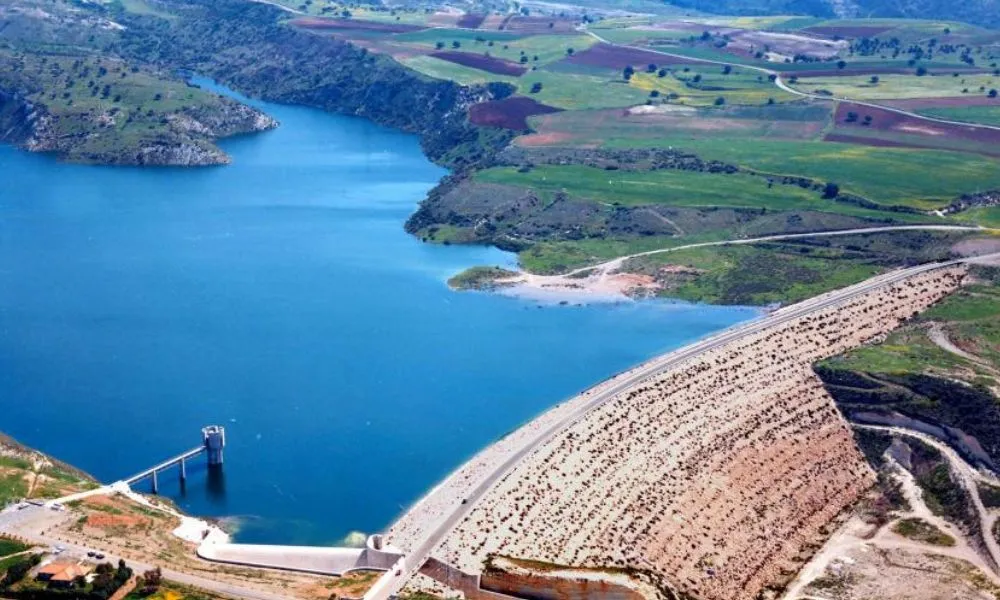
At present, and following reactions from agricultural organisations and producer groups, which after the announcement of the SEDDY decision sent relevant letters to the ministry and publicly warned of mobilisations, the ministry is examining the possibility of granting additional quantities, encouraged mainly by the small additional inflows into the dams recorded after the SEDDY meeting on 24 April. For this purpose, the Water Development Department was asked to prepare revised scenarios that take into account the new inflows. It should be noted that until 24 April total dam capacity stood at 111.2 million cubic metres of water (38.2%), while as of yesterday Tuesday it rose to 122.9 million cubic metres (42.3%). In other words, the additional quantities so far amount to 11.7 million cubic metres of water.
It should be noted that meetings are ongoing between the Minister of Agriculture, Maria Panayiotou, agricultural organisations and affected producer groups. The contacts began last week and, according to information given to Politis by representatives of agricultural organisations, decisive for the ministry’s final decisions will be the detailed presentation of needs by each affected production sector separately (potato growers, banana growers, etc.).
The Water Development Department disagrees
At the same time, the ministry already has before it the scenarios prepared by the competent state advisor on water policy, the Water Development Department, which are not aligned with the demands of farmers.
The Department’s position, as conveyed to Politis by its director Ilianna Tofa‑Christidou, is that based on the data available they cannot recommend granting the additional quantities that have entered the dams in the period from 24 April to today, as such a decision would deprive equivalent quantities from future years, quantities that would be used for irrigation. She described as very critical the choice to allocate this year’s additional quantities, with the risk that next year, if rainfall is insufficient and demand for water supply continues to increase, water sufficiency will return to the same level as today.
The Germasogeia unit
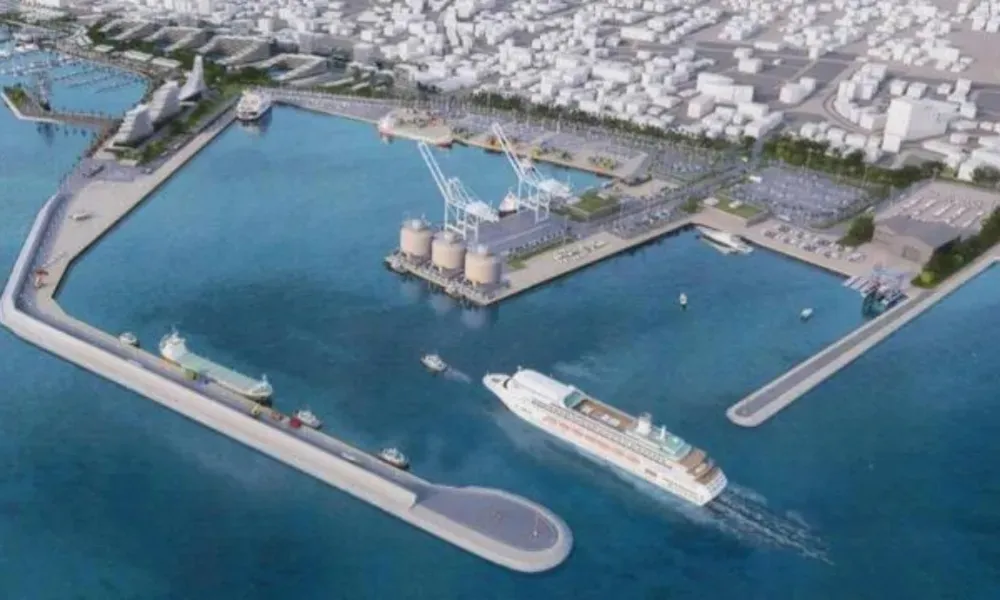
At the same time, these additional quantities, she noted, provide a safety buffer against unpredictable factors that complicate the implementation of the Department’s three‑year strategy for water sufficiency. Among these factors is also the recent cancellation of the planned floating desalination unit in Germasogeia (6.6 million cubic metres annually) by the Ministry of Finance, or a potential delay in the desalination unit planned for 2027 in Mazotos.
Asked whether the decision on the Germasogeia unit is final, she replied that “it is not something final, because if additional water is eventually granted to farmers beyond the scenarios, then we must rely on strengthening the balance with desalination units, which are, however, more costly.”
“Providing additional quantities this year deprives equivalent quantities from future years, at a time when as a state and as a Department we have set a three‑year period as the basis for a more rational evaluation, until now, whenever it rained, water was granted very easily, and taking into account the previous three years, thus covering a six‑year cycle,” she explained.
These ongoing processes are what delay the finalisation of the water allocation text, so that decisions will apply at least until next November.
“The glass is half empty”
For his part, the Director General of the Ministry of Agriculture, Andreas Grigoriou, said that it is under examination whether it is possible to partially satisfy additional irrigation requests, while at the same time noting that dam reserves today are below 50%, stressing that “the glass is not half full but half empty.” He also explained that there has so far been no need to allocate additional quantities for open crops, as rainfall in recent months meant it was not necessary. At the same time, he clarified that water from dams covers only 30% of irrigated areas used by producers, while the remaining 70% is covered either by boreholes or other sources secured by farmers. “Therefore, the problem is not so big,” he emphasised.