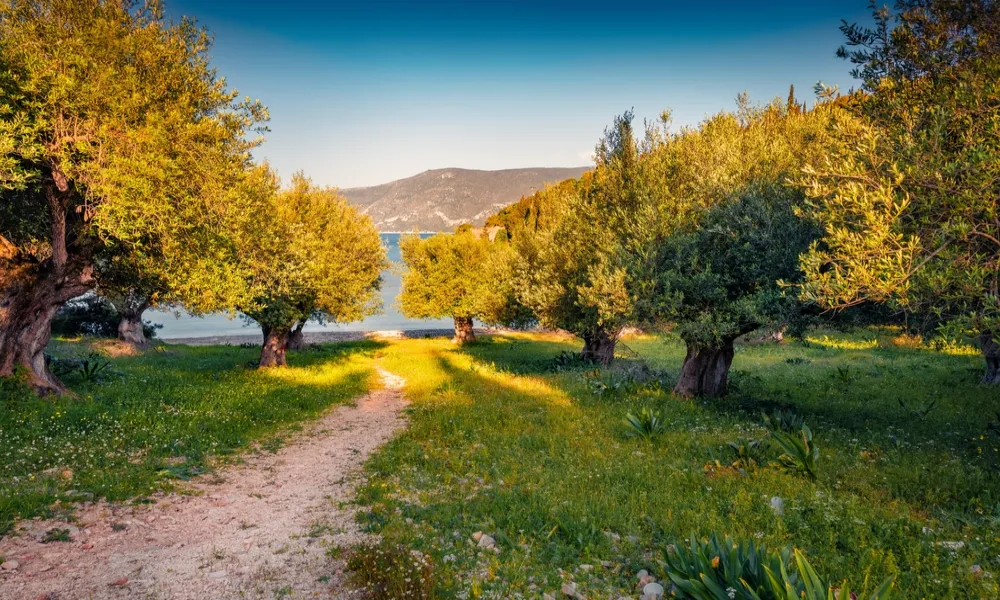

Across Portugal, olive trees described by Euronews as “living monuments of Mediterranean nature” have stood for more than 2,000 years. One may be older than 3,700 years, yet several continue to produce fruit.
Their age is estimated and certified by the University of Trás-os-Montes and Alto Douro, known as UTAD, which has developed and patented a specialised dating method.
How scientists determine their age
The technique uses a mathematical model that links a tree’s age to the physical characteristics of its trunk, including its diameter, height and circumference.
This allows researchers to estimate the age of ancient olive trees without relying solely on traditional methods, which can be difficult to apply to trunks that have become hollow or heavily weathered over time.
Portugal’s oldest olive trees
One of the most remarkable examples is the Oliveira do Mouchão, located in Abrantes. Its age is estimated at 3,350 years, meaning it was already standing during the eras of the Phoenicians, Celtiberians and Romans.
According to UTAD, the tree was still producing olives in early 2022 “as if it were in the prime of its life”, despite its trunk bearing clear signs of its extraordinary age.
It has endured waves of conquest, wars and major historical upheavals over thousands of years, largely because of its highly developed root system. In 2022, it was nominated for the European Tree of the Year competition.
Portugal’s oldest olive tree, however, may be found elsewhere. Oliveiras Milenares, an organisation that has worked with UTAD since 2007 to certify ancient olive trees, says the Oliveira do Peso in Vidigueira, in the Beja district, is estimated to be more than 3,700 years old. That assessment was carried out in 2021.
The tree competed for Portugal’s Tree of the Year title in 2024 and finished third. It stands on land containing a group of olive trees whose combined age exceeds 7,000 years.
Ancient trees found across Portugal
Other exceptionally old olive trees have been identified in Monsaraz, Estremoz, Montemor-o-Novo, Lagoa, Beja, Vilamoura, Évora and Serralves Park in Porto.
UTAD has also been asked to date olive trees in Spain and France. Among them was a tree in Menorca that was certified as being more than 2,300 years old.
How the trees continue to regenerate
José Luís Louzada, the UTAD researcher who created the dating method, says the olive tree may be the organism best able to withstand the passage of time because of its exceptional capacity for renewal.
Even parts of a very old trunk can sprout again, allowing the tree to continue growing and producing fruit. Its remarkable adaptation to the Mediterranean climate is another major factor behind its longevity.
Most of Portugal’s ancient olive trees are found south of the River Mondego. In theory, Louzada says, they could live “forever”, surviving far beyond the human generations that pass through the same landscape.
Source: LiFO