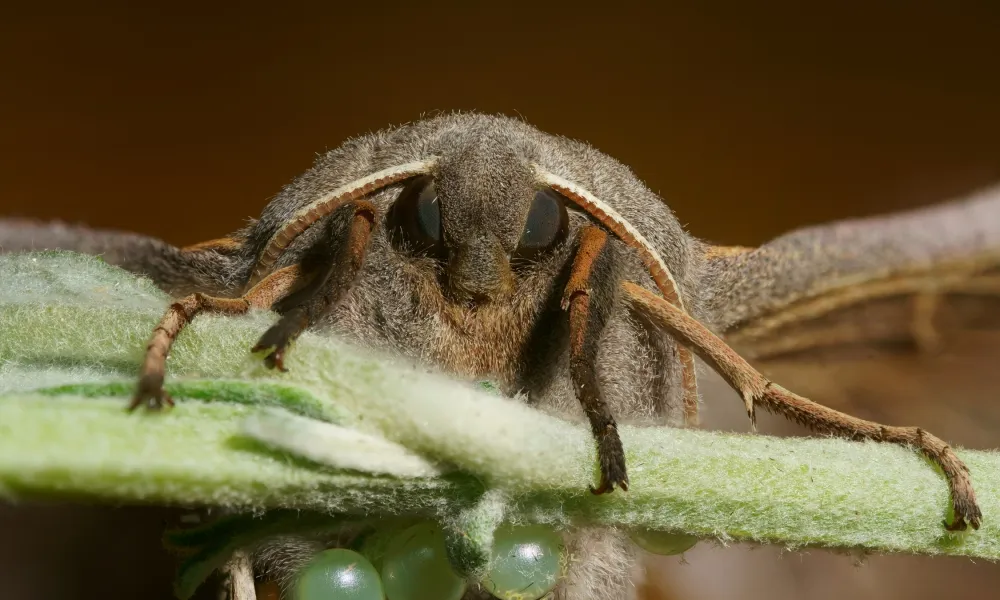

Cyprus is home to 27 European endemic moth species, placing the island among six countries with more than 20 European endemic moth species, according to the European Commission's first European Red List of Moths.
The report found that available information on all 27 endemic species recorded in Cyprus is insufficient to determine their risk of extinction.
Cyprus joins Spain, Italy, Greece, France and Portugal among the countries with more than 20 endemic moth species classified as data deficient, highlighting significant gaps in scientific knowledge about some of Europe's unique pollinators.
First continent-wide assessment
In a statement issued on Monday, the European Commission's Directorate-General for the Environment said the report represents the first comprehensive assessment of extinction risks facing moths across Europe.
The Commission noted that moth populations are coming under increasing pressure, raising concerns about the future of a key group of pollinators.
The assessment examined 3,082 moth species across Europe, including 704 endemic species, and 2,828 species within the European Union, including 488 endemic species. The study was conducted using criteria established by the International Union for Conservation of Nature (IUCN) Red List.
Nearly 12% at risk in EU
According to the findings, 10.8% of assessed moth species in Europe are considered threatened with extinction. Within the EU, the proportion rises to 11.9%.
Species classified as data deficient account for 23.6% of those assessed across Europe and 17.9% within the EU.
The Commission said the findings indicate that nearly one in nine moth species in Europe and almost 12% of species in the EU face extinction risks.
It also noted that information remains insufficient for around one in four European moth species, limiting understanding of their population trends, distribution and ecology.
Call for stronger monitoring
The report recommends the development of long-term monitoring programmes, expanded field surveys and broader geographical data collection.
It also calls for additional research on threatened species and on species for which current information is insufficient to assess conservation status.
Source: CNA