
Nicosia Municipality has asked for its contribution to the state network of green points to be reviewed for 2025 and 2026, and for the state to cover the cost of running its two unlicensed green points. The requests were set out in a memorandum submitted to the House Environment Committee, which continued its examination of problems in the state network on Wednesday.
Fewer green points than planned
Picking up where they left off at the previous session, committee members returned to the problems linked to the state network of green points. The discussion focused mainly on their small number: 28 instead of the 67 originally plannedby the state, including in urban areas.
As a result, according to the Union of Municipalities, municipalities are forced to run their own temporary and informal green points at higher cost, to relieve pressure on the state sites until the state increases their number.
Nicosia Municipality’s memorandum
In its memorandum, Nicosia Municipality refers to a disproportionate burden from funding both its temporary green points and the state system. It calls on the state to speed up the creation of permanent green points in Nicosia district.
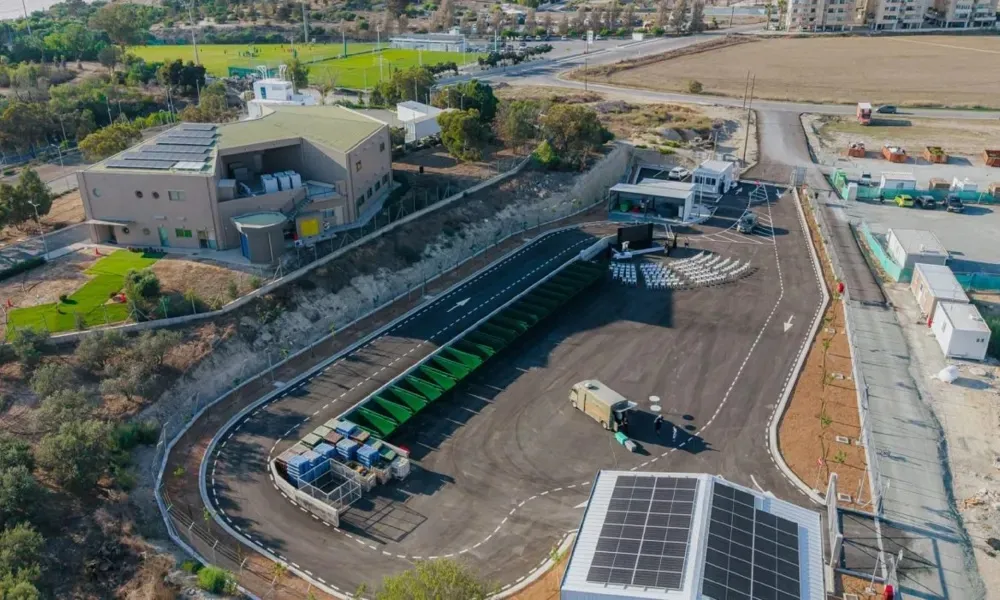
The municipality informs the House that although green points are now the responsibility of the District Local Government Organisations (DLGOs), it continues to fully fund two temporary green points, in Kaimakli and Ayios Dometios, to serve urban Nicosia. There is only one state green point, in Strovolos.
According to the memorandum:
- the annual running cost of the two temporary sites now exceeds €600,000
- the municipality’s contribution to the Nicosia DLGO for the state network of green points amounts to €380,000 for 2026
The municipality has asked for its contribution to the Nicosia DLGO for 2025 and 2026 to be reviewed. It has also asked the state to cover the running costs of its two unlicensed green points until licensed green points are built. On both requests, it cites the significant contribution its two temporary sites make to serving residents and relieving pressure on the state network.
Waste handled by the temporary sites
Nicosia Municipality has operated the two temporary green points in Kaimakli and Ayios Dometios for several years. They serve a large number of residents every day and are essential waste management infrastructure for the capital.
According to municipal data, the two sites handle each year:
- around 1,000 loads of mixed waste, an estimated 4,000 to 5,000 tonnes
- around 220 loads of green waste and prunings, an estimated 660 to 1,100 tonnes
Delays in permanent green points
At the same time, the municipality says there are delays in delivering permanent green points in the Nicosia area. In particular:
- the proposed green point at the SOPAZ site has had all the required approvals and consents from the relevant government services since May 2024
- the municipality has also identified a suitable plot in western Nicosia, near Nicosia Mall, as a possible location for the Engomi–Ayios Dometios green point
However, the municipality says there has been no substantial progress on these projects to date. This forces it to keep running temporary facilities at significant financial cost.
“Nicosia Municipality has in effect been substituting over time for the absence of the planned state infrastructure, bearing a significant financial cost for the benefit of the entire waste management system of the district,” it adds.
State network to grow from 28 to 36
At the previous session, Kostas Constantinou, Director-General of the Directorate-General for Environment, presented the strategy for expanding the state network of green points in detail.
The core network currently includes 28 green points island-wide:
- 8 in Nicosia
- 8 in Larnaca
- 5 in Paphos
- 4 in Limassol
- 3 in Famagusta
Once Phase A of the expansion is completed, the total is expected to rise to 36.
At the time of that discussion, the Deryneia green point was under construction, with completion expected at the end of October 2026. The Latsia–Geri green point was expected to be completed at the end of February 2027.
Four new green points are also being promoted in Nicosia district, in Engomi–Ayios Dometios (in the Nicosia Mall area), Nicosia–Aglantzia, Lakatamia–Tseri and Kato Pyrgos. Two more are planned in Limassol district, in Linopetra–Ayios Athanasios and Pelendri.
Famagusta DLGO dispute heading for resolution
The discussion also indicated that the Famagusta DLGO’s refusal to operate four new green points, in Deryneia, Sotira, Avgorou and Ayia Napa, is moving towards resolution. The DLGO had refused because it was concerned that local authorities would not pay their share of the operating costs.
Nikos Mouaimis, Director-General of the Famagusta DLGO, said that if the organisation’s requests for adequate equipment for the new units, funded by the state, are met, it will proceed with operating them.
Deputy Director of the Department of Environment Elena Stylianopoulou asked for the requests in writing, so that they can be met through a relevant budget item of the Water Development Department.
To address the DLGO’s concerns about unpaid contributions, the Director-General of the Agriculture Ministry’s Directorate-General for Environment conveyed at the previous session a commitment from the Interior Ministry. Under it, the operating costs of the Famagusta sites will be deducted directly from the state grant that local authorities receive and paid to the organisation. He noted that this arrangement already applies to many other matters.