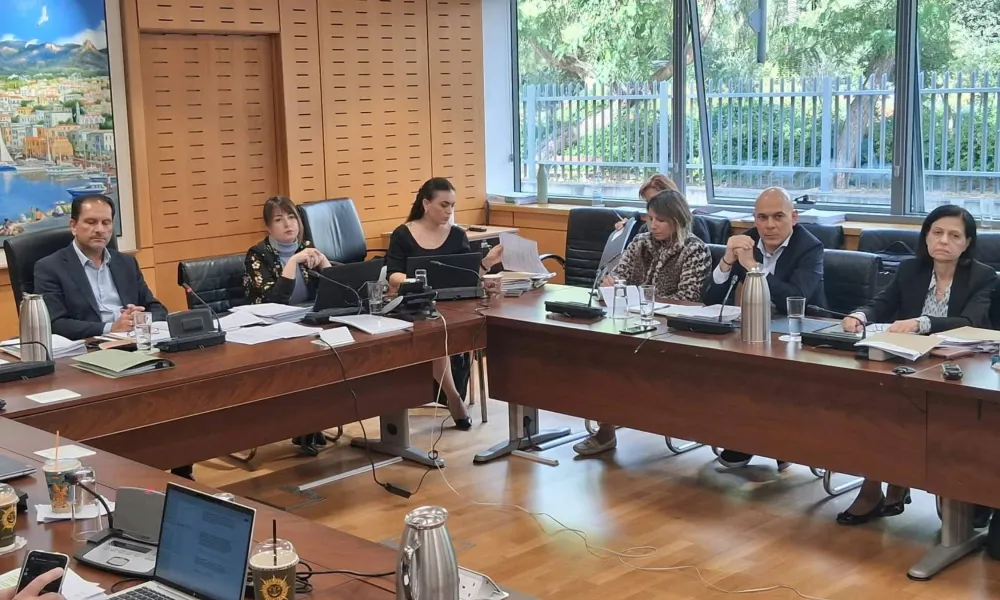

Cyprus' House Interior Committee on Wednesday examined the powers and decision-making process of the Planning Exceptions Council following its preliminary recommendation in favour of legalising an unauthorised monastery development within the environmentally protected Natura 2000 area of Cavo Greco.
The discussion follows an initial decision on 16 October, when a majority of the council voted in favour of supporting a planning permit by exception for the monastery, with four members voting in favour and one representative from ETEK opposing the proposal.
Application under review
The council has since decided to reconsider the application submitted by the Metropolis of Constantia after receiving objections and being informed of changes to the development plans.
House Interior Committee chairman and AKEL MP Aristos Damianou highlighted the absence of representatives from the Municipality of Ayia Napa, despite having been invited to attend the session.
Damianou also described as "unusual" the representation of the Interior Ministry, which opposes the application and has called for demolition of the structures. The same position has been adopted by the Department of Environment.
According to Planning Exceptions Council chairman Sotiris Ktoridis, the Department of Forests gave a positive opinion on the Special Ecological Assessment submitted for the retrospective legalisation of the development, while the Game and Fauna Service expressed support subject to numerous conditions.
However, Damianou intervened during the discussion, noting that the Game and Fauna Service had also imposed a €5,000 fine in relation to the case. Ktwridis replied that he had not been aware of the penalty.
'We do not grant permits without conditions'
Ktwridis defended the council's approach, insisting that any positive recommendation would be accompanied by conditions.
"A positive recommendation, whether for this application or any other major development, is always accompanied by conditions," he told the committee.
He said that if the application eventually receives a favourable recommendation after the review process, the conditions imposed could even include demolition requirements.
Ktwridis added that the council does not issue permits without restrictions and is considering all correspondence and objections submitted by environmental organisations and other stakeholders before reaching a final decision.
Calls for legislative changes
The council chairman also argued that Cyprus lacks a legislative tool that would prevent landowners who have carried out unauthorised construction from subsequently applying for development permits.
According to Ktwridis, such a provision would significantly simplify the council's work and help address cases involving illegal developments.
The case remains under review, with the council expected to revisit the application in light of updated plans and the objections received.