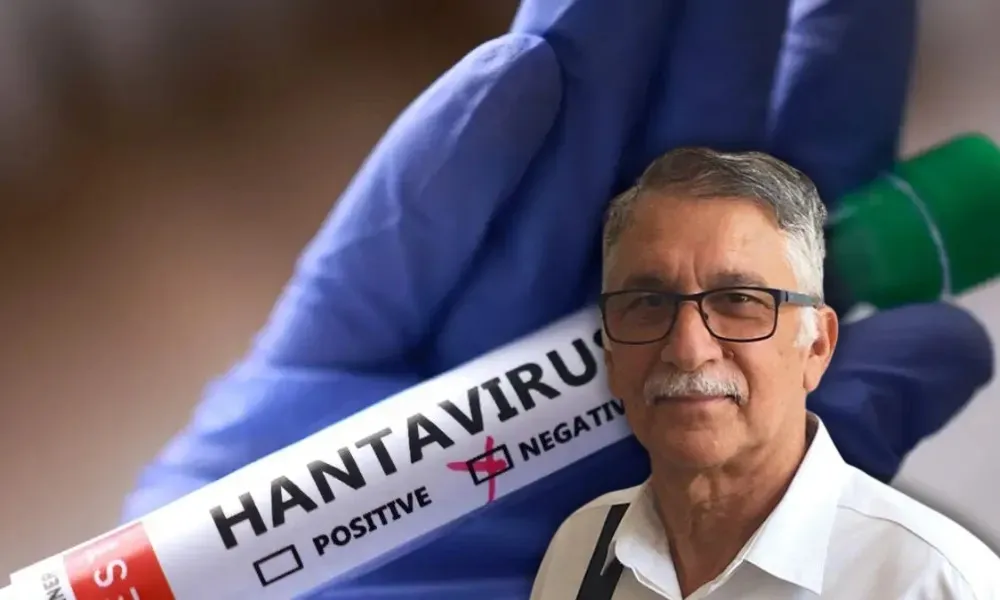

There is no risk for Cyprus or the rest of the world from the hantavirus cases detected on the cruise ship MV Hondius, according to Professor of Microbiology and Molecular Virology Petros Karayiannis.
Speaking on Politis radio 107.6 and 96.6, on the programme Morning Inspection, Dr Karayiannis stressed that hantavirus is not a new virus. “It has been known for more than 50 years. It was isolated in Korea during the Korean War, and strains have since been identified in Europe and the Americas,” he said.
Two types of hantavirus
Dr Karayiannis explained that hantavirus is divided into two groups. The first, found in the Far East, causes haemorrhagic fever with kidney complications, while the second causes pulmonary syndrome. The latter is found in the American continent and was the strain detected on the cruise ship.
This virus carries a very high fatality rate. The pulmonary form has a mortality rate of around 40 per cent, while the haemorrhagic form is around 15 per cent. There are no antiviral treatments or vaccines, meaning cases are managed according to symptoms and require early and immediate intervention.
A key concern, including in the case of the cruise ship, is the incubation period, which can range from one to eight weeks. For this reason, those placed in isolation will remain so for 45 days.
How it spreads
The virus is not easily transmitted from person to person. It is spread through rodent droppings, urine and saliva, meaning infection occurs through consumption of contaminated food or drink. Dr Karayiannis noted that the first case on MV Hondius may have been infected in Argentina, at a landfill site visited for birdwatching.
“Once on the cruise ship, in the confined conditions of cabins and corridors without proper ventilation, some passengers became infected due to very close contact. Transmission requires extremely close contact,” he said.
As for the ship’s passengers, Dr Karayiannis noted that there was no Cypriot among them. One Greek passenger, however, is being treated at Attikon Hospital in Athens.
Concerns over cruises
Responding to a listener planning a summer cruise, Dr Karayiannis said there is no reason to cancel one in the Mediterranean. “In fact, I do not believe there is a risk from this specific virus on cruises in general, even though infections have occurred in the Caribbean in the past,” he said.
He added that cruise ships in the Caribbean have previously been affected by norovirus, which causes vomiting and diarrhoea but is acute, lasting about 48 hours with full recovery. “So I personally would not cancel my cruise,” he said, seeking to reassure listeners concerned about the prospect of a new pandemic or epidemic.