Health authorities in the Democratic Republic of the Congo and Uganda are racing to contain a new Ebola outbreak that has been linked to hundreds of suspected cases and dozens of deaths.
The outbreak was first detected in Ituri province, in eastern Congo, but cases have also been reported in Uganda, raising concern that the virus may already have spread more widely than official figures suggest.
The World Health Organization has declared the outbreak a public health emergency of international concern and called on countries to strengthen surveillance, testing and response measures.
What is Ebola?
Ebola is a severe and often deadly disease caused by a group of viruses that can lead to haemorrhagic fever. The virus is believed to circulate in animals, including fruit bats, before occasionally passing to humans.
Once in people, Ebola spreads through direct contact with the bodily fluids of an infected person, including blood, vomit, faeces and semen. It can also spread during unsafe burials or in health facilities where infection control is limited.
Symptoms usually begin with fever, fatigue, muscle pain and headache. These can be followed by vomiting, diarrhoea, rash and, in some cases, internal or external bleeding.
Ebola is far less easy to transmit than airborne respiratory viruses, but it is much more deadly. Case fatality rates vary between outbreaks, though the disease has killed around half of those infected in past epidemics.
The current outbreak is linked to Bundibugyo virus, one of the Ebola virus strains known to cause disease in humans. It is rare, with only a small number of previous outbreaks recorded.
The World Health Organization has declared an Ebola outbreak in Congo and Uganda a public health emergency of international concern. Here's what to know about one of the world's deadliest diseases https://t.co/So5WkNvmV1
— Bloomberg (@business) May 18, 2026
Why this outbreak is worrying
Scientists are particularly concerned because there is no approved vaccine or specific treatment for the Bundibugyo strain.
The vaccine used in some previous Ebola responses targets Zaire ebolavirus, a different strain, and is not considered effective against the virus involved in this outbreak.
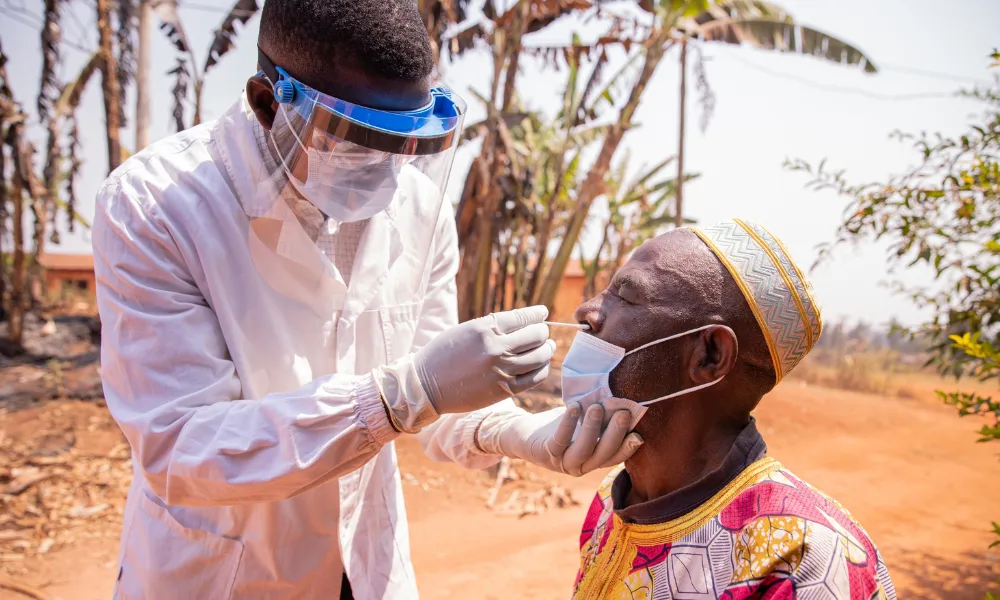
That means the response depends largely on classic public health measures: finding cases quickly, isolating patients, tracing contacts, carrying out safe burials and protecting health workers.
Those measures are difficult in eastern Congo, where armed conflict and insecurity have disrupted health services for years. Attacks on clinics, population displacement and mistrust of authorities can all delay the response and allow the virus to spread.
Why WHO declared an emergency
WHO’s declaration does not mean the outbreak is already global. It means the situation poses a serious international risk and requires a coordinated response across borders.
The detection of cases in Uganda, including in the capital Kampala, has heightened concern because cross-border movement can make the outbreak harder to contain.
WHO has also warned that the true number of infections may be higher than the confirmed figures, partly because the outbreak appears to have gone undetected for several weeks.
According to health officials, the first known suspected victim developed symptoms in late April and died days later. Authorities were only alerted to a possible outbreak in early May, by which time dozens of deaths had already been reported.
Experts say such delays can be critical in an Ebola outbreak. Without rapid isolation and contact tracing, each missed case can create new chains of transmission.
For now, the priority is to identify infections, protect health workers and stop the virus from gaining a stronger foothold in areas already strained by conflict and fragile health systems.
The US Centers for Disease Control and Prevention is escalating its response to the ongoing Ebola outbreak in the Democratic Republic of Congo and Uganda, after the World Health Organization labeled the outbreak a public health emergency https://t.co/bhIGfQZRxX
— Bloomberg (@business) May 18, 2026
Source: lifo.gr