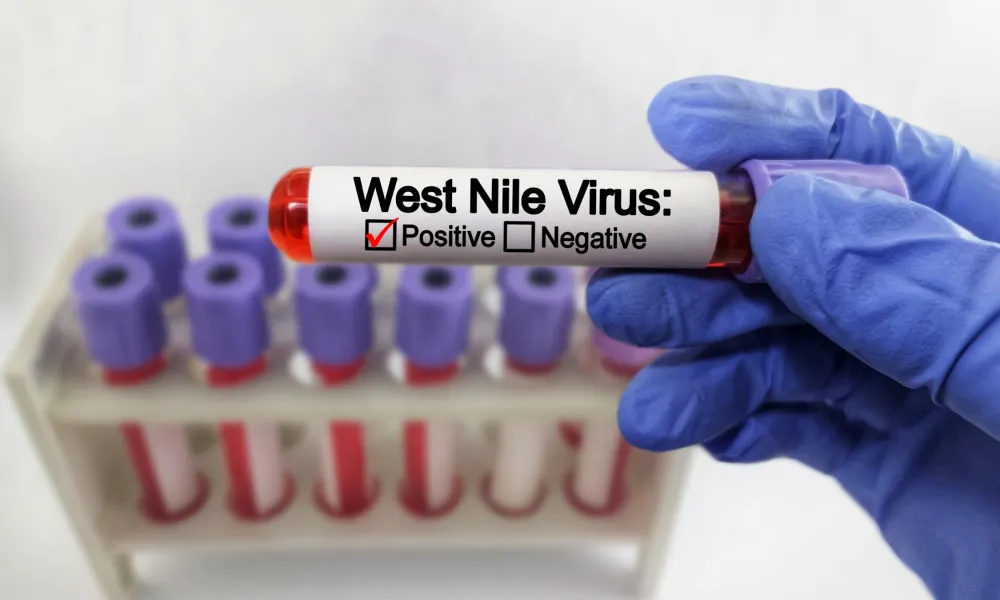



The number of confirmed West Nile virus cases in Cyprus has reached eight, with seven of them in Nicosia district, as health authorities intensify mosquito control efforts across affected areas.
Seven of the eight cases involve people from various parts of Nicosia district, with one case in Larnaca district. All patients required treatment at Nicosia General Hospital.
The numbers have shifted noticeably within days. On 1 September, four confirmed cases had been officially announced, with two more under investigation. A day later, on 2 September, confirmed cases had risen to six, with two additional cases awaiting laboratory results. By yesterday, 2 September, the total had reached eight.
The rise comes as health authorities remain on heightened alert, with experts saying further cases cannot be ruled out in the coming period.
Close to the 2023 total
This year's eight cases carry particular weight when set against previous years. The virus has been monitored in Cyprus since 2016, and health ministry data show most years have seen only sporadic cases, or none at all.
The largest outbreak was recorded in 2019, when the total reached 24 cases, while 2023 saw nine. No cases at all were recorded in 2020, 2021 or 2025. That means Cyprus, by early September 2026, sits just one case short of the entire 2023 total.
The first serious case to come to light this year involved a 74-year-old patient, who was intubated and treated in the intensive care unit at Nicosia General Hospital with encephalitis.
Tracking the breeding grounds
Each new case triggers health ministry protocols. Health services inspect and spray the patient's home before extending the response to the wider area, targeting both mosquitoes and their larvae.
Stagnant water is a particular concern. Inspections have found water collecting in buckets, flower pots, storage jars and other containers in yards and gardens, with similar breeding sites also forming in fields and empty plots. Health services link this year's prolonged mosquito activity to weather conditions and rainfall patterns that have created pooling points for stagnant water.
Blood donations also under watch
Authorities are also on alert over blood safety. During months of heightened mosquito activity, blood units collected through donation are tested for West Nile virus.
There have been cases of people with no symptoms in whom the virus was detected only through blood donation screening. In these cases, mosquito control measures are also triggered in the area where the person lives.
The ability to be infected without showing symptoms is a defining feature of the virus. According to health authorities, around 80% or more of infected people show no symptoms at all. Older people and vulnerable individuals face a higher risk of severe illness.
The virus is not transmitted between people through ordinary social contact. The main transmission cycle involves infected mosquitoes that have previously fed on infected birds.
With cases now at eight, seven of them in Nicosia district, health authorities remain on alert, with particular emphasis on limiting mosquito breeding sites and identifying new cases early.