
The case of an unlicensed centre in Larnaca has highlighted shortcomings in existing legislation and is driving efforts to give authorities stronger tools to intervene before violations become entrenched.
In the wake of Politis revelations about an unlicensed centre in Larnaca that continues to accept clients and offer treatments despite being reported to police, the issue has now reached the Presidential Palace.
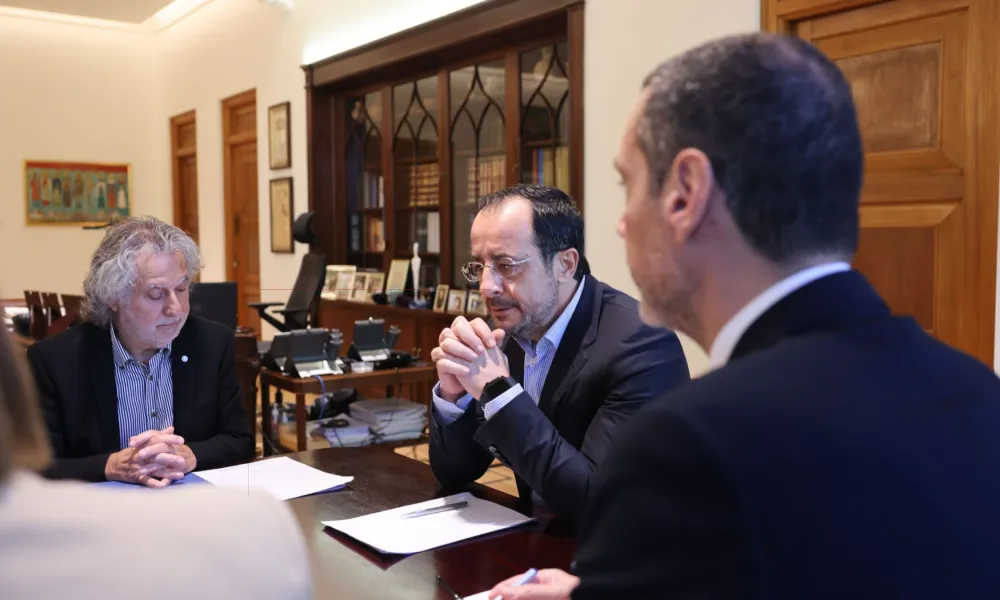
During a meeting between President Nikos Christodoulides, representatives of the Cyprus Medical Association (CyMA) and Health Minister Neophytos Charalambides, discussions focused on the need for legislative changes, tougher penalties and enhanced oversight of centres and individuals providing medical services outside the legal framework.
Spotlight on the Larnaca case
The discussion gained particular significance following findings from the Politis investigation in Larnaca.
Despite a surprise inspection by the Health Ministry and a fresh complaint to police, the centre has continued operating.
As reported by Politis, journalists posing as prospective patients were given detailed information about treatment packages costing up to €20,000, including plasmapheresis, with treatment reportedly available as early as October.
At the same time, plasmapheresis equipment discovered at the premises was not confiscated because it had been legally imported and carried the required certification.
The case was specifically raised during the Presidential Palace meeting, with CyMA seeking updates from the Health Ministry on both the services allegedly offered by the centre and the doctor who was presented as its director.
Tougher penalties discussed
Among the proposals discussed was the strengthening of penalties for the unlawful practice of medicine and for providing medical services in Cyprus without the required licences.
The direction outlined involves amendments to existing legislation aimed at creating genuinely deterrent sanctions and providing authorities with clearer powers to intervene.
Current penalties ‘not deterrent’
CyMA president Petros Agathangelou argued that existing penalties fail to discourage violations.
Particular attention was given to so-called alternative therapies and unlicensed centres offering such services.
According to Agathangelou, these practices may place patients' lives at risk, prompting the association to pursue further legislative amendments.
Greater oversight sought
The Presidency expressed willingness to consider legislative measures and stronger supervisory mechanisms to ensure continuous monitoring of such services.
The objective is to allow authorities to intervene proactively rather than only after complaints are filed or incidents have already occurred.
President Christodoulides also raised the issue of establishing a more structured dialogue with the Cyprus Medical Association on broader healthcare policy matters.