

A system that assesses hospitals’ infrastructure, equipment and available beds does not examine as strictly which doctor performs an operation, whether they have the necessary specialist training and what their results are. That is the picture described to Politis by gynaecological surgical oncologist Dr Andreas Kavallaris.
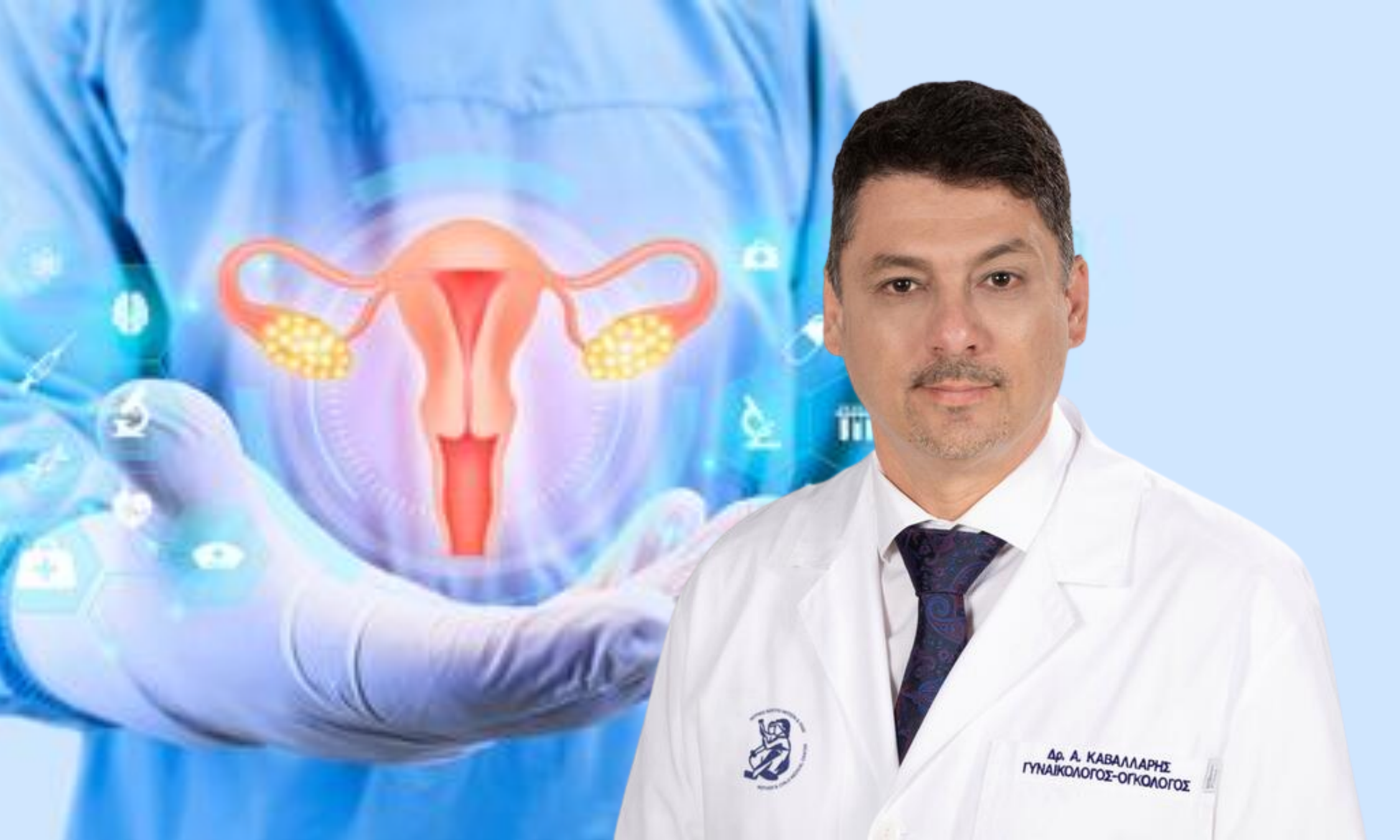
He practises in Cyprus and Greece and heads gynaecological oncology units at private clinics in Nicosia and Thessaloniki.
“A good gynaecologist is not one who operates on everything. It is one who knows their limits and refers patients to specialists in good time.”
Dr Kavallaris raised serious concerns about patient safety, the necessity of surgical procedures and what he described as the lack of adequate mechanisms for assessing surgical competence. His criticism was aimed mainly at the Health Insurance Organisation (HIO). He called on the HIO to link payments for complex surgical procedures to doctors’ certified specialist training, not solely to hospitals’ infrastructure. “Quality must be measured by the outcome for the patient, not by the square metres of the hospital,” he said. The remark sums up his criticism of a system that, in his view, has not developed adequate mechanisms to identify even operations that may not have been necessary.
How quality is checked
Dr Kavallaris was particularly critical of the way the quality of surgical services is monitored in Cyprus. As he explained, the Cyprus Medical Association has a disciplinary role, but its procedures are time-consuming and only begin after the event. At the same time, according to Dr Kavallaris, the HIO says it has no remit over medical negligence, even though it is the body that pays for surgical procedures. He spoke of a serious institutional gap, noting that the HIO holds valuable data that could help assess the quality of the services provided. These include procedure codes, readmissions, repeat operations and histopathology results.
He explained that the quality criteria and conditions for payment under the DRG system have focused mainly on hospital infrastructure, such as beds, intensive care units, equipment and 24-hour cover. Larger units, he said, receive higher payments, without any corresponding assessment of which doctor operates, how many similar procedures they perform and with what results. “A large hospital with an intensive care unit does not make an operation safer if it should not have been carried out or was carried out by the wrong hands,” he stressed.
As gynaecological surgical oncologist Dr Andreas Kavallaris explained, many ovarian cysts are functional and resolve on their own within a few cycles, with simple ultrasound monitoring. Similarly, many fibroids need no intervention. When treatment is required, the choice depends on their size, location, symptoms and possible effect on fertility.
He went a step further, arguing that the current payment mechanism does not create adequate incentives to identify unnecessary operations. In his assessment, a procedure that is coded correctly can be paid for without any real check on whether it was medically necessary.
He also pointed to the absence of a public register of recognised specialisations in gynaecology and of published results by doctor or hospital. According to Dr Kavallaris, the General Healthcare System (GHS) list does not distinguish gynaecologists by their surgical specialisation, even though a simple hysteroscopy and a complex oncological operation demand very different skills.
Specialist training saves lives
Dr Kavallaris placed particular emphasis on the importance of additional training and specialisation in gynaecological surgery. He explained that the general specialty of gynaecology does not automatically make a doctor suitable for every type of operation. He cited recognised subspecialties such as gynaecological oncology, urogynaecology, reproductive medicine, maternal-fetal medicine and minimally invasive surgery. These, he explained, are fields that require additional, structured training and skills that are not acquired within the general specialty. In his view, the greatest risk is not always a technical error during the operation. It may come before surgery, when the assessment or treatment plan is wrong.
As examples, he cited a suspicious ovarian mass treated as a simple cyst, the rupture of a tumour during its removal with the possible spread of cancer cells, and the incomplete staging of a cancer.
Citing international data, he said that women with ovarian or cervical cancer have better survival prospects when treated by specialist gynaecological oncologists. Similarly, in complex benign operations, insufficient experience can increase the risk of injury to the urinary tract or bowel. “A good gynaecologist is not one who operates on everything. It is one who knows their limits and refers patients to specialists in good time,” was his message.
Surgery is not the only option
Dr Kavallaris also stressed the question of whether gynaecological operations are necessary, making clear that some conditions can be treated without surgery.
As he explained, many ovarian cysts are functional and resolve on their own within a few cycles, with simple ultrasound monitoring. Similarly, many fibroids need no intervention. When treatment is required, the choice depends on their size, location, symptoms and possible effect on fertility.
He stressed the importance of specialist surgical care, especially for women who have not yet had children. In endometriosis, he noted, medication is often the first option, while repeated operations by doctors without the required specialisation and experience may harm fertility.
The decision to operate, he said, should take into account the symptoms, imaging findings, tumour markers where needed, age, the wish to have children and the woman’s needs.
He made clear that there are genuine emergencies, such as ovarian torsion, rupture with bleeding and ectopic pregnancy. But even when cancer is suspected, he stressed, what is needed is speed and correct referral, not hasty surgical decisions.
In favour of a second opinion
In the same context, he came out clearly in favour of a second medical opinion before serious non-emergency operations, especially when a hysterectomy, removal of an ovary or a procedure that may affect fertility is proposed.
“What is not acceptable is presenting something as the only option when it is not, or applying time pressure without a genuine medical emergency,” he said.
He added that a woman told she must have immediate surgery for an asymptomatic finding has good reason to ask for more explanation. In his view, in non-emergency cases there must be enough time for a second opinion, which he suggested should be facilitated and explicitly covered by the GHS. He also stressed that patients should be given a written referral, signed by the doctor, stating the diagnosis and the proposed treatment or operation.
Consent is not enough
Beyond the choice of treatment, Dr Kavallaris highlighted the need for patients to be properly informed before an operation. “Consent is a process, not a signature,” he said. He explained that the doctor must inform the patient in detail about the diagnosis, how certain it is, the method to be used and the risks that may arise. According to Dr Kavallaris, this should include the possibility that the surgical plan may change, the effects on fertility and recovery, and all available alternatives, even the option of postponing an operation.
He stressed that the patient must have time to think, receive written information and come back with further questions, without feeling pressured or afraid. He also pointed out that every woman is entitled to ask about the surgeon’s specialisation, how many similar operations they perform and their complication rates. The problem, he repeated, is that in Cyprus there is no publicly available data that would allow her to check the answers independently.
He made particular reference to the need to record the pre-operative discussion in the medical file. He also highlighted comparing the initial diagnosis with the final histopathology result as an important indicator of whether surgery was justified.
Five proposals for safer surgery
In response to the weaknesses he described, Dr Kavallaris put forward five specific proposals to improve the safety of surgical procedures:
- An official register of recognised medical specialisations, under the responsibility of the Cyprus Medical Association and the Ministry of Health, so that doctors’ additional qualifications are clearly recorded.
- Linking complex surgical procedures, especially oncological ones, to the surgeon’s certified specialisation, not only to the infrastructure of the hospital where they are performed.
- Systematic monitoring of results by doctor, using indicators such as complications, repeat operations and whether the pre-operative diagnosis matches the histopathology findings. He also proposed triggering review procedures when deviations are recorded.
- Mandatory multidisciplinary meetings for every case of gynaecological cancer, so that treatment decisions are taken with the involvement of doctors from different specialties.
- A fast, independent procedure for investigating complaints, involving doctors, so that patients do not have to wait years to find out whether something went wrong.
The key aim is to move from a system that primarily assesses what hospitals are able to offer to one that measures the quality of the actual medical care provided. The criteria should cover not only where an operation was carried out, but who carried it out, why it was deemed necessary and what the final outcome was for the patient.