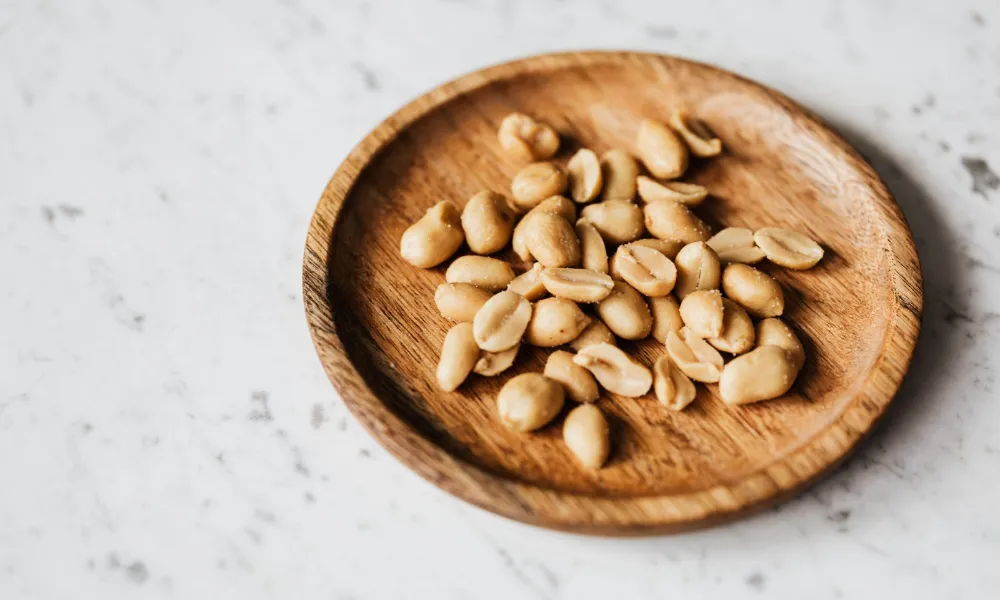

Eating peanuts every day may improve how memory-related areas of the brain respond to insulin in older adults, according to a recent scientific study. The researchers stress, however, that the findings do not show that peanuts prevent cognitive decline or dementia.
The study
The study, published in the journal Food & Function, was carried out by researchers at Maastricht University Medical Centre in the Netherlands. It set out to examine how regular peanut consumption affects the brain’s response to insulin as people age.
It involved 31 healthy adults aged 60 to 75. Participants ate 60 grams of roasted, unsalted peanuts with their skins every day for 16 weeks. The researchers then compared the results with a period in which the same participants did not eat peanuts.
How the brain responded
The results showed an improved response to insulin in areas of the right hemisphere of the brain, including parts of the hippocampus, the parahippocampal gyrus, the lingual gyrus and the posterior cingulate gyrus. These areas are involved in memory and other cognitive functions.
To measure this response, the researchers gave participants insulin through the nose. They then used a type of MRI scan based on arterial spin labelling, which tracks changes in blood flow to different regions of the brain.
Why insulin matters for the brain
Insulin plays a role in several brain processes linked to learning, memory and communication between nerve cells. As people age, the brain’s response to the hormone can become less effective, a change associated with age-related cognitive decline.
The researchers did not show that eating peanuts prevents cognitive decline or stops dementia from developing. What they observed were changes in how specific brain regions respond to insulin.
Building on earlier findings
The findings build on earlier research by the same team, using the same diet, published in the journal Clinical Nutrition in 2025. After the 16-week period, that study found a 3.6% increase in total blood flow to the brain and a 5.8% improvement in verbal memory.
What makes peanuts different
The researchers believe the nutritional make-up of peanuts may explain some of these effects. Peanuts contain unsaturated fats, fibre, vitamins, minerals, biologically active plant compounds and plant protein.
They are also a source of the amino acid L-arginine, which the body uses to produce nitric oxide. This compound helps regulate how blood vessels work and may in turn be linked to learning and memory.
Are peanuts enough to protect memory?
Further research is needed to establish how far the changes in the brain’s response to insulin translate into better memory and mental performance.
The experiment was limited to 31 people, and the indicators the researchers observed are not enough to say with certainty that peanuts offer protection against Alzheimer’s or other forms of dementia.
Studies with more participants and longer follow-up would help clarify the relationship and show whether any potential benefits last over time.
With information from Euronews