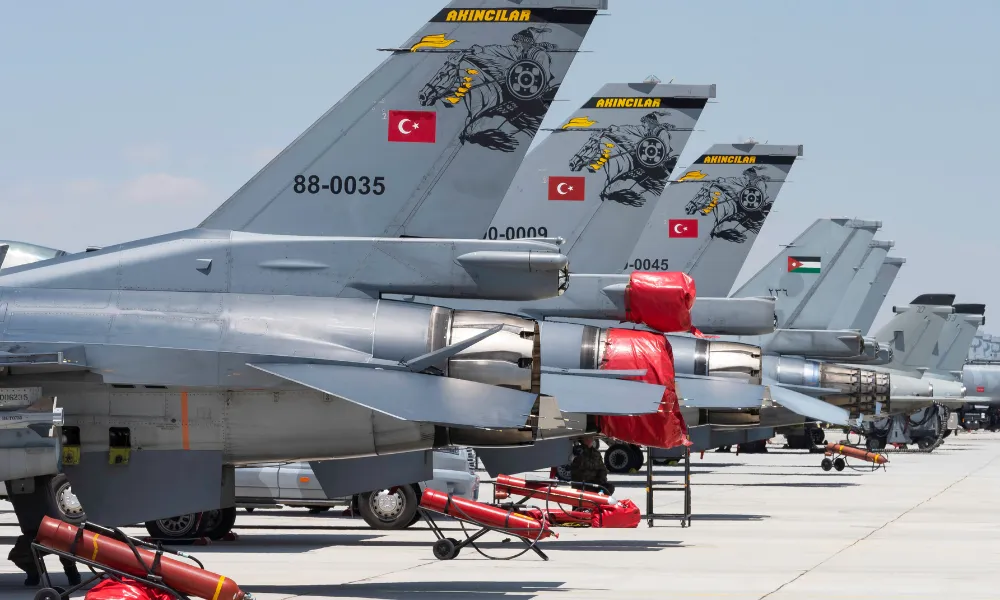
Cyprus is becoming an increasingly important front in the geopolitical contest unfolding in the Eastern Mediterranean, according to a new analysis by the Washington-based Foundation for Defense of Democracies, which argues that Turkey is adopting a more confrontational posture towards the Republic of Cyprus, Greece and European powers active in the region.
The analysis, published on June 9 by FDD senior fellow Sinan Ciddi, focuses on reports that aircraft carrying European defence ministers to Cyprus for an informal EU meeting in Nicosia were subjected to interference allegedly originating from Tymbou airport in the Turkish-occupied north.
According to Victor Papadopoulos, director of the President’s Press Office, the defence ministers of Greece, France and the Netherlands informed Cypriot authorities that they had experienced interference during their arrival in Cyprus. In the case of Greek Defence Minister Nikos Dendias, Papadopoulos said Turkish fighter jets were also detected near the route of his aircraft.
Ankara rejected the claims, saying Turkish aircraft were carrying out routine operational activity and remained within areas it considers to be under its control.
A wider security signal
The FDD analysis links the incident to the deepening defence cooperation between Cyprus and France, including a Status of Forces Agreement that sets the legal framework for the presence and activity of French military personnel in the Republic of Cyprus.
For Nicosia and Paris, the agreement strengthens operational cooperation and supports security and humanitarian activity in the Eastern Mediterranean. For Ankara, according to the FDD reading, it forms part of a broader alignment involving Cyprus, Greece, France and potentially Israel.
Ciddi argues that Turkey has also expanded its military footprint in the Turkish-occupied north since the escalation of conflict in the Middle East, including the deployment of F-16 fighter aircraft and additional air defence systems.
Ankara’s regional strategy
The FDD brief places the Cyprus incidents within what it describes as Turkey’s broader revisionist strategy in the Eastern Mediterranean.
Ciddi points to recent Turkish initiatives concerning claims over Greek islands and islets in the Aegean, Ankara’s positions on maritime zones and its continued challenges to Cypriot sovereignty as parts of a policy aimed at reshaping the regional order.
In this view, developments around Cyprus are no longer only a matter between Ankara, Athens and Nicosia. They also touch wider European Union and NATO interests in a region where energy routes, military access and crisis response capacity have become increasingly important.
Ahead of the NATO summit
The analysis comes weeks before a NATO summit expected to be hosted by Turkey in July, with allied leaders, including US President Donald Trump, due to attend.
FDD argues that the Alliance should send a clear message on respect for sovereign rights and internationally recognised borders in the Eastern Mediterranean, warning that Turkish pressure on Cyprus should not be treated as an isolated regional dispute.