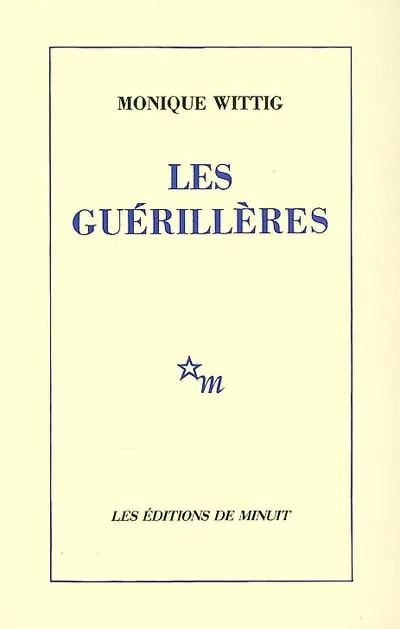
Wittig describes Les Guérillères as both an “epic poem” and a “collage of fragments,” drawing on multiple voices and narrative modes. Rather than following a linear storyline, the text unfolds as a series of discontinuous yet interconnected passages, combining poetic intensity with theoretical ambition.
At its centre is a symbolic war led by the “Guérillères” – women fighters who dismantle the structures of a world defined by patriarchy. Through this collective voice, Wittig transforms her radical critique of heteronormativity into a distinct literary form.
One of the book’s most striking features is its use of language. Wittig deliberately replaces the masculine pronoun with the feminine “they” to disrupt linguistic conventions and challenge the gendered hierarchies embedded in language itself. “They say” becomes a recurring refrain, signalling both a collective subject and a break from inherited modes of expression.
A vision of rupture
The world evoked in Les Guérillères is one that emerges from the ruins of the existing order. The text speaks of the need to sever ties with what it describes as a “dead culture,” articulating a vision of rupture rather than reform.
At once poetic and political, the book resists classification. Its experimental structure, rhetorical force and conceptual clarity position it as a foundational work within twentieth‑century feminist writing.