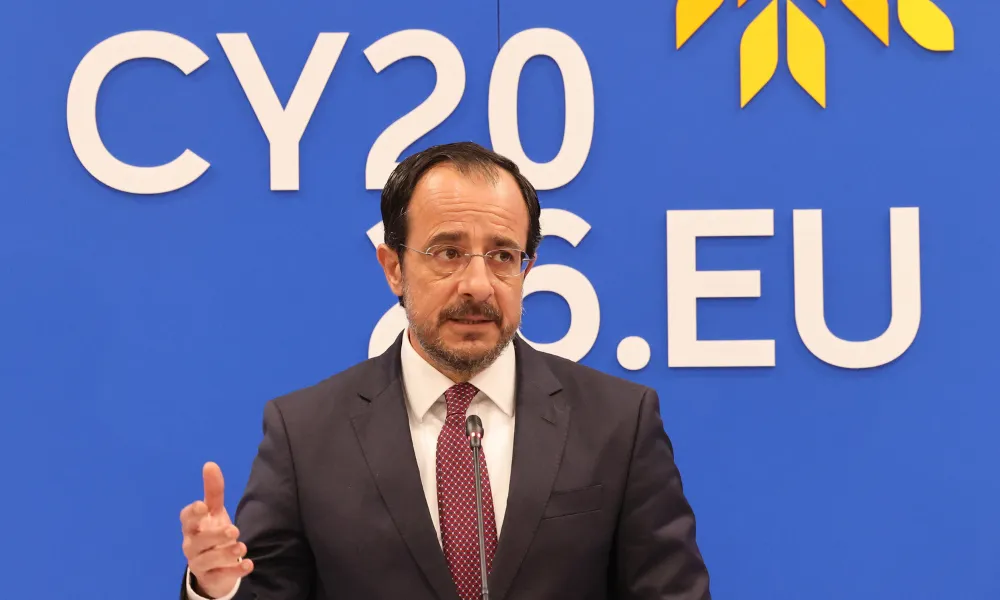

President Nikos Christodoulides has presented the government’s assessment of Cyprus’s Presidency of the Council of the European Union, describing the term as a successful test of the country’s ability to manage major European responsibilities.
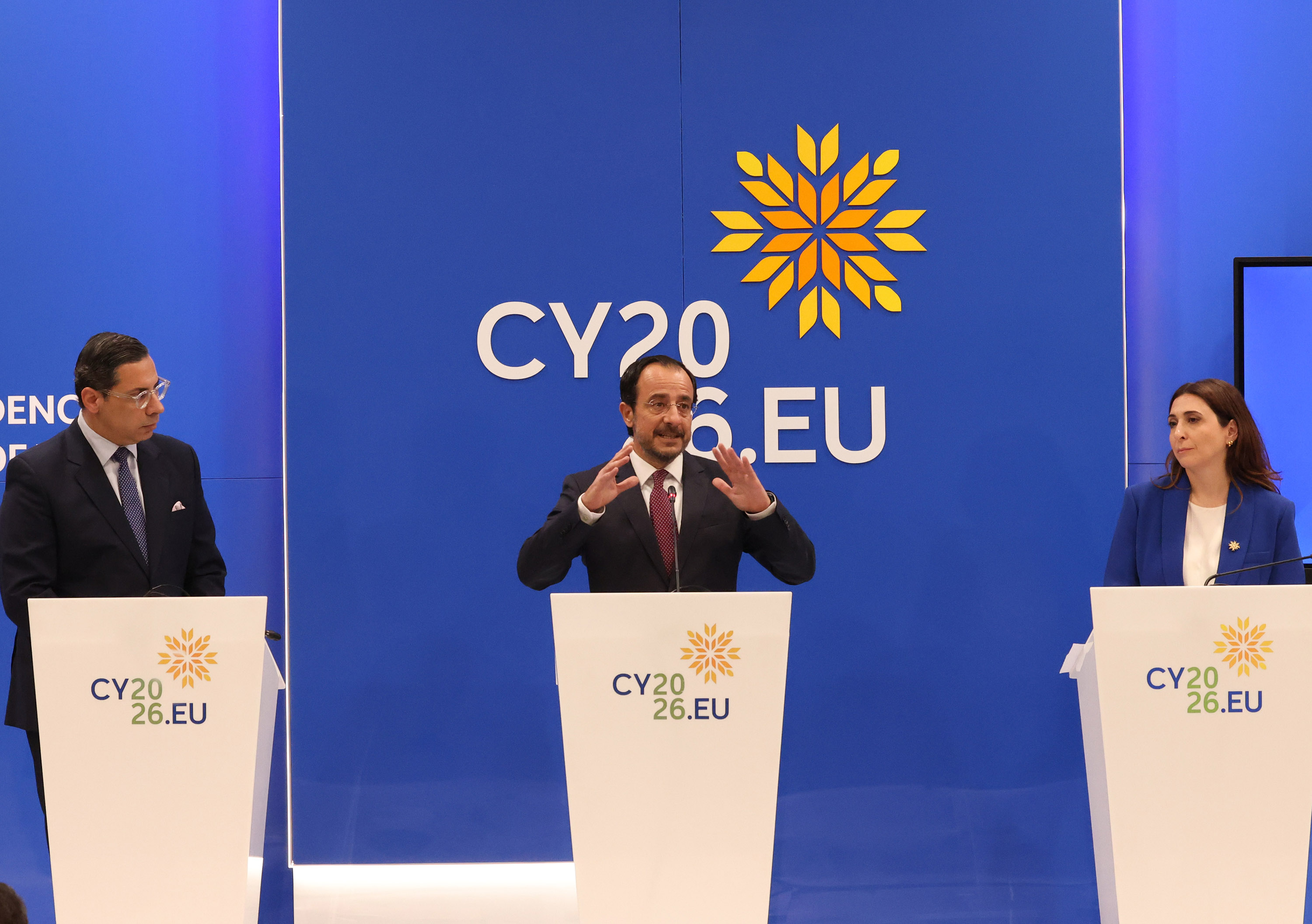
Speaking at a press conference on Wednesday, Christodoulides said the experience and political influence gained during the Presidency would now be incorporated into the state’s longer-term European policy.
A presidency shaped by international uncertainty
Cyprus assumed the rotating Presidency during a period marked by wars near Europe, wider geopolitical instability and growing pressure on the international trading system.
Christodoulides said the country had demonstrated that it could manage complex negotiations, build consensus among member states and contribute directly to decisions shaping the EU’s future.
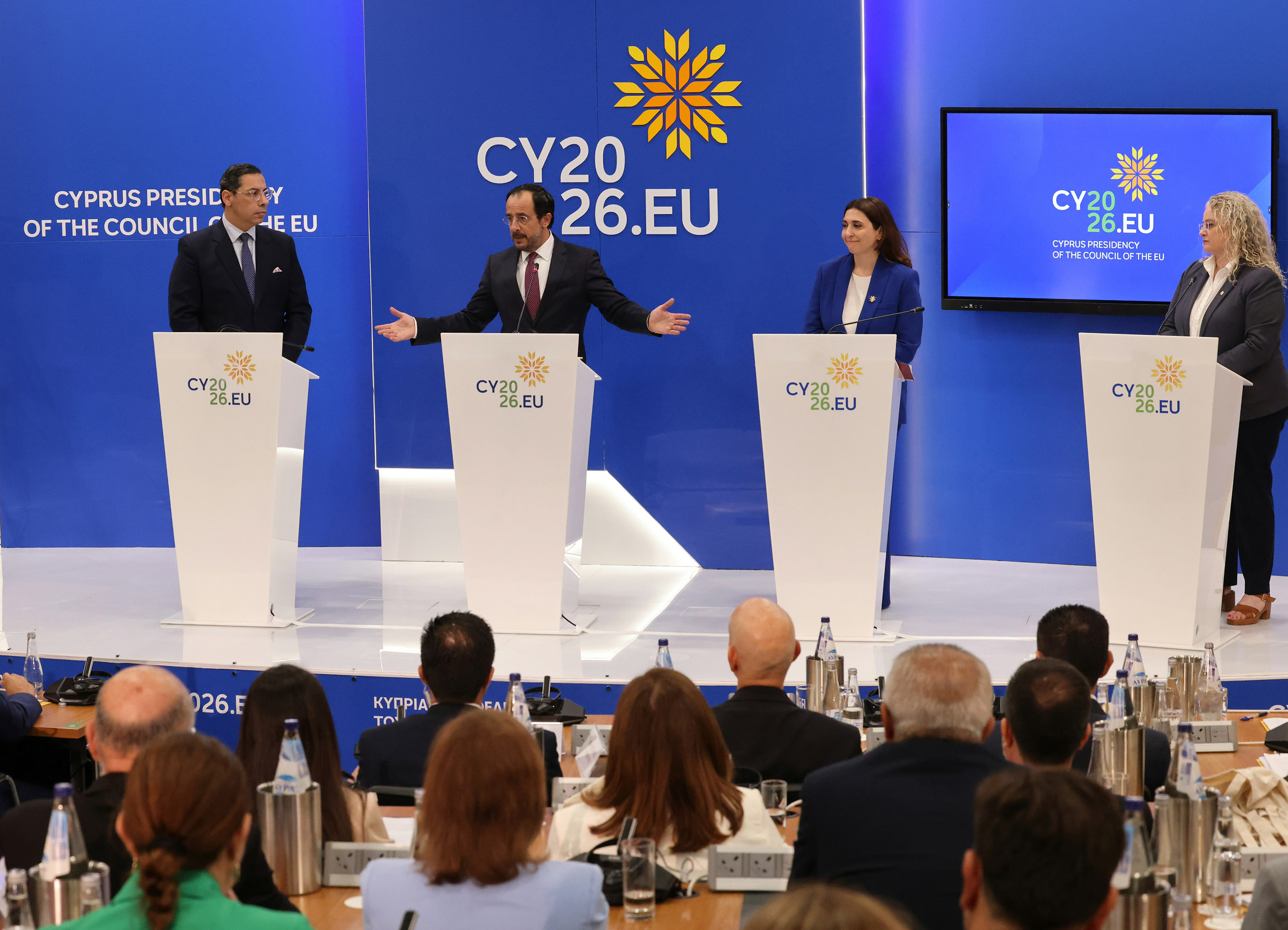
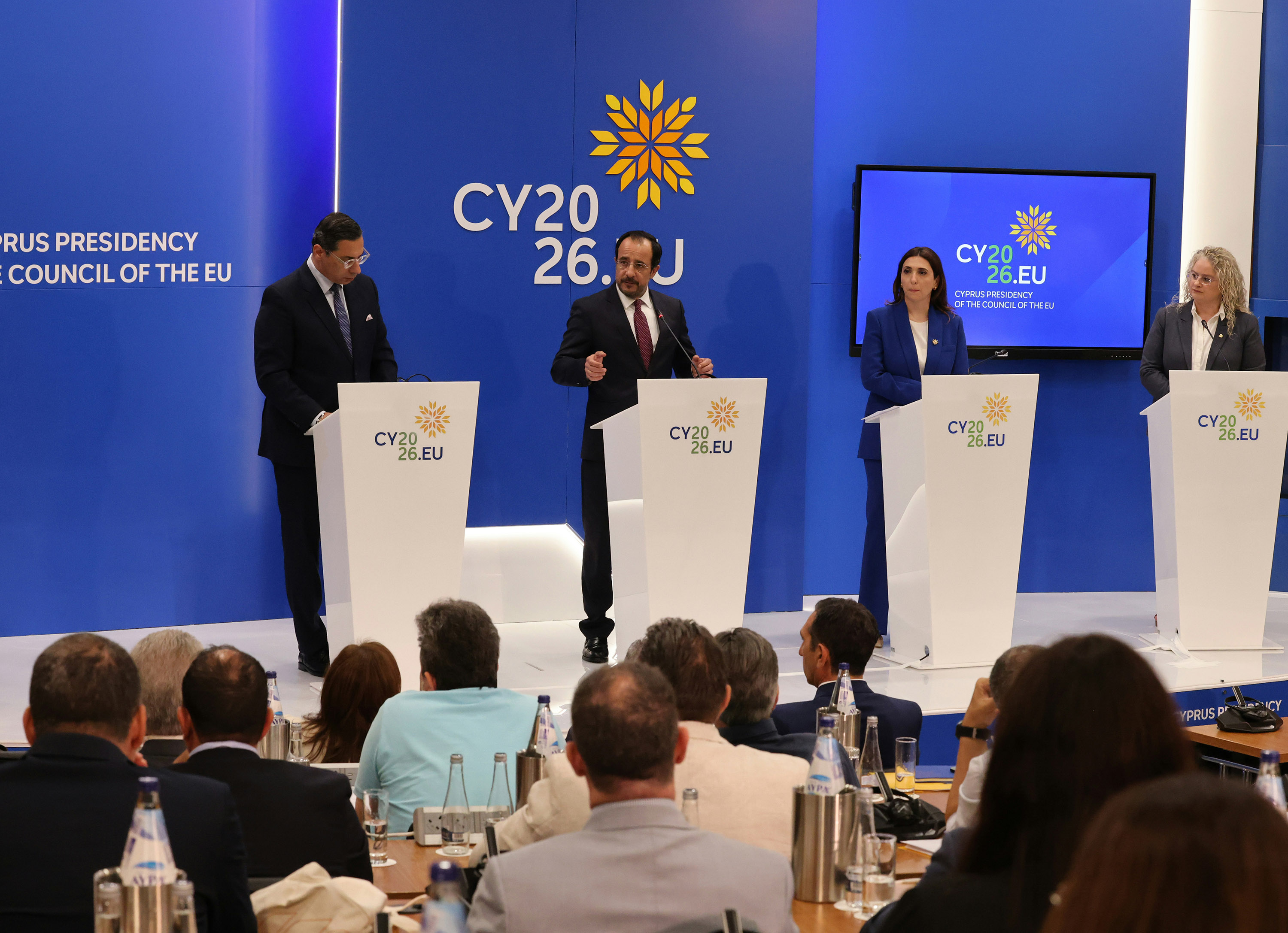
The press conference was also attended by Foreign Minister Constantinos Kombos and Deputy Minister for European Affairs Marilena Raouna. Raouna said the Presidency had produced “tangible, measurable and meaningful results” for Cyprus and the wider European Union.
The official Presidency programme focused on five broad areas, including security and defence, competitiveness, enlargement, citizens’ rights and preparations for the EU’s next long-term budget.
Progress on EU enlargement
The government identified enlargement as one of the most significant areas of progress.
During the Cypriot term, the EU opened the first negotiating cluster with Ukraine and Moldova, while Montenegro provisionally closed four chapters and work began on drafting its eventual Accession Treaty. Albania’s accession process also moved forward through a further intergovernmental conference and progress on the fundamentals cluster.
Cyprus also handled the opening phase of negotiations over the EU’s next Multiannual Financial Framework, submitting proposals intended to provide a basis for subsequent talks among member states.
Defence, migration and the single market
Security and defence formed another central part of the government’s account. Christodoulides pointed to progress on military mobility and efforts to lay the groundwork for the practical application of the EU’s mutual assistance clause.
The Presidency also advanced European defence-readiness legislation and negotiations on measures intended to make defence investment and cross-border military projects easier to implement.
On migration, Cyprus worked on the implementation of the EU Pact on Migration and Asylum, with an emphasis on more effective returns and closer cooperation with countries outside the bloc.
Economic priorities included reducing administrative burdens, encouraging investment and strengthening the single market. The government also promoted the “One Europe, One Market” roadmap, aimed at removing remaining obstacles faced by businesses operating across the EU.
Agreements affecting European citizens
Christodoulides highlighted an agreement on air passenger rights reached after 13 years of negotiations. The deal covers compensation and assistance in cases involving cancelled or heavily delayed flights, denied boarding and problems with passenger baggage.
The Presidency also secured progress on the Critical Medicines Act, which is intended to strengthen the availability and security of essential medicines, and on updated rules governing the coordination of national social security systems.
For the first time, the Council adopted conclusions devoted specifically to housing, addressing demographic changes and the development of housing policy across the bloc. Social priorities also included children’s welfare, social inclusion and measures against cyberviolence targeting girls.
Presidency structures to become permanent
Christodoulides said the end of the six-month term should not be viewed as the end of the government’s European effort, but as “the beginning of a new responsibility”.
He described the influence and institutional experience accumulated during the Presidency as a national asset that should now be used to advance Cyprus’s strategic objectives and produce practical benefits for citizens.
The government has decided to retain the European Affairs portfolio and transform the Presidency Secretariat into a permanent state structure, preserving the expertise and administrative networks developed during the six-month term.
Sources: Presidency of the Republic, Cyprus Presidency of the Council of the European Union, Euronews.