
By Marina Schiza, Politis correspondent in Strasbourg
The European Parliament has adopted a resolution recognising the serious and lasting impact of the 1974 Turkish invasion on Cypriot women and girls, including sexual violence, forced displacement, family separation and psychological trauma.
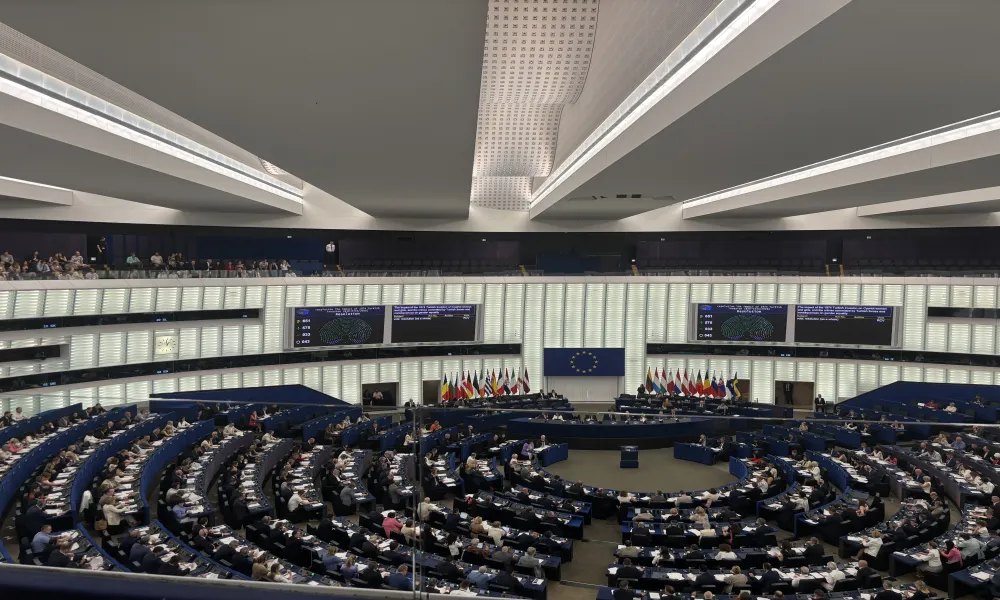
MEPs approved the text on Wednesday by 575 votes in favour, 33 against and 43 abstentions, giving it broad support across the plenary. The resolution calls for accountability, reparations and greater assistance for survivors and their families.
The vote followed work by the European Parliament’s Committee on Women’s Rights and Gender Equality, known as FEMM, and came 52 years after the Turkish invasion. Greek MEP Eleonora Meleti served as rapporteur.
The resolution states that Cypriot women and girls suffered grave human rights violations as a result of the invasion, including displacement, the loss of relatives, family separation, stigma and long-term social and economic harm.
It also condemns the use of sexual violence as a weapon of war, describing it as a grave breach of the Geneva Conventions. MEPs called for the experiences of survivors to be officially documented and preserved as part of Europe’s historical memory.
References to the invasion retained
The amendment process proved politically significant, with 16 amendments tabled by political groups and individual MEPs.
Some sought to remove or soften references to the Turkish invasion, replacing them with broader language referring to the “conflict” or the “events of 1974”. Those changes did not secure sufficient support.
The final text retained references to:
- the Turkish invasion of 1974;
- the continuing occupation of part of the Republic of Cyprus;
- crimes committed against women and girls;
- the use of rape and sexual violence as weapons of war;
- the need for accountability and an end to impunity.
The European Parliament also condemned Türkiye’s continuing occupation of Cyprus and called for the withdrawal of Turkish troops. It urged Ankara to lift restrictions on access to military areas and archives and to cooperate with international authorities and the Republic of Cyprus over enforced disappearances, conflict-related sexual violence and other serious violations of international law.
Support and reparations for survivors
The resolution recognises that many survivors of sexual violence did not speak publicly about their experiences because of fear, shame and social stigma.
MEPs called for comprehensive, victim-centred support, including trauma-informed counselling, psychosocial assistance and programmes addressing the impact of trauma across generations.
The text also calls for full and effective reparations, including compensation, and increased European Union support for the Committee on Missing Persons in Cyprus.
It further supports the proposed construction of a monument in Nicosia dedicated to women who suffered sexual violence and calls for formal recognition of survivors’ testimonies.
Women’s role in the peace process
The European Parliament called for the urgent resumption of United Nations-led negotiations on Cyprus and reaffirmed its support for a bicommunal, bizonal federation with political equality, in line with relevant UN Security Council resolutions.
The resolution stresses that Cypriot women must be able to participate fully and meaningfully in peace negotiations and future decision-making.
Following the vote, Meleti said the resolution ensured that the suffering and resilience of survivors would no longer remain unheard or invisible.
The vote represents one of the European Parliament’s clearest positions on the experiences of Cypriot women during and after the 1974 invasion, linking recognition of the crimes committed with demands for accountability, survivor support and the preservation of historical evidence.