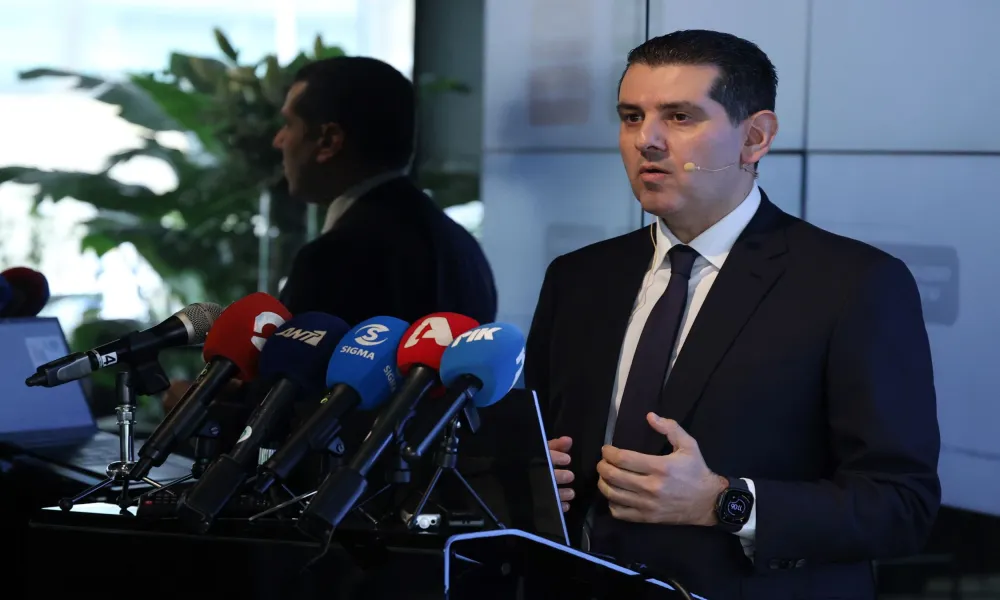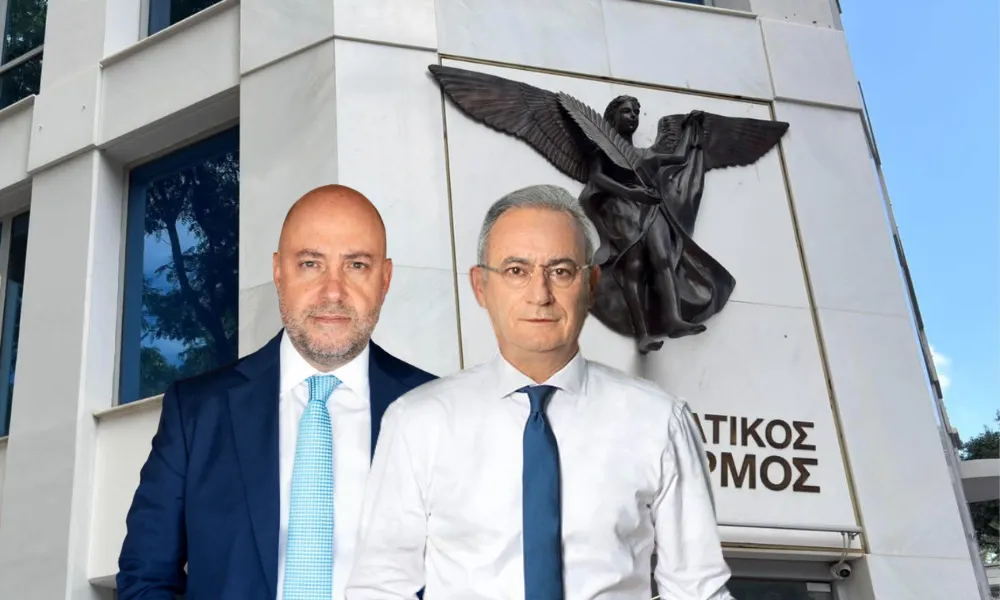

The picture within DISY is beginning to clear after a week of dramatic developments, with the contest for the party's nomination ahead of the 2028 presidential election increasingly crystallising into a head-to-head battle between Averof Neophytou and George Pamporidis.
MEP Loukas Fourlas formally ruled himself out of the race on Monday, while parliamentary spokesman Demetris Demetriou has also confirmed he will not seek the nomination. As a result, speculation about a third candidate, which dominated internal discussions until recently, is fading.
The emerging two-way race is already prompting the formation of rival camps. Party headquarters is attempting to contain tensions, urging members to avoid personal attacks and unfounded speculation. In a statement issued on Monday, DISY reminded members that all contenders had pledged to respect the verdict of party members and called for an end to "scenarios, petty comments and personal barbs".
Demetris Demetriou, who acknowledged mistakes in the party leadership's handling of events, including by himself, is expected to ask MPs not to publicly endorse any candidate. In practice, however, several party figures have already begun taking sides, and DISY sources expect tensions to intensify in the weeks leading up to the 28 November vote.
Neophytou's machine and the "solution" narrative
Many within the party continue to view Averof Neophytou as the early favourite.
Having led DISY for a decade, he possesses a deep understanding of the party organisation and maintains extensive networks, particularly in the districts. He continues to make regular visits to community groups, organisations and local associations, especially in Paphos.
In an internal election decided by party members rather than the wider electorate, those personal networks could prove decisive.
Politically, Neophytou is placing the Cyprus problem at the centre of his campaign. He presents his candidacy as the candidacy of a settlement, contrasting himself with those whom he portrays as managers of the status quo.
According to political scientist Giannos Katsourides, that narrative allows Neophytou to appeal beyond the party's traditional base.
However, the main challenge facing him remains the manner in which he returned to the race.
The prolonged uncertainty over whether he would contest the nomination through or outside party procedures, coupled with last Thursday's meeting attended by Alithia publisher Frixos Koullermos, which preceded Annita Demetriou's withdrawal, has generated dissatisfaction among sections of the party.
The criticism extends beyond his traditional opponents and includes individuals who supported him during the 2023 presidential election.
The memory of that election, when DISY's official candidate failed to reach the second round, remains one of the main arguments cited by those reluctant to back his candidacy again.
Pamporidis as the outsider candidate
George Pamporidis is building his campaign around a very different image.
A DISY member since 1981 and health minister between 2015 and 2018, Pamporidis presents himself as a party loyalist who is not a career politician.
In 2019 he distanced himself from DISY, criticising what he described as a drift towards the far right and expressing disagreement with the party leadership's direction.
He returned to active party politics last year, saying he wanted to help reverse what he viewed as DISY's decline.
In the May parliamentary elections, his first personal electoral campaign, he secured 12,040 preference votes in Nicosia, the second-highest tally nationwide behind only Demetriou.
Throughout that period he openly criticised the party's internal direction, arguing that DISY should not fear opposition politics.
Only days before launching his candidacy, he described the situation within the party as an "operetta" and blamed the leadership for the turmoil.
Following Demetriou's withdrawal, however, his tone softened considerably.
Appearing on CyBC on Friday, Pamporidis said the party leader had proven herself "more ethical than all of us" and argued that her victory would have been "almost certain".
He also recounted a conversation in which Koullermos advised him to step aside if he wished to have a political future.
Speaking again on the broadcaster on Monday, Pamporidis insisted that no blackmail had taken place.
Critics view the shift in rhetoric as an effort to court Demetriou's supporters, whose backing may prove essential to his prospects.
Early endorsements appear to support that interpretation.
Michalis Ioannides, a close associate of Demetriou, publicly backed Pamporidis in an interview with Kathimerini. According to Politis sources, former foreign minister Ioannis Kasoulides is also expected to support his candidacy.
The key question, however, is whether momentum generated largely in Nicosia can be translated into support across the island among party members in all districts.
An early test will be securing the 500 signatures required by 26 October to formally enter the contest, a target Pamporidis acknowledged on Monday he has not yet reached.
A fluid political landscape
Although the two camps are consolidating and seeking allies, the internal dynamics of the party remain fluid.
Demetriou's supporters are not moving as a single bloc, while DISY members aligned with President Nikos Christodoulides represent a separate and potentially influential factor.
Lingering dissatisfaction over the events that preceded Demetriou's withdrawal may ultimately carry more weight than repeated calls for unity.
Neophytou enters the race with the advantage of a well-established party machine, while Pamporidis benefits from the momentum generated by recent developments.
Which factor proves more influential will become clearer over the six weeks remaining before party members go to the polls.