The National Trust for Historic Preservation released the list on Wednesday, giving it added political weight as the United States prepares to mark 250 years since its founding. The organisation said it selected sites connected to the promise of the Declaration of Independence that all people “are created equal.”
The list highlights locations tied to struggles for equality, including places of worship that served as community refuges, as well as sites representing Black history, Indigenous heritage, the Japanese American experience and LGBTQ+ rights.
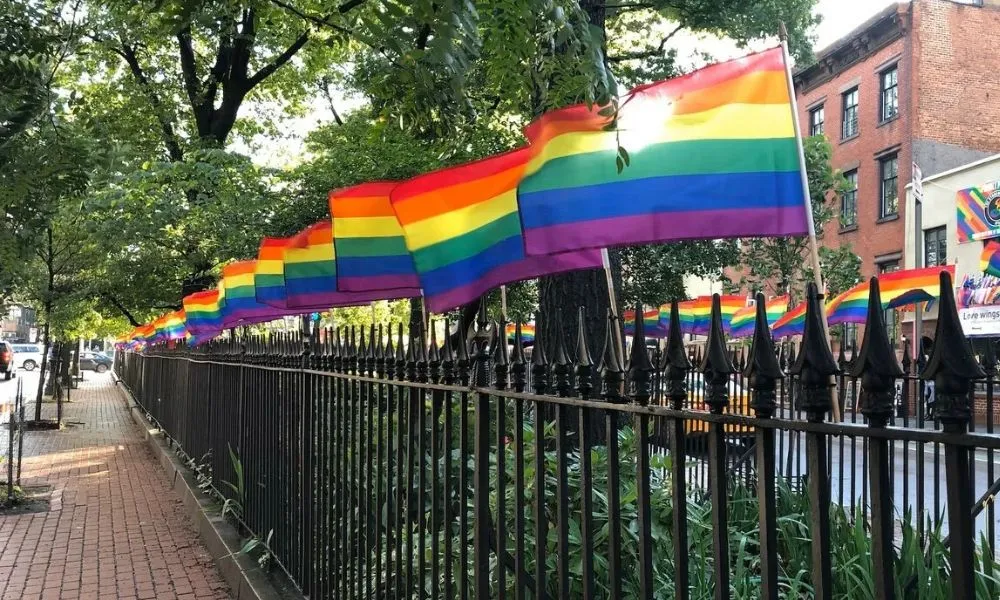
The Stonewall National Monument, located in Christopher Park opposite the historic Stonewall Inn, commemorates the 1969 uprising, widely regarded as a defining moment in the modern LGBTQ+ rights movement.
In this case, the threat does not involve the demolition of a building. Instead, it centres on how the US government presents LGBTQ+ history.
The National Trust points to federal actions and policy changes that, it says, risk undermining the monument’s accurate public interpretation, community representation and educational role.
The issue has gained attention in recent months following the removal of references to transgender people from federal material related to the history of Stonewall. Advocacy groups and historians argue that the 1969 uprising cannot be fully understood without acknowledging the role of transgender and gender non-conforming individuals.
The list also includes the President’s House Site in Philadelphia, the archaeological remains of the presidential residence from 1790 to 1800. Panels referring to the history of slavery and the nine people enslaved by George Washington were removed earlier this year. While several have since been reinstated following a legal challenge, the broader debate over historical interpretation continues.
Another site named is the Greater Chaco Cultural Landscape, spanning parts of New Mexico, Colorado, Arizona and Utah. The area, linked to ancestral Pueblo and Hopi lands, faces pressure from potential changes to protections against oil and gas extraction.
In California, the Tule Lake Segregation Center recalls the incarceration of Japanese Americans during the Second World War. In Texas, El Corazón Sagrado de la Iglesia de Jesús, a church built in 1915 for Mexican and Mexican-American farm workers on both sides of the border, faces threats from plans to expand the border wall.
The nature of the risks varies across sites. In some cases, concerns relate to federal policy and historical interpretation, while in others they stem from development pressures, neglect, deterioration or lack of funding.
Carol Quillen, president and chief executive of the National Trust, said that as Americans prepare to mark the country’s 250th anniversary, important historic places remain at risk, some from “deliberate erasure,” others from short-sighted development or abandonment.
The National Trust established its endangered sites list in 1988 and has since highlighted more than 350 locations nationwide. This year, each of the 11 sites will receive a one-off grant of 25,000 dollars to support preservation, documentation and public awareness.
For Stonewall, however, the stakes go beyond conservation. The issue centres on public memory, who is included in the history of a movement, and who risks being written out of it.