The US president, Donald Trump, described the negotiations as “largely complete,” raising hopes of de-escalation in a conflict with global repercussions. He also confirmed a fresh conversation with Israeli Prime Minister Benjamin Netanyahu, which he said “went very well.”
Conflicting signals
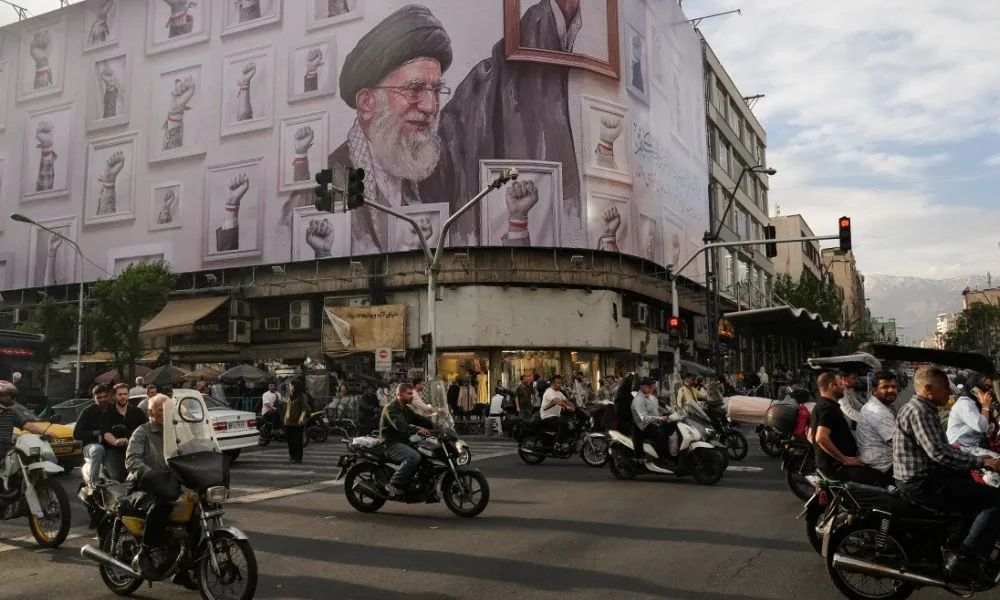
Despite the optimistic tone from Washington about a possible “memorandum of understanding,” Tehran continues to raise key objections, particularly over sovereignty in the Strait of Hormuz, Iran’s nuclear programme and regional tensions involving Iran-backed groups in Lebanon.
These conflicting statements highlight the challenges that remain in the talks.
US Secretary of State Marco Rubio struck an optimistic note, saying, “I believe we will have good news in the coming hours.” However, Iran’s Tasnim news agency, citing an Iranian source, warned that “if the US continues to create obstacles, there will be no possibility of reaching a final memorandum of agreement.”
The same source added that disagreements persist over one or two clauses, stressing that negotiations remain at a critical stage and that a final agreement is not yet guaranteed.
The key sticking points
A central issue in the negotiations is the Strait of Hormuz, a vital global energy route linking the Persian Gulf with the Arabian Sea. Before the recent escalation, about 20% of global oil and liquefied natural gas passed through the strait.
Iran asserts sovereignty over the waterway, noting that it lies within its territorial waters as well as those of Oman, and has proposed introducing transit fees. The United States, by contrast, demands full freedom of navigation.
Another major point of contention concerns Iran’s nuclear programme, specifically its stockpile of enriched uranium.
The US and Israel are calling for a full halt to enrichment, arguing that Iran may be seeking to develop nuclear weapons. Iran insists its programme is for civilian purposes.
On Sunday, Iranian President Masoud Pezeshkian said Tehran is ready to reassure “the world that the country does not seek to acquire nuclear weapons.”
International media report that a final agreement will depend largely on whether both sides can bridge these differences.
How realistic is an end?
The proposed memorandum currently includes no major concessions from either side and is viewed by experts as an initial signal of intent rather than a binding settlement.
Trita Parsi, co-founder of the Quincy Institute, told Al Jazeera that the real test will come in the coming weeks, particularly regarding a final agreement on the nuclear issue.
Despite the limited substance so far, he said the framework reflects “a sincere willingness for mutual engagement.”
At the same time, academic Setareh Sadeghi of the University of Tehran said the talks send a clear message that there is regional appetite for agreement and peace, although she noted that the message has at times been contradictory.
She described the challenge facing Donald Trump as whether he can push forward a deal that may conflict with the strategic priorities and concerns of Israel.
Overall, while the current framework is not a full solution, analysts view it as a positive step towards a broader and more durable diplomatic settlement between Iran and the United States.
“No deal on uranium”
Separately, a senior Iranian source told Reuters that Tehran has not agreed to hand over its stockpile of highly enriched uranium. The source added that Iran’s nuclear programme is not included in the preliminary understanding with the United States.