


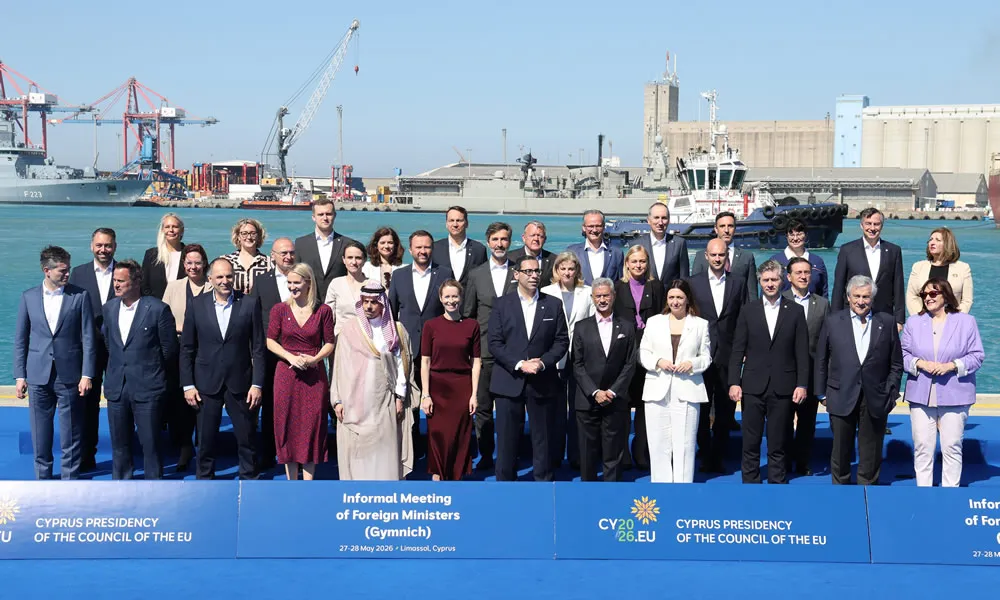

EU foreign ministers gathered at Limassol Port on Thursday, joined by their Indian and Saudi Arabian counterparts, to discuss the Middle East, maritime security, supply chains, trade routes and Russia’s war with Ukraine.
Ministers held an informal dialogue on key issues at a critical moment of conflict in Europe and the Gulf, with implications for Europe’s security architecture, transatlantic relations and global commerce.
Foreign Minister Constantinos Kombos and EU foreign policy chief Kaja Kallas co-hosted the bi-annual ‘Gymnich’ meeting, named after the German castle where the first such gathering took place in 1974.
On Cyprus’ initiative, Indian External Affairs Minister Subrahmanyam Jaishankar and Saudi FM Prince Faisal bin Farhan joined the discussions, designed to take place in an open and frank atmosphere. Saudi Arabia is a major exporter of energy products and fertiliser and a leading Gulf power, while India is a global player maintaining ties with major actors in an emerging multipolar world.
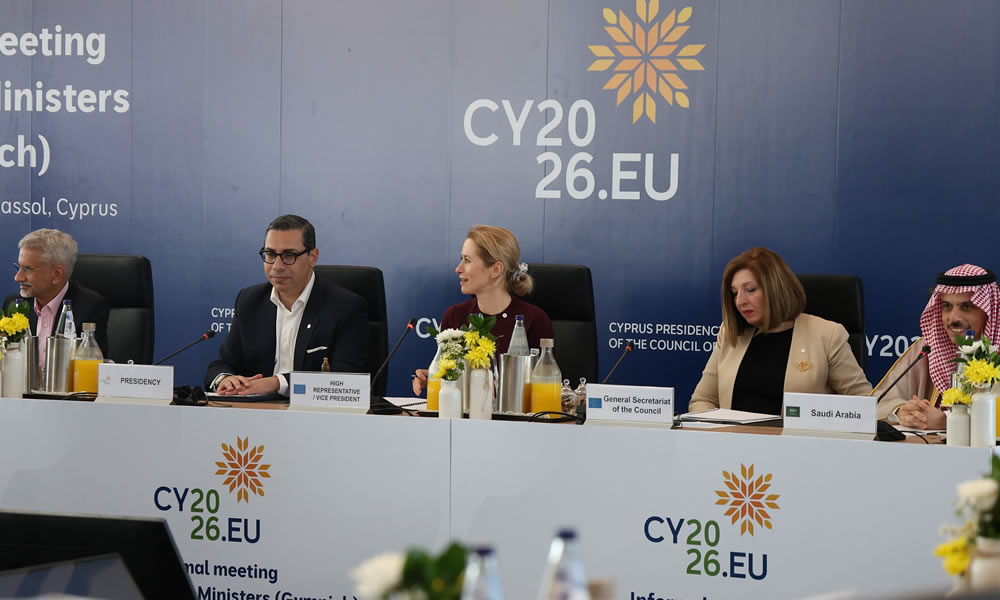
Sources said India’s regional interest centres on maritime security, supply chains, trade and projects such as the India–Middle East–Europe Economic Corridor (IMEC). Ukrainian Foreign Minister Andrii Sybiha attended the welcoming dinner and met separately with Jaishankar.
Kombos said the aim was to provide “the strategic compass” for EU foreign policy.
Ahead of the meeting, President Volodymyr Zelenskyy urged Europe to take part in negotiations with Russia, fuelling reports of divisions within the EU over re-engagement with Moscow. Some favour maintaining sanctions and isolation. Speculation also arose over representation at negotiations, with Moscow suggesting former German chancellor Gerhard Schröder – an idea rejected by Kallas, who said he would be "sitting on both sides of the table".
‘Eye opening’
Kallas described talks with India and Saudi Arabia as “eye opening” in exploring joint responses to Middle East challenges.
On the Strait of Hormuz, she said it remained in a “dangerous grey zone” between “war and peace”. The priority is reopening the strait, followed by discussions on nuclear issues and regional security. The EU can contribute technical expertise on nuclear talks and expand the ‘Aspides’ naval mission to escort ships, though more vessels are needed. How this would align with a parallel UK-France initiative remains unclear.
On Lebanon, Kallas warned the ceasefire was becoming increasingly ‘nominal’, with risks of renewed war. Possible sanctions against Israeli ministers were also discussed and will be revisited, she said.
Russian troops out of Europe
On Ukraine, Kallas said Russia was on the backfoot militarily and diplomatically. Ministers examined a paper tabled by Kallas in February, outlining EU demands for any negotiations: an unconditional ceasefire; an end to sabotage, cyber activity and airspace violations; no recognition of occupied territory; accountability; compensation; and withdrawal of Russian troops from Georgia and Moldova.
Europe has valid demands to ensure lasting peace, she said. On the US role, Kallas stressed EU efforts would complement Washington’s: “We are not coming in instead of the US but addressing issues they haven’t been addressing in these talks.”
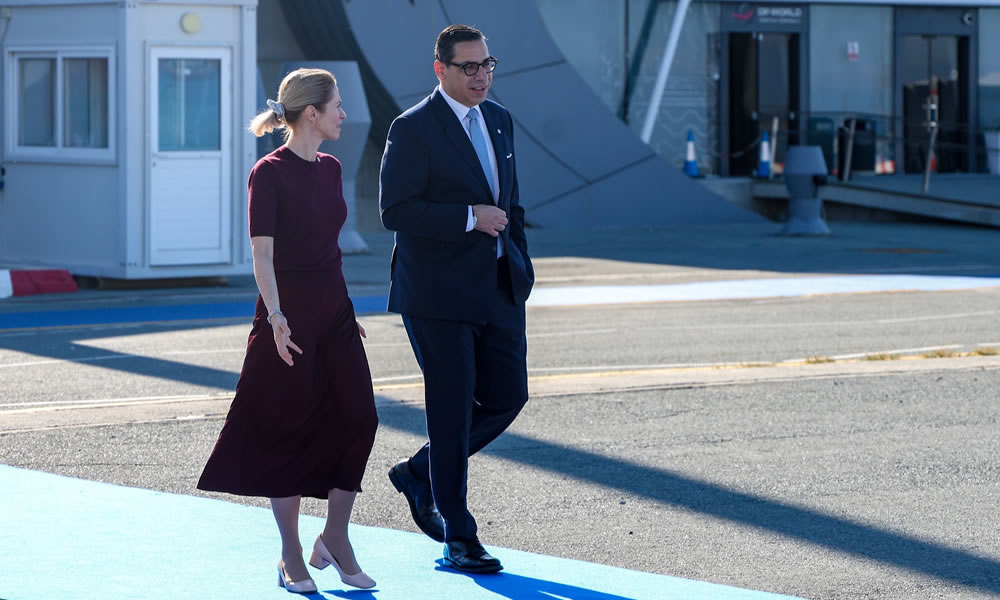
Kombos said ministers discussed guiding principles for the EU position, describing Kallas’ document as “dynamic” and subject to updates until negotiations begin alongside Ukraine. “We’re not there yet,” he noted.
Closer to home, Kombos also raised the need to address high insurance premiums in a post-war scenario if the Strait of Hormuz reopens, warning costs will remain too high for shipping even after hostilities subside.
According to EU diplomatic sources, many of the issues discussed were interlinked, requiring a collective, strategic and comprehensive approach. Talks on the Strait of Hormuz, the nuclear issue and new security arrangements for the Gulf were unlikely to be conclusive and long-lasting, meaning these issues would come up again, they noted.


