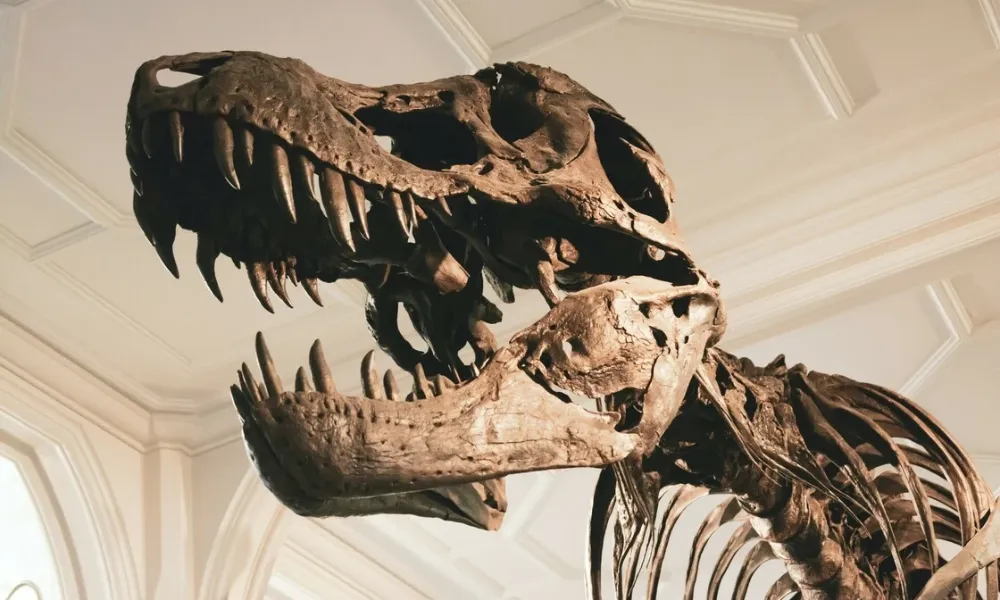

A handbag unlike any other luxury accessory is going under the hammer in Paris, with its creators presenting it as the first object of its kind made from lab-grown material connected to Tyrannosaurus rex fossils.
The teal-coloured bag has been valued at between €300,000 and €500,000, placing it firmly in the world of high-end collecting. Yet its appeal rests less on traditional craftsmanship than on the story behind it: a blend of fossil science, genetic engineering and experimental leather production.
The object was first shown in Amsterdam in April, where it was displayed at the Art Zoo museum beneath a replica of a T-Rex. After that public presentation, it moved towards auction as a rare test case for how far biotechnology can be pushed into the luxury market.
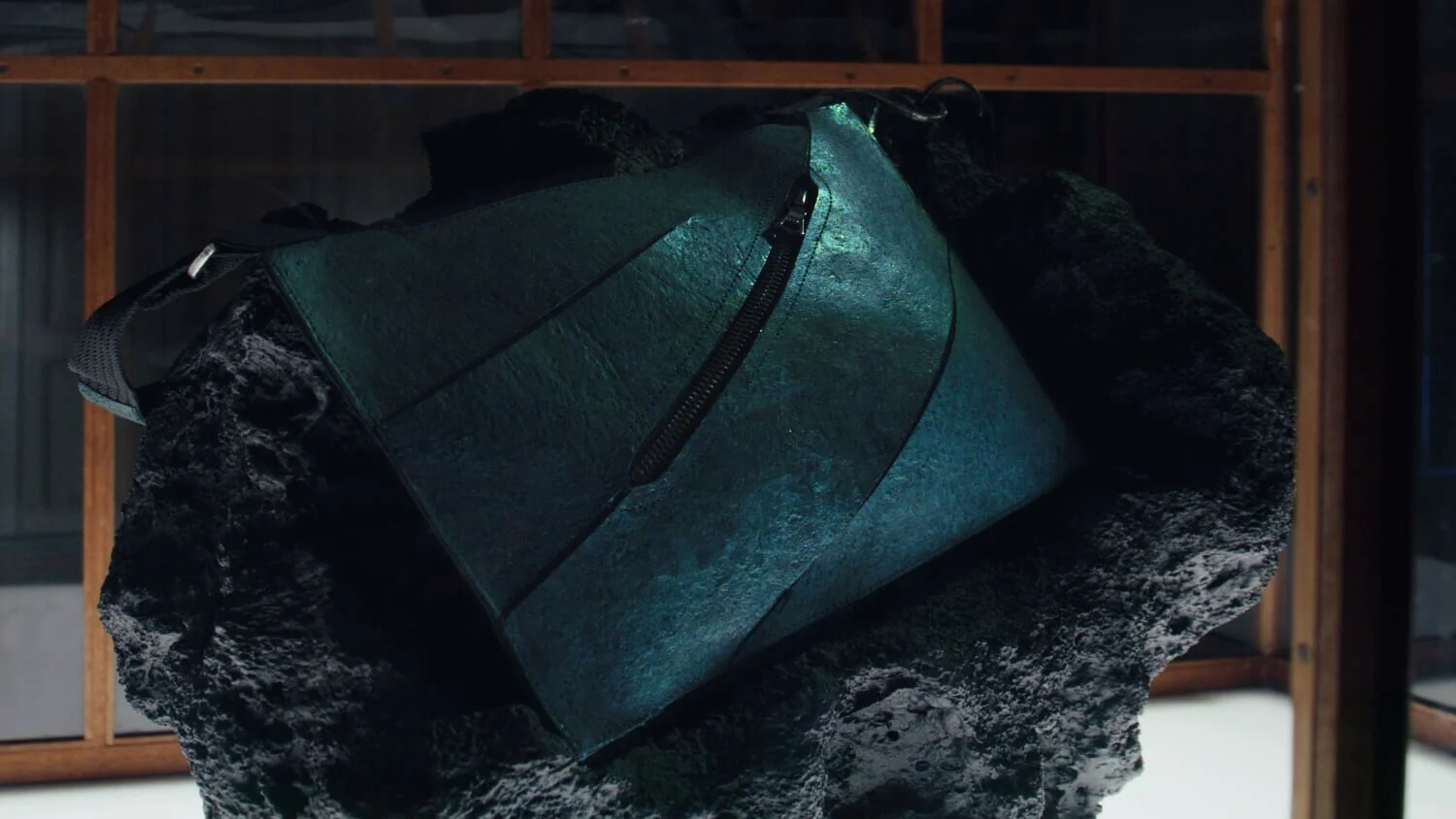
The project was developed by The Organoid Company, VML and Lab-Grown Leather Ltd. According to those involved, the material was produced using protein fragments associated with dinosaur fossils from the United States. These were used in a laboratory process designed to generate collagen, which was then turned into a leather-like material for the handbag.
Thomas Mitchell, chief executive of The Organoid Company, has described the process as technically difficult, but the group sees the experiment as more than a novelty. The same company and VML previously attracted attention with a lab-grown meatball inspired by woolly mammoth DNA, placing the handbag within a wider attempt to use extinct species as a starting point for futuristic materials.
Supporters of the project argue that lab-grown leather could eventually offer luxury brands a way to create premium materials without relying on livestock. They also say it differs from many products marketed as vegan leather, which are often made with synthetic or plastic-based components rather than grown from cells.
Che Connon, chief executive of Lab-Grown Leather Ltd, has said the dinosaur connection gives the bag an added sense of spectacle. For him, the point is not only sustainability, but the idea that laboratory-grown leather could become a material upgrade rather than a substitute.
The claim has also drawn caution from palaeontologists.
Some experts argue that calling the material “T-Rex leather” risks overstating what the science can prove. Collagen traces can survive in dinosaur bones only in incomplete fragments, meaning they cannot recreate the skin or hide of the animal. Others have pointed out that the collagen identified in T-Rex fossils comes from bone, not skin, and that leather depends not only on proteins but on the complex fibre structure found in animal hide.
Mitchell has acknowledged the criticism, but says it is part of attempting something new. He argues that the handbag may be the closest anyone is likely to come to producing a material with a genuine link to T-Rex.
That tension between scientific ambition and scientific caution may be exactly what makes the bag so valuable. With no obvious precedent and no comparable product on the market, the auction estimate reflects rarity, research cost and the theatre of owning an object that connects prehistoric life with modern luxury.
Whether buyers see it as a breakthrough, a curiosity or a provocation, the handbag has already achieved what many luxury items try to do: it has become impossible to ignore.
With information from AMNA, Reuters