
US President Donald Trump said on Wednesday that Iran desperately wants to reach an agreement with the United States, while US armed forces continue successive waves of attacks against Iranian targets.
Speaking to a Fox Business reporter on the sidelines of an event in Pennsylvania, Trump said Tehran had expressed a willingness to meet. "We received a phone call as I was coming here. They want a meeting," he said.
Later, speaking at the same event, he repeated his position while leaving open the possibility of escalation: "They don't like what we're doing and they want to make a deal. We'll see whether we make a deal or just finish it."
According to a Reuters report citing three sources with knowledge of the discussions, Tehran has already asked the Houthis in Yemen to prepare for the possible closure of the Red Sea in the event that the United States strikes Iranian energy infrastructure.
A delegation from the Islamic Revolutionary Guard Corps (IRGC) is already in Yemen, while the Houthis have deployed missiles and drones near the Bab el-Mandeb Strait, awaiting the relevant order.
Threat to energy
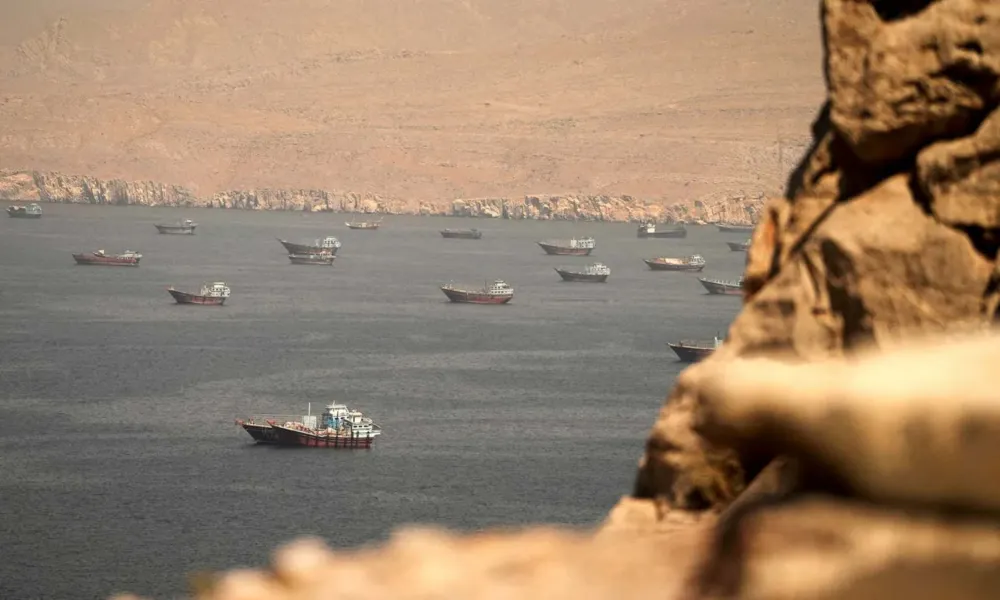
The prospect carries particular significance as the Strait of Hormuz has remained closed since 28 February, when Israel and the United States first launched attacks against Iran.
A simultaneous disruption of shipping through the Red Sea would render unusable the Middle East's two principal oil export routes, dramatically intensifying an energy crisis that has already been triggered by the collapse of the fragile June ceasefire between Tehran and Washington.
Tensions in the region deteriorated further when the Houthis launched missiles at Saudi Arabia, accusing the kingdom of bombing an airport under their control on Monday, thereby breaking a four-year truce with Riyadh.
Oil markets reacted immediately to the developments, with Brent crude futures rising by 1.09% to $85.88 per barrel, while US crude gained 1.12% to $80.49 per barrel.
Analysts warn that simultaneous disruptions in the Strait of Hormuz and the Bab el-Mandeb Strait would drastically reduce tanker availability and send maritime risk insurance premiums soaring, with serious consequences for the global energy supply chain.
Iran considers the Houthis part of the so-called Axis of Resistance, which also includes Lebanon's Hezbollah and Shiite armed groups in Iraq, although the Yemeni rebels have not yet officially entered the conflict.
The United States accuses Tehran of providing the Houthis with weapons, funding and training, an allegation Iran consistently denies.
According to a source close to the Iranian regime, Tehran's strategy is aimed at increasing the cost of any potential US escalation for the global economy, a pressure tactic regarded as characteristic of the "Iranian way of thinking" in dealing with Washington.
The question, as suggested by Trump's own ambiguous wording, remains whether the two sides will ultimately succeed in reaching a negotiated settlement or whether the crisis will slide into open military confrontation, with unpredictable consequences for the global energy market.