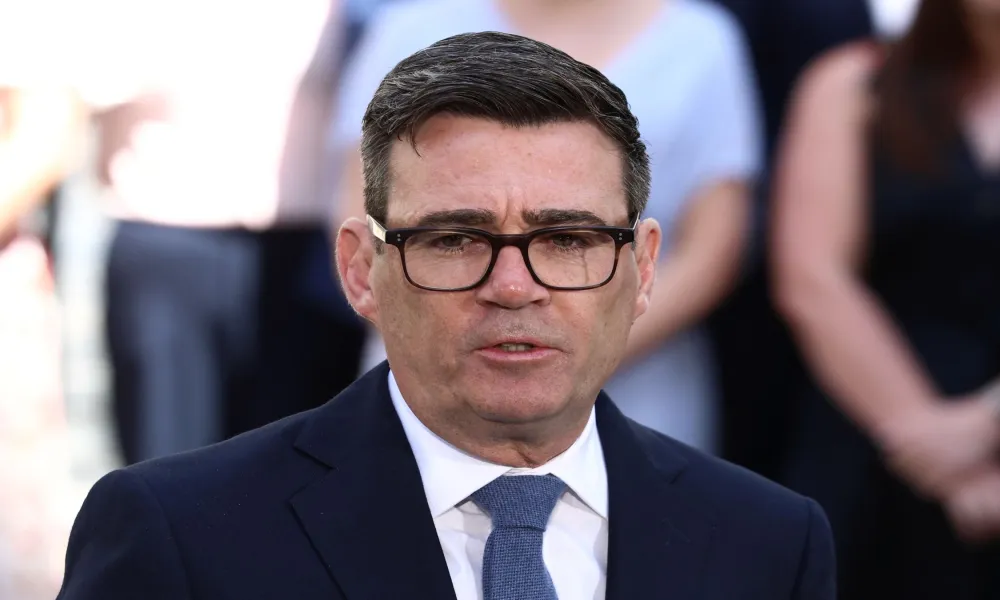

European leaders have lined up to welcome Andy Burnham as Britain's seventh prime minister since the Brexit referendum, expressing hope that the improvement in UK-EU relations initiated under Keir Starmer will continue during his tenure.
European Commission President Ursula von der Leyen said she looked forward to strengthening ties across the Channel, adding that an initial discussion had confirmed a shared commitment to an increasingly close EU-UK relationship.
French President Emmanuel Macron said he hoped for a deeper partnership that would inject fresh momentum into relations between the European Union and the United Kingdom, while German Chancellor Friedrich Merz said he also looked forward to forging even closer ties.
A pro-European instinct
While little is known about what Burnham's foreign policy might look like, political analysts note that his priorities are largely domestic.
However, Burnham is known for his pro-European instincts. He opposed what he described as the "isolationism" of Brexit in 2016 and last year said he hoped Britain could rejoin the European Union during his lifetime.
More recently, campaigning in a constituency estimated to have voted 65% in favour of leaving the EU, Burnham struck a more cautious tone.
"Brexit was disastrous," he said, while adding: "I also believe the last thing we should do now is reopen those arguments."
His stated aim is to unite the country rather than deepen divisions, and he has not proposed reopening the question of EU membership.
Economic priorities may align with Brussels
According to The Guardian, Burnham appears to recognise that Britain's economic stagnation, falling relative living standards and underlying social discontent are linked, at least in part, to the impact Brexit has had on trade and investment.
While Starmer's approach focused heavily on security cooperation and reducing post-Brexit trade barriers, Burnham's emphasis on industrial development, regional growth and economic sovereignty could ultimately bring the UK closer to the EU.
His ambition to reduce Britain's dependence on foreign-owned data centres and US-centric technology policies is also seen as broadly aligned with Brussels' efforts to strengthen Europe's technological autonomy.
That could create opportunities for practical UK-EU cooperation in areas such as critical minerals and cloud computing infrastructure.
New agreements expected
Anthony Dworkin, a senior policy fellow at the European Council on Foreign Relations (ECFR), argues that Burnham is likely to base foreign policy more closely on local economic realities than his predecessor.
In the short term, he expects the new government to focus on completing three pending UK-EU agreements expected later this autumn.
The agreements are expected to cover:
- Reducing bureaucracy and certification requirements for fresh food products.
- Linking emissions trading systems.
- A mobility scheme allowing people aged 18 to 30 to study and work in both the EU and the UK.
Quiet alignment
The Guardian concludes that Burnham's industrial and economic objectives largely overlap with EU policy priorities.
Rather than pursuing closer ties through grand political declarations, the newspaper argues, Burnham could strengthen the UK-EU partnership by quietly aligning Britain with many of the European Union's strategic goals.
Source: The Guardian