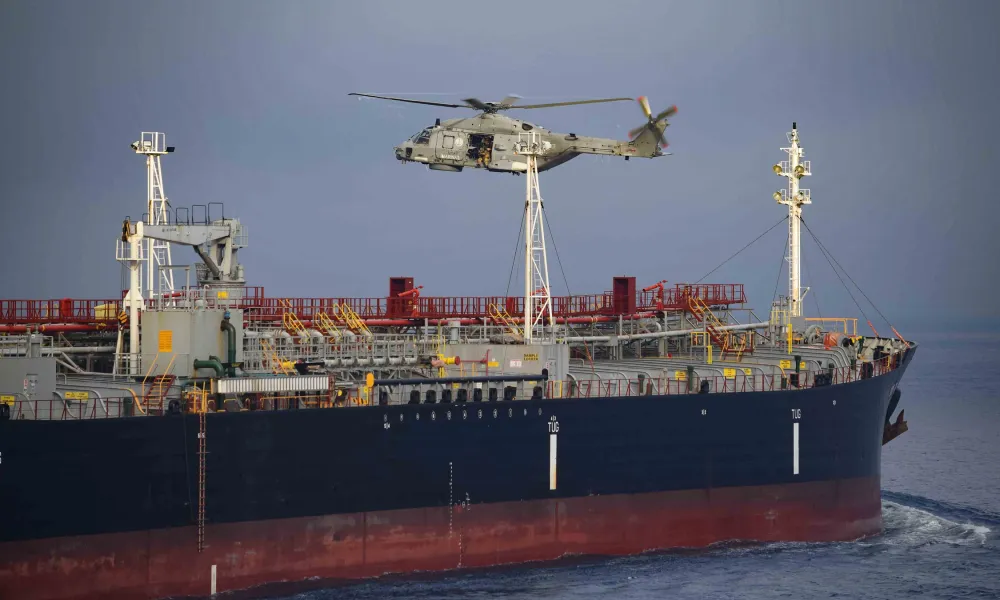

The European Union is stepping up maritime enforcement against Russia's so-called shadow fleet, with EU foreign policy chief Kaja Kallas saying a tanker suspected of sailing under a false flag was boarded by the bloc's naval forces for verification in the Mediterranean.
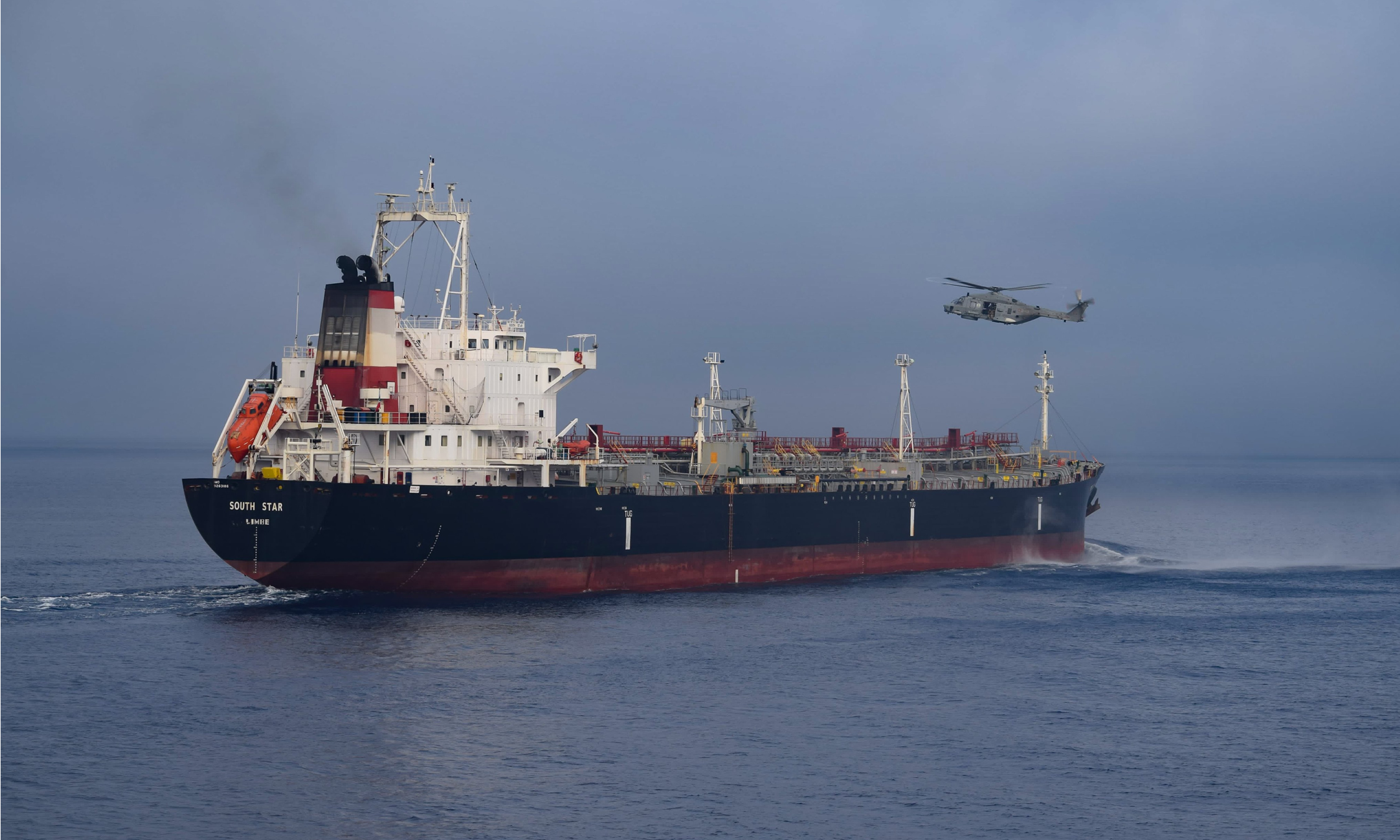
"We’re turning up the pressure on Russia’s shadow fleet. The oil tanker MV SOUTH STAR, suspected of sailing under false flag in breach of international maritime law, has been boarded on 20 July by Operation EUNAVFOR MED IRINI forces for flag verification," Kallas said in a post on X.
"Every illicit voyage helps sustain Russia's war machine. We are matching our sanctions with action at sea."
Kallas said EU member states had also authorised Operation ATALANTA to begin conducting flag verification boardings of suspected Russian shadow fleet vessels, in the same way Operation IRINI does.
"This decision further tightens the net," she said.
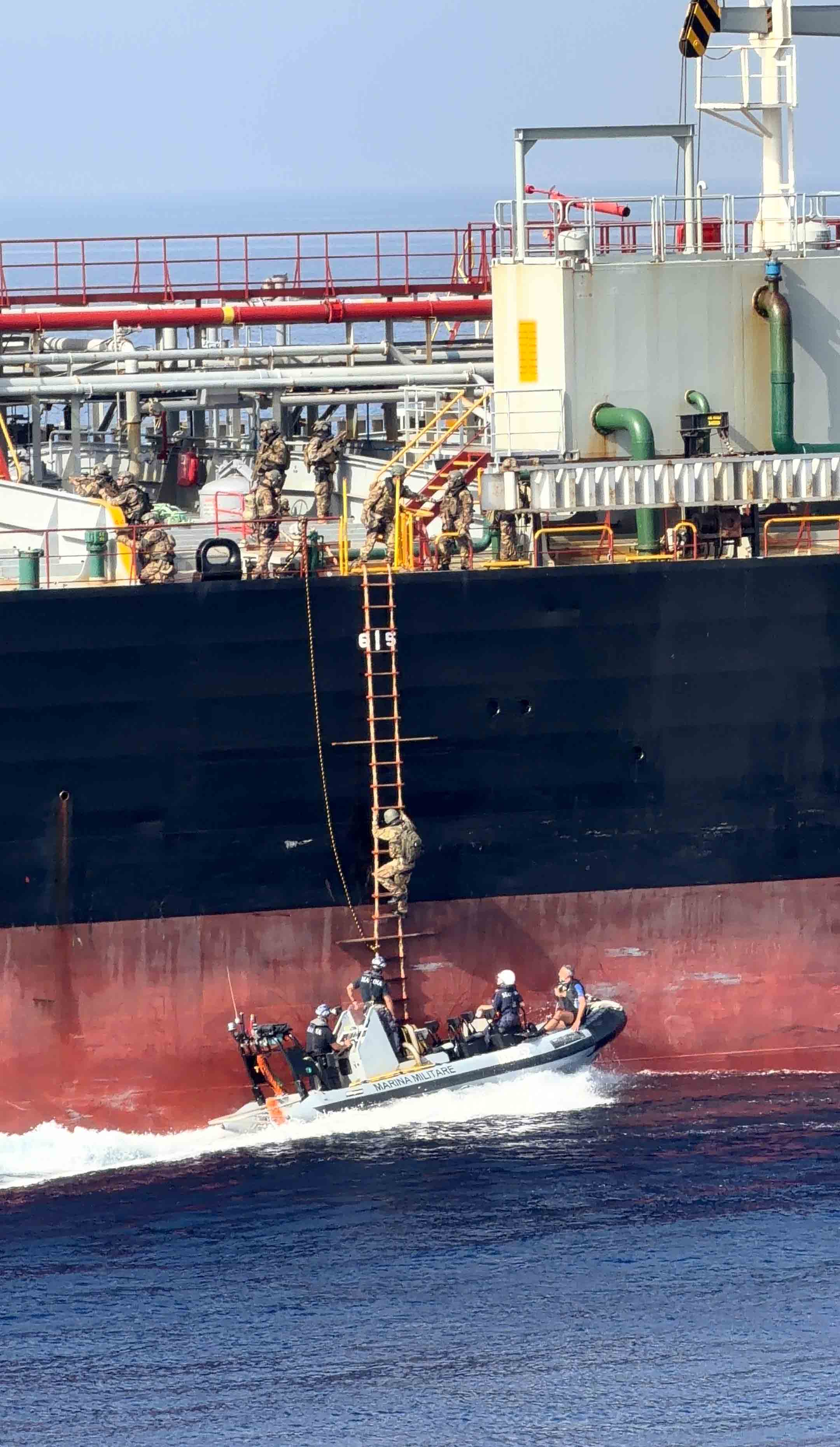
In a separate post, Operation EUNAVFOR MED IRINI said: "On July 20, Op. IRINI conducted a flag verification boarding of EU sanctioned MV SOUTH STAR in Med High Seas in compliance with Art. 110 of UNCLOS. IRINI supports EU efforts to counter the Russian Shadow Fleet."
Legal basis
The legal basis for the interception – Article 110 of the UN Convention on the Law of the Sea (UNCLOS) – requires serious grounds for suspecting that a vessel is stateless before boarding. If suspicions prove unfounded, the vessel must be compensated. Article 92 of UNCLOS notes that a ship sailing under several flags, using them interchangeably, may be treated as a stateless ship.
Sanctions-busting fleet
The boarding comes as the EU intensifies efforts to curb Russia's ability to circumvent Western sanctions through a network of ageing tankers often referred to as the "shadow fleet". European officials say such vessels are used to transport Russian oil and petroleum products while obscuring ownership, insurance arrangements and operational details.
Under the last EU sanctions framework, 632 vessels were identified as falling under the ‘shadow fleet’ network, subjected to bans on port access and other maritime transport services. In addition, actors operating within this ecosystem have also been targeted under relevant EU restrictive measures.
Cyprus and the shadow fleet
As an EU member state and maritime nation, the Shipping Deputy Ministry recently told Politis that Cyprus promotes compliance with UN sanctions and EU restrictive measures. Since 2022, it has issued 34 Sanctions Information Notices (SINs) and 5 relevant Circulars to Cyprus-flagged vessels, their ship management and the local shipping industry.
Following the introduction of EU restrictive measures adopted against Russia in 2022-2023, the Cyprus Ships Registry deleted 70% of its tanker fleet. However, in the last three years, the registry has grown by more than 25% in gross tonnage, confirming its status as one of the leading registries in the world.
Cyprus continuously monitors vessel traffic in its Exclusive Economic Zone (EEZ), within the parts under its effective control. Last year, the authorities noticed an increase of shadow fleet movement in the area. If a vessel comes under investigation for suspicious activity, under EU measures, Cyprus is obliged to prohibit the provision of services to that vessel.
New round of sanctions
In a further intensification of efforts to choke funding for Moscow’s war chest, Kallas announced in a tweet today that the EU has agreed its 21st package of sanctions against Russia, targeting the country's financial sector, military-industrial complex and energy industry.
According to Kallas, the measures include restrictions on more than 100 banks and crypto operators, more than 40 shadow fleet vessels and several oil refineries in Russia and Belarus.
EU naval operations
Operation IRINI, launched by the EU in 2020, is tasked primarily with enforcing the UN arms embargo on Libya through the use of naval, aerial and satellite assets. In recent months, the operation has also supported broader EU efforts aimed at monitoring and countering activities linked to Russia's shadow fleet.
Operation ATALANTA, the EU's naval mission in the western Indian Ocean, was originally established to combat piracy off the Horn of Africa and protect vulnerable shipping. Its mandate has since expanded to include wider maritime security tasks, including flag verification boardings of vessels suspected of being part of Russia's shadow fleet.
We’re turning up the pressure on Russia’s shadow fleet.
— Kaja Kallas (@kajakallas) July 22, 2026
The oil tanker MV SOUTH STAR, suspected of sailing under false flag in breach of international maritime law, has been boarded on 20 July by Operation @EUNAVFOR_MED IRINI forces for flag verification.
Every illicit voyage… pic.twitter.com/Q4esYx4VRl