The agreement to open the Louroudjina-Lympia and Kampos-Karavostasi crossing points revealed more about those managing the Cyprus problem than they would probably like us to know. After months of discussions, expectations and assurances about political will, they managed to reach agreement where an agreement could be announced before the conditions for its implementation had even been clarified.
This is, of course, a move that could acquire value. The question is why this particular move was chosen and whom it serves today, when the real needs of thousands of people continue to pile up in the queues at Ayios Dometios.
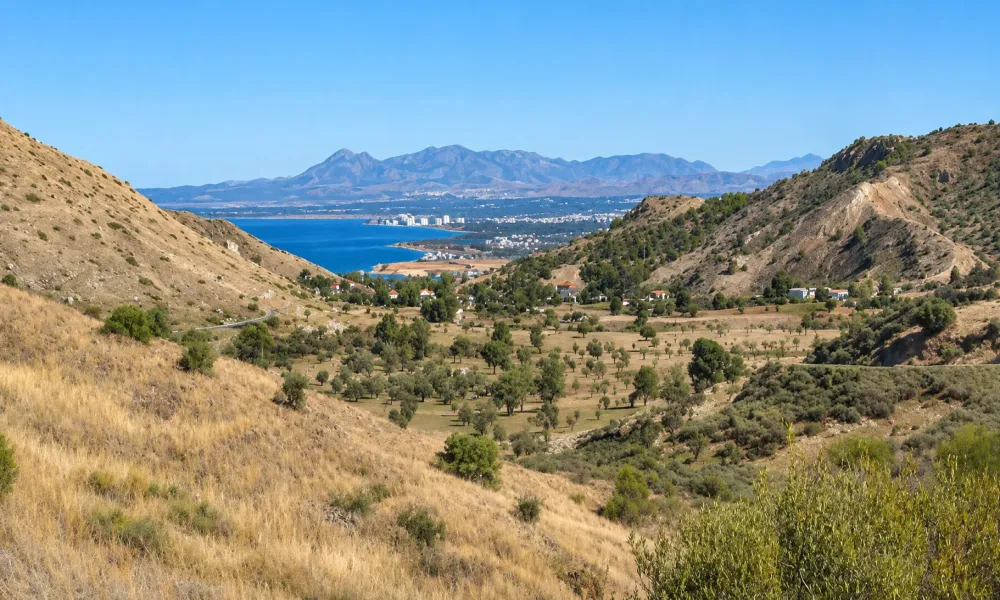
Kampos lends itself to an almost sarcastic depiction of our political reality. Along a forested, difficult-to-access route, where wild animals move freely and birds ignore the prohibitory signs of human history, the leaders decided to build confidence.
For people, of course, roads, studies, money and time are required. Until all of that is done, we can admire nature, wait for the snow and listen to announcements about progress.
Our diplomacy has acquired a forest route, while citizens' daily lives remain trapped in the same narrow lane of waiting.
The problem is not an invention of ill-intentioned criticism. According to CNA, the road from Kampos to the buffer zone is an unpaved track, and the terrain, ownership status and requirements for constructing a proper road must be examined.
In other words, after the political announcement comes the investigation of the basic conditions for implementation.
And because the simultaneous opening of both crossings was agreed, a very specific question arises: will the easier case of Louroudjina also have to wait until the difficulties in Kampos are overcome? Who is committing to what, under what timetable and with what funding?
The residents of the area are entitled to better access, communication and development. No village is expendable, and no human need should be underestimated simply because it concerns fewer people.
Precisely for that reason, serious planning is required so that local communities are not used as the backdrop for a political success story that precedes the actual work.
The criticism concerns priorities.
How can it be explained that while new crossings are being promoted, Nicosia's main everyday crossing route remains without the relief it urgently needs?
Why does the movement of workers, families and contact between the two communities not demand greater political determination?
Anyone waiting at Ayios Dometios to get to work pays the cost of partition in hours, fuel, exhaustion and lost income.
These people build confidence without ceremonies. They cooperate, conduct business, get to know one another and return the next day despite the obstacles.
The political leadership is asking them to continue waiting.
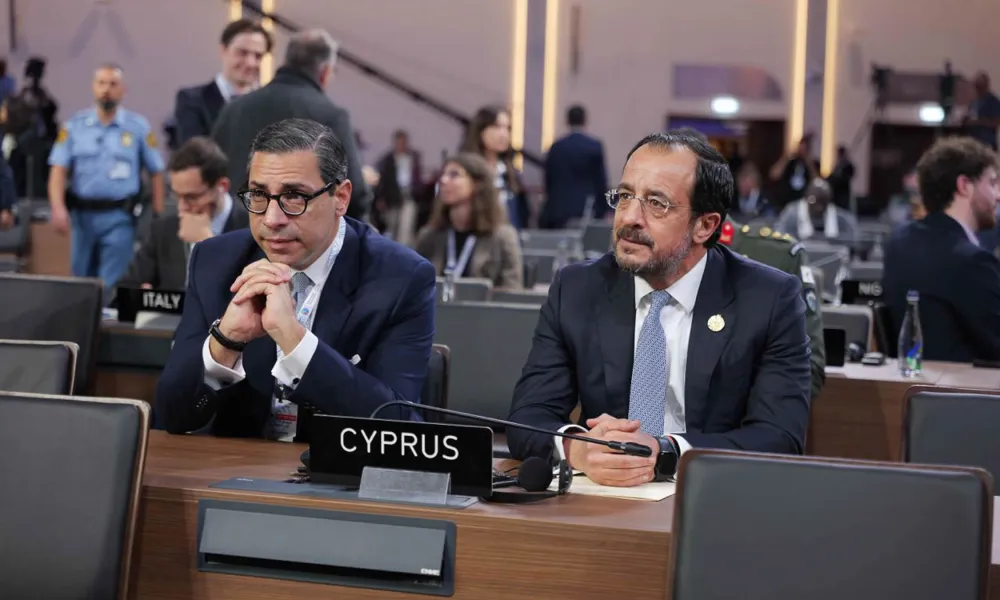
Responsibility rests first and foremost with Nikos Christodoulides, who is accountable to our own society, and secondarily with Tufan Erhurman, who must also be judged on the gap between declarations and the practical facilitation of coexistence.
Photographs do not shorten queues.
Meanwhile, political time is running out.
Antonio Guterres' term ends at the end of December, and the two leaders are preparing for yet another meeting with him.
His presence offers an opportunity that they are not entitled to waste repeating familiar positions.
Something verifiable must emerge: common ground on methodology, clarity on substance, specific next steps.
Otherwise, we will have added another meeting to the archive and another lost opportunity to this country's history.
Renewing expectations is not, in itself, a political result.
Those who are comfortable with partition have every reason to rub their hands at this prospect.
The closer we move to the presidential election campaign period without meaningful movement, the more easily the Cyprus issue will return to its familiar function: as a reservoir of slogans, a means of rallying supporters and a mechanism for absolving those in power.
We will once again hear that everything possible was done, that proposals were submitted, that there was readiness.
And in the end, Turkish intransigence will be presented as the explanation, supposedly answering every question about our own choices as well.
Turkish intransigence is real, and Turkey's responsibility for the occupation remains undiminished.
Invoking those realities, however, does not absolve any Cypriot leadership of its obligation to demonstrate what it pursued, what it rejected, what it counter-proposed and what it achieved.
Quite the opposite.
The more difficult the interlocutor, the greater the need for consistency, preparation and credibility.
When every failure is attributed exclusively elsewhere, accountability disappears.
And when accountability disappears, deadlock becomes a safe refuge for those who have learned to govern by constantly invoking their inability to change anything substantial.
If there truly is political will, let it be demonstrated through the publication of the technical data, the assumption of commitments and persistence in pursuing crossings that genuinely facilitate everyday life.
Let it also be demonstrated through readiness to discuss difficult proposals without the constant anxiety of political cost.
Peace requires leaders who assume responsibility, especially when that responsibility does not bring applause.
This is the deeper problem of an establishment that congratulates itself on its endurance while society is worn down.
Partition provides the permanent alibi, opacity protects privileges, and corruption finds room wherever citizens are asked to remain silent for the national good.
The less affluent lose time, income and prospects. The powerful retain access, influence and immunity from the consequences.
The crossing-point agreement therefore confronts us with a simple demand: show us a road that people can actually use.
Because the road to a solution is judged where power meets human need.