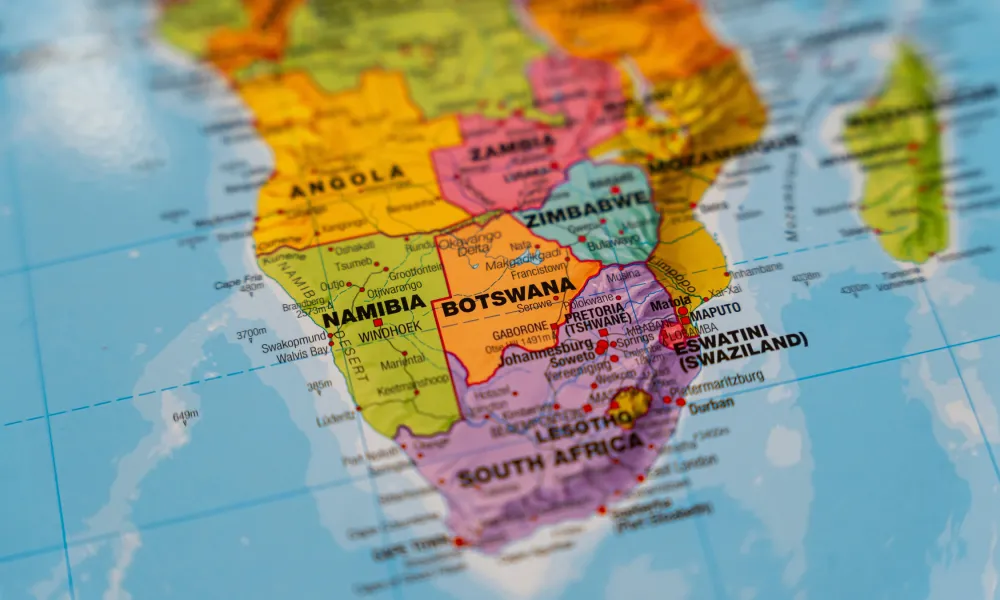

A map of Africa presented by the US State Department at a conference in Brazil mislabelled almost every country on the continent, prompting confusion among delegates and an apology from the department.
Participants photographed the slide and shared the images online after noticing that several countries had effectively been “moved” to different parts of Africa.
Map shown during health presentation
Reuters reviewed a video of the presentation at the AIDS 2026 conference in Rio de Janeiro. The incorrect map appeared midway through a briefing on the State Department’s new international health agreements.
According to a Reuters analysis, the image contained a watermark suggesting it had been produced using an OpenAI artificial intelligence tool. OpenAI did not respond to a request for comment.
The State Department said it accepted “full responsibility” for the mistake, explaining that a member of its team had made last-minute changes to the presentation slides.
Countries moved across the continent
Among the most striking errors, Nigeria was depicted as a landlocked country near the centre of the Sahara. The United States has deployed hundreds of troops to Nigeria.
Mozambique, which is located in south-eastern Africa, appeared in the Horn of Africa. Ivory Coast was moved from West Africa to the eastern side of the continent and was incorrectly shown without access to the sea.
Screenshots of the map were first published in a Substack post by AIDS specialist Emily Bass and were subsequently shared on LinkedIn. One post attracted approximately 40,000 views.
“Whoever created and approved this slide did not know where countries in Africa are and did not care to check their work,” wrote Matt Petit, who focuses on artificial intelligence and geopolitics at the Atlantic Council.
State Department accepts responsibility
In a statement, the State Department accepted responsibility “for the confusion and misinformation” caused among those attending the presentation, including its African partners.
The US speaker at the conference was Jeff Graham, a special envoy for global health who oversees the President’s Emergency Plan for AIDS Relief, known as PEPFAR.
Despite the map, the department said discussions at the conference had been “substantive and constructive”, adding that Washington remained committed to delivering measurable results in the fight against AIDS.
The Trump administration temporarily suspended funding for international aid programmes last year. However, PEPFAR’s core work, including the provision of life-saving medicines, continued. The United States is reducing spending in other areas, including prevention initiatives, and plans to end the corresponding programme in South Africa entirely.
Source: AMNA