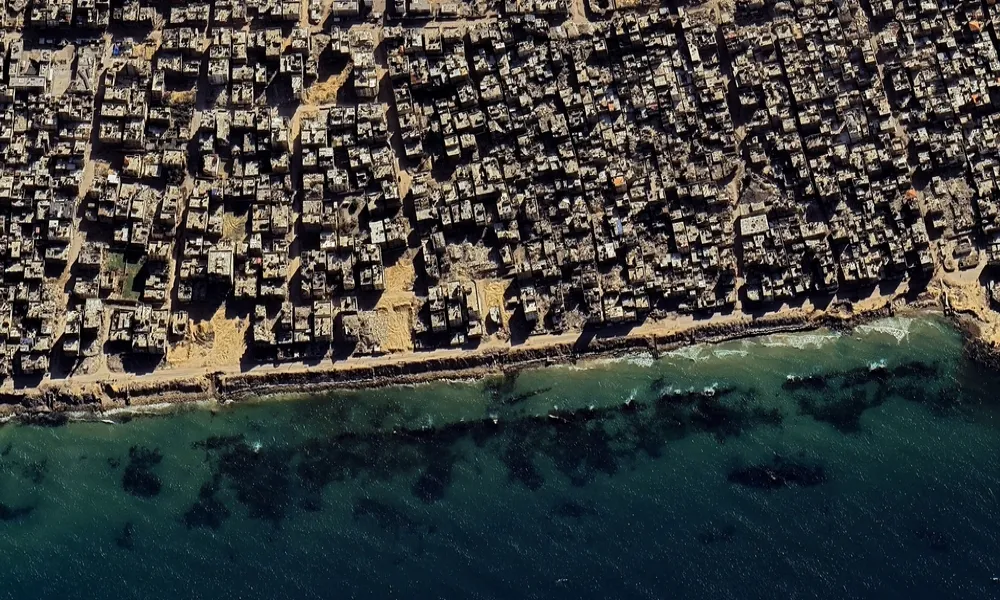

New satellite images published through Google Maps provide a stark picture of how dramatically Gaza has changed after nearly three years of conflict, showing devastated neighbourhoods and vast tent camps stretching along the coastline and across urban areas.
The images, captured in June 2026, show extensive damage to homes, businesses, religious sites and infrastructure, including destruction that occurred after the ceasefire announced in October 2025.
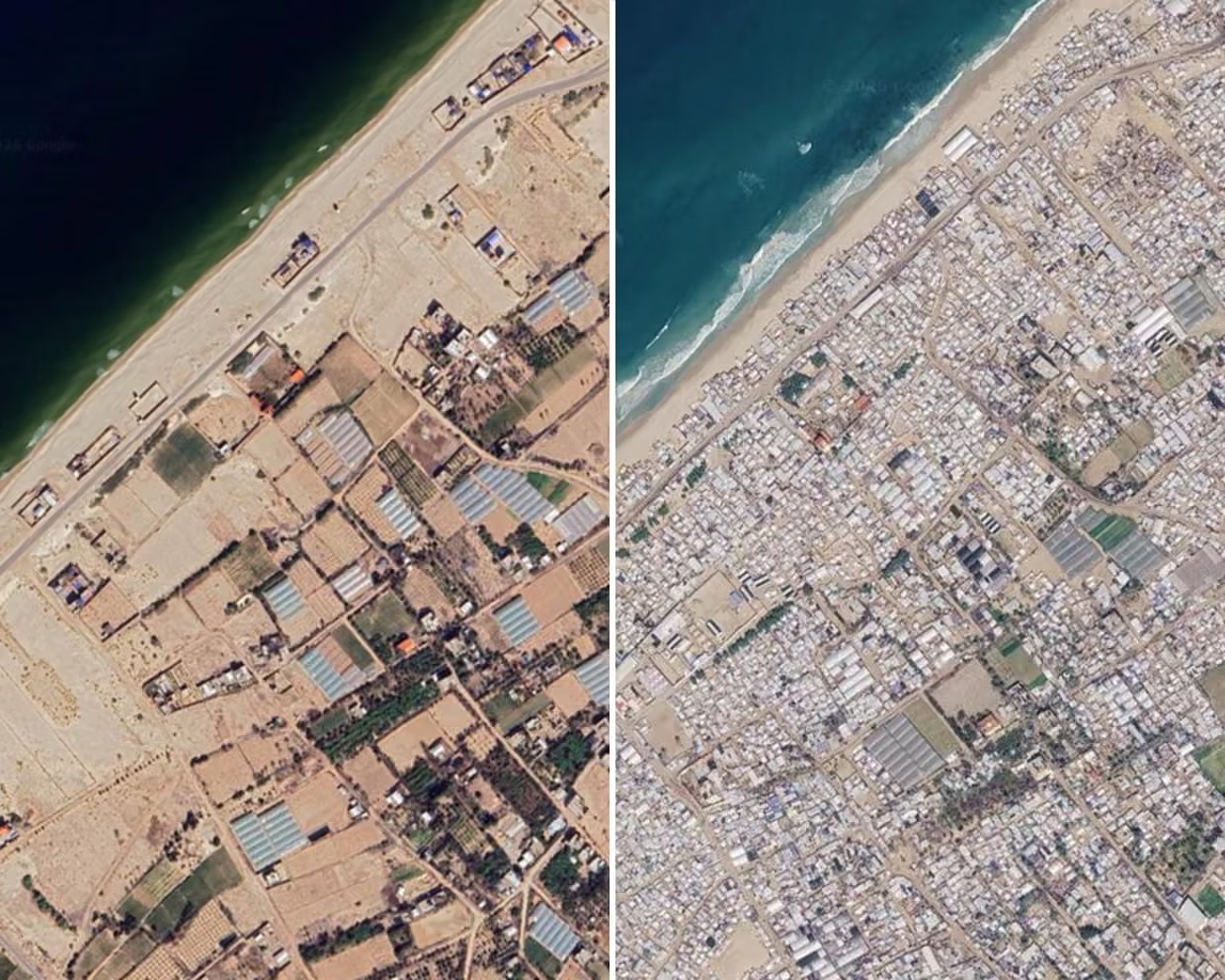
Tent cities spread across the territory
Large sections of Gaza's coastline are now lined with tents and makeshift shelters, in some places just metres from the sea.
In Gaza City, much of the remaining open space appears to have been converted into temporary camps for displaced residents.
The territory's main port, once crowded with fishing boats, appears heavily damaged and largely deserted, with temporary shelters erected nearby.
Entire districts reduced to rubble
In the north, the images show widespread destruction in Beit Lahia and Beit Hanoun.
Large parts of Jabalia and Shujaiya in Gaza City, areas repeatedly affected by Israeli military operations, now appear largely uninhabitable.
The situation is similar in the south, where Rafah appears almost entirely devastated and Tel al-Sultan largely flattened.
The imagery also shows a broad cleared strip of land along Gaza's border with Egypt.
More than 2.1 million people displaced
According to UNRWA, more than 2.1 million displaced people are currently living in tents and temporary shelters across Gaza.
The United Nations estimates that roughly 82% of buildings in the territory, around 200,000 structures, have sustained damage. Approximately two-thirds of those buildings have been destroyed.
A recent UN assessment found that the number of damaged buildings increased by 9% after the October 2025 ceasefire.
Humanitarian crisis continues
The volume of debris across Gaza is now estimated at approximately 61 million tonnes.
According to Jaco Cilliers, the UN Development Programme's special representative in the Palestinian territories, that figure is around twenty times greater than the total amount of war debris generated globally over the previous 18 years.
Human remains are still believed to be trapped beneath collapsed buildings, a situation the United Nations has described as one of Gaza's most urgent humanitarian challenges.
More than 74,000 Palestinians have been killed since the war began, most of them civilians.
The conflict started after the Hamas attack on Israel in October 2023, which killed about 1,200 people, mostly civilians, and resulted in the abduction of 251 hostages.
Source: LiFO / The Guardian