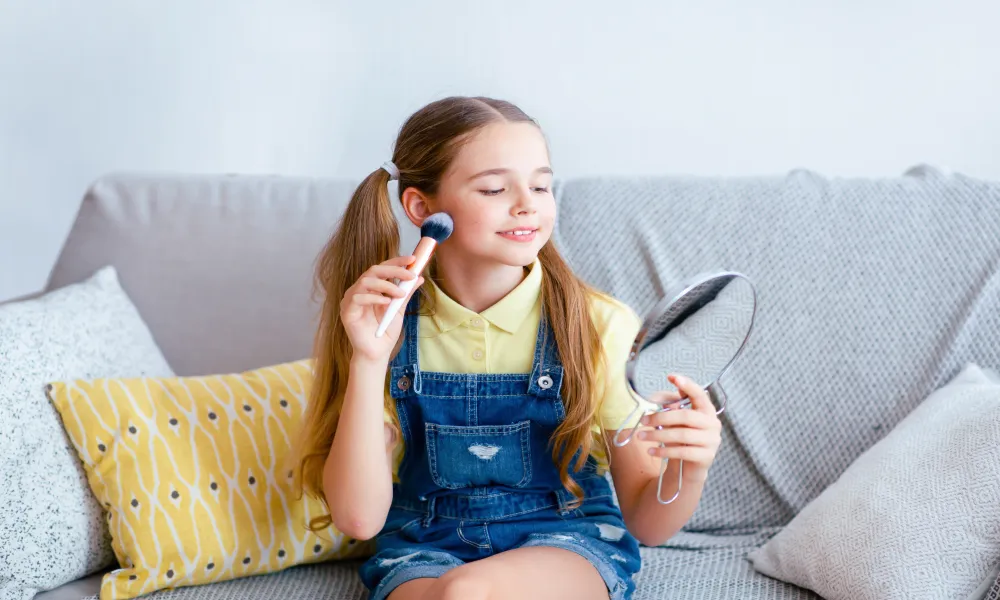

Laboratory analyses by the State General Laboratory have detected the presence of cobalt in children's cosmetics and makeup products, with the highest concentrations found in children's makeup items. The issue is of particular interest because, as the Ministry of Health notes, there are no uniform European numerical acceptance limits for cobalt as an impurity in cosmetics. This does not automatically mean that the products are dangerous, but that their safety must be assessed by the competent authorities.
The findings were disclosed in a written reply by Health Minister Neophytos Charalambides to a question submitted by MP Andreas Papacharalambous, who requested information on inspections of children's products and potential health risks. The issue had also been highlighted in an earlier Politis report following a warning letter from the European Commission to Cyprus over delays in transposing into national law the European directive relating to cobalt in toys. The warning concerned legislative compliance and not the identification of dangerous toys on the market.
Measurements in cosmetics
The State General Laboratory analysed 59 samples of children's cosmetics, resulting in 138 individual test specimens. In 40 children's makeup samples, corresponding to 119 test specimens, cobalt concentrations of up to 9 mg/kg were measured. In two children's powder products, levels reached 1.41 mg/kg, in 10 children's toothpastes 0.020 mg/kg, and in seven children's creams 0.001 mg/kg.
European legislation permits the unintentional presence of traces of prohibited substances only when such presence is technically unavoidable under conditions of good manufacturing practice and where the finished product is safe. Laboratory results are forwarded to the Pharmaceutical Services for assessment and any necessary action. However, the minister's reply does not specify whether the withdrawal of any of the products examined was deemed necessary.
No breaches of limits
The picture was different for toys and chalk products. A total of 155 samples, comprising 147 toys and eight chalk products, were tested, with no exceedance of the prescribed cobalt migration limit recorded. This is a different type of assessment from measuring the presence of the metal in cosmetics.
Cobalt is classified as a Category 1B carcinogenic substance. European legislation restricts its use in toys, while providing specific exemptions for certain materials and components. However, the presence of a substance is not the same as actual exposure to it, and the assessment of health risks does not fall within the responsibilities of the State General Laboratory.
Batteries, magnets, 3D-printing products and certain metal toys remain outside the scope of the State General Laboratory's testing programme. The service noted that any expansion of testing would be considered if requested by the competent authority and if permitted by its available capabilities.