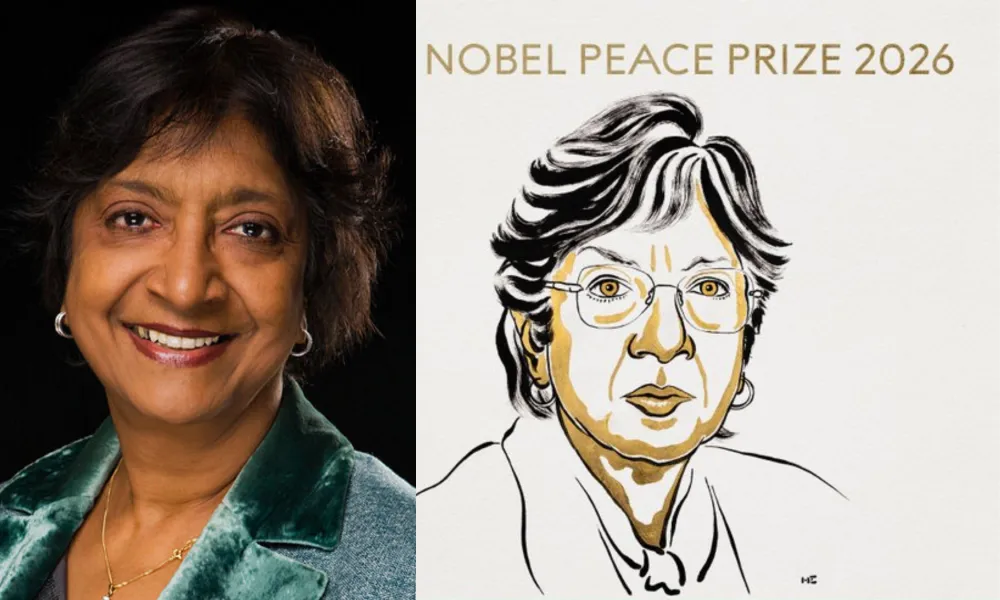

South African lawyer and former UN official Navanethem "Navi" Pillay has been awarded the 2026 Nobel Peace Prize, recognising a career spanning decades in human rights, international justice and the rule of law.
Born in Durban, South Africa, on 23 September 1941, Pillay grew up under apartheid in a working-class family of Tamil descent. She studied at the University of Natal before continuing her legal education at Harvard Law School, where she earned both a master's degree and a doctorate in law.
Fighting apartheid
Pillay began her legal career during the apartheid era, representing anti-apartheid activists and political prisoners while drawing attention to abuses in detention and allegations of torture.
In 1967, she became the first non-white woman to open a law practice in South Africa's Natal province.
Her trailblazing career continued in 1995 when she became the first non-white woman appointed to South Africa's High Court.
Alongside her legal work, Pillay championed women's rights and helped advance protections against discrimination and gender-based violence.
Shaping international justice
Pillay later moved onto the international stage, serving as a judge and eventually president of the International Criminal Tribunal for Rwanda (ICTR).
During her tenure, the tribunal delivered a landmark ruling recognising that rape and sexual violence can constitute acts of genocide under certain circumstances, a decision that became a major precedent in international law.
From 2003 to 2008, she also served as a judge at the International Criminal Court (ICC), helping oversee cases involving some of the world's most serious international crimes.
At the helm of UN human rights
In 2008, Pillay was appointed United Nations High Commissioner for Human Rights, a role she held until 2014.
As the UN's top human rights official, she consistently advocated for the protection of rights regardless of race, gender or sexual orientation and spoke out on issues ranging from freedom of expression to civilian protection in armed conflicts.
She was also a frequent critic of alleged human rights violations and breaches of international law in conflicts including those in Syria, Sri Lanka and Gaza.
Continuing her advocacy
Since leaving the UN, Pillay has remained active in international human rights initiatives, including campaigns against the death penalty and efforts focused on accountability for genocide and other international crimes.
Her Nobel Peace Prize honour recognises a lifetime dedicated to advancing human rights, strengthening international law and promoting justice through both national and international institutions.