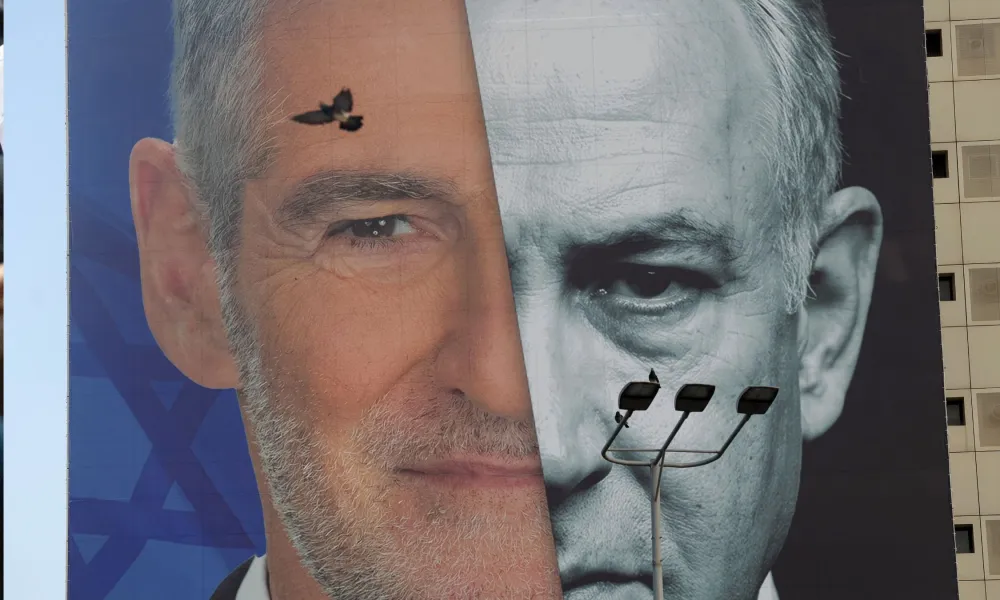

Israelis go to the polls on 27 October in the country's first parliamentary election since the 7 October 2023 Hamas attack and the subsequent wars in Gaza and Iran.
Many observers describe the vote as one of the most consequential in Israel's history, with implications extending far beyond the country's borders. Yet despite a highly polarised campaign, opinion polls suggest neither Prime Minister Benjamin Netanyahu's bloc nor the opposition is on course for a clear parliamentary majority.
The result may ultimately depend not on who finishes first, but on who can assemble a governing coalition in the 120-seat Knesset.
Benjamin Netanyahu: Fighting for survival
Israel's longest-serving prime minister remains at the centre of the political arena.
The Likud leader continues to govern through an alliance with ultra-Orthodox and far-right parties despite mounting political pressure over the wars in Gaza and Iran.
Netanyahu also faces ongoing legal challenges. He remains on trial in Israel over corruption allegations, which he denies, while an arrest warrant issued by the International Criminal Court over alleged war crimes continues to shadow his international standing.
The election will determine whether he can preserve the alliances that have kept him in power.
Gadi Eisenkot: The former general leading the challenge
Among Netanyahu's most significant rivals is former Israel Defense Forces chief Gadi Eisenkot, who has emerged as a leading opposition figure.
Eisenkot founded the Yashar party in 2025 and has topped several opinion polls heading into election day.
He left Netanyahu's war cabinet in 2024, citing the absence of a clear strategy for the Gaza conflict, and has repeatedly called for a state commission of inquiry into the failures surrounding the 7 October attack.
His personal story has also resonated with many voters after losing his son, an Israeli soldier, during the Gaza war.
Bezalel Smotrich and Itamar Ben-Gvir: The far-right power brokers
Two of Netanyahu's most influential allies remain Bezalel Smotrich and Itamar Ben-Gvir.
Smotrich, the finance minister and leader of the Religious Zionism party, is contesting the election on a joint ticket with Ben-Gvir's Jewish Power movement.
Ben-Gvir, who serves as national security minister, remains one of the most controversial figures in Israeli politics. His political strength could prove crucial if Netanyahu is to assemble another governing coalition.
Naftali Bennett: The comeback candidate
Former prime minister Naftali Bennett, who led Israel between 2021 and 2022, is seeking a political return.
He co-leads the centre-right Together alliance alongside former prime minister Yair Lapid, hoping to unite voters looking for an alternative to Netanyahu.
His experience and ability to attract support from different parts of the political spectrum could make him a key figure in coalition negotiations.
Mansour Abbas: Potential kingmaker
Mansour Abbas, leader of the Islamist Ra'am party, could once again find himself holding the balance of power.
If neither major bloc secures a majority, Abbas and the Arab parties may become central to post-election coalition talks.
His role is likely to be closely watched as parties explore possible governing arrangements.
Yair Golan: The voice of the left
Former deputy military chief Yair Golan leads the left-wing Democrats party.
Unlike many opposition figures, Golan openly advocates cooperation between Jewish and Arab political parties as part of a broader effort to remove Netanyahu from office.
His position highlights both the possibilities and difficulties of building a united anti-Netanyahu coalition.
Coalition maths remains the decisive factor
As in previous Israeli elections, the central question is not simply which party comes first but who can command the support of at least 61 seats in the Knesset.
Netanyahu could remain in power even without a decisive electoral victory if his allies secure enough seats collectively. Conversely, the opposition faces the challenge of bridging significant ideological differences if it wants to form an alternative government.
The outcome is expected to influence not only Israeli domestic politics but also policy on the Palestinian issue, the future of Gaza and broader geopolitical dynamics across the Middle East.