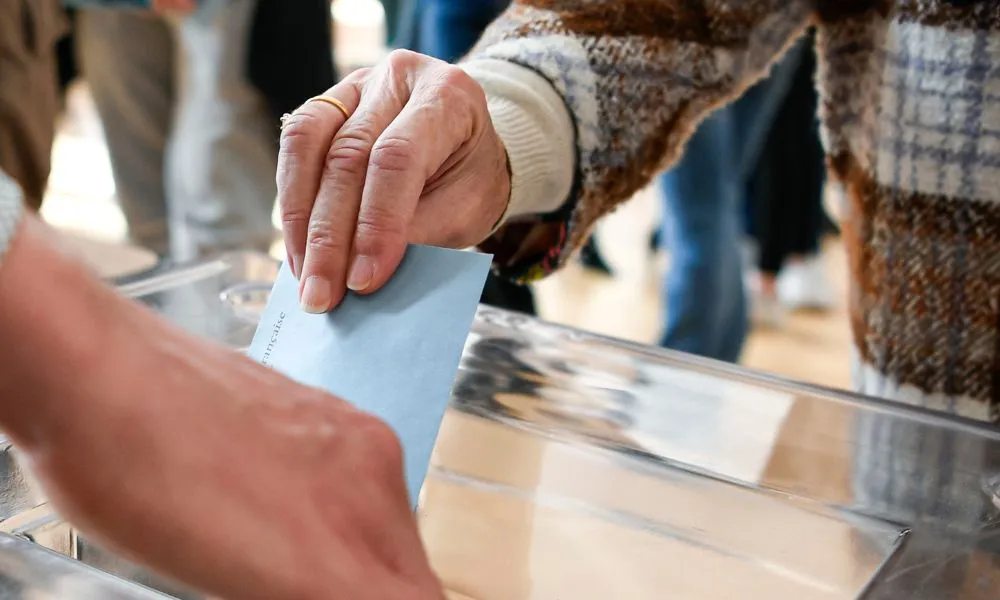

With the latest public opinion surveys, it is clear that this Sunday’s elections are shaping up to be perhaps the most uncertain and fluid electoral contest of recent decades. The main feature of the upcoming elections is not only the close race for first place, but above all the deep reshaping of the party system itself, which is shifting from a model of relative stability to a multi‑party and more unpredictable environment.
Based on the fourth Noverna poll conducted for Politis, the most significant trend is the gradual weakening of the traditional bipartisanship between DISY and AKEL. For decades, the two parties dominated the political landscape, easily securing combined percentages above 65%. Today, however, all polls indicate that together they will struggle to reach even 50%, and may remain around 45%, reflecting a deep crisis of confidence in traditional parties.
At the same time, the battle for first place remains open, with DISY appearing marginally ahead of AKEL in the latest surveys, although no outcome can be considered certain. Meanwhile, ELAM seems to be consolidating its position as the third political force, capitalising on widespread dissatisfaction and public disappointment, as well as underlying insecurities among voters. At the same time, DIKO continues to show significant weakness in withstanding pressure both from the far right and from new political formations, a trend observed consistently in dozens of polls over at least the past year, with little likelihood of reversal.
Particular interest also lies in the momentum of new political formations such as Direct Democracy, ALMA and Volt Cyprus, all of which are strongly contesting parliamentary representation and further contributing to the fragmentation of the political landscape.
Undecided voters are expected to play a decisive role, with some polls, including the present Noverna survey, placing them at around 20%. Their final stance will influence not only the race for first place but also the distribution of seats in the new parliament.
The most important issue, however, concerns the day after. All indications suggest that the new parliament will be highly fragmented, with seven or even more parties represented, making it difficult to form stable parliamentary alliances.
Thus, the real stake in these elections is not only which party comes first, but whether the functionality and effectiveness of the political system can be maintained during a period of heightened political and social instability, with the unresolved Cyprus issue remaining a central concern.