
The composition of Parliament has changed significantly, with the presence of new parties and political forces that alter the landscape and create a more demanding environment, showing that majorities are no longer guaranteed.
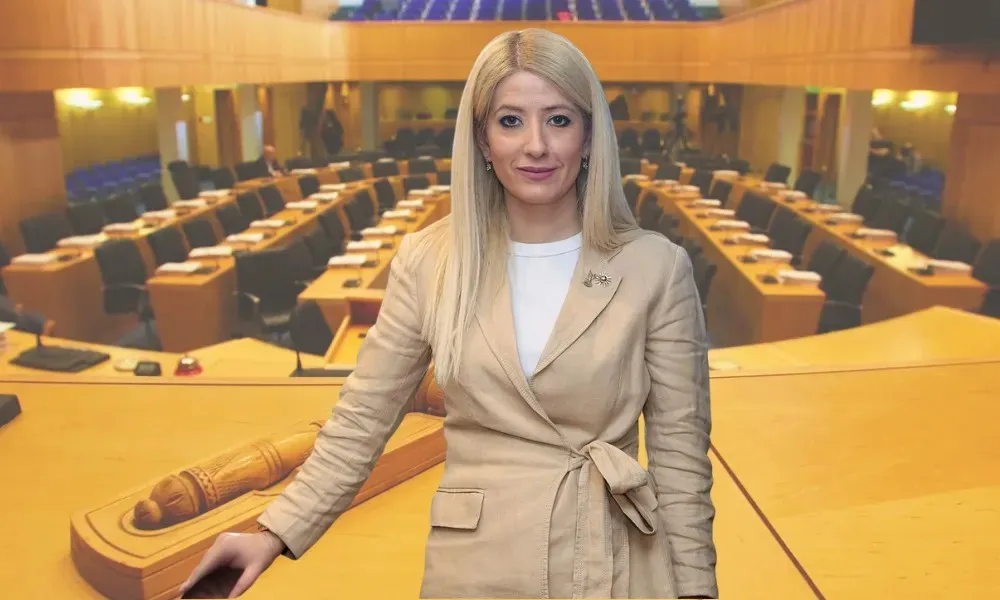
The re‑election of Annita Demetriou as President of the House is not merely a procedural development stemming from parliamentary balances. To a large extent, it represents a choice of continuity and seriousness at a time when the country’s political landscape is becoming increasingly complex.
Of course, yesterday’s vote highlighted a broader reality that characterises modern democracies. The era of one‑dimensional political alignments has largely passed, giving way to an environment in which cooperation and consensus are necessary conditions for the effective functioning of institutions. The search for common ground is not a sign of weakness, but an element of political maturity. This is what the two major parties, DISY and AKEL, did, as they managed to persuade the smaller parties that entered Parliament – Direct Democracy on the one hand and ALMA on the other – demonstrating how essential collaboration is.
On the other hand, the Presidential Palace emerges as the main loser of the vote, as it failed to persuade the parties that support it, directly or indirectly, to align themselves. DIKO and ELAM appeared to have different party priorities, with DIKO excluding Stefanou and aligning with Annita due to its dispute with ALMA, while ELAM, through Christou’s candidacy, attempted to consolidate its base and maintain its far‑right profile. Whether these alignments signal intentions for the presidential elections will become clear over time.
What matters is that Annita Demetriou’s new term does not resemble the previous one. The composition of Parliament has changed significantly, with the presence of new parties and political forces that reshape the landscape and create a more demanding environment, where majorities cannot be taken for granted. Parliamentary balances are more complex, convergences more difficult and political confrontations are expected to be more frequent and more intense.
During her first term, Annita Demetriou managed to handle a series of difficult political and institutional challenges, broadly maintaining the prestige of the institution and avoiding the tensions that often accompany the functioning of a multi‑party parliament. However, at a time when public trust in institutions is declining, she is now called upon to reverse a climate of discredit that has been shaped by actions taken – or not taken – by Parliament and its members.