
By Vasilis Polemitis
The Republic of Cyprus is a sovereign state with international and European institutional standing, and as such conducts a sovereign foreign policy within the framework of the EU and, by extension, the Western system, to whose security and prosperity it has a duty and obligation to contribute reliably and effectively.
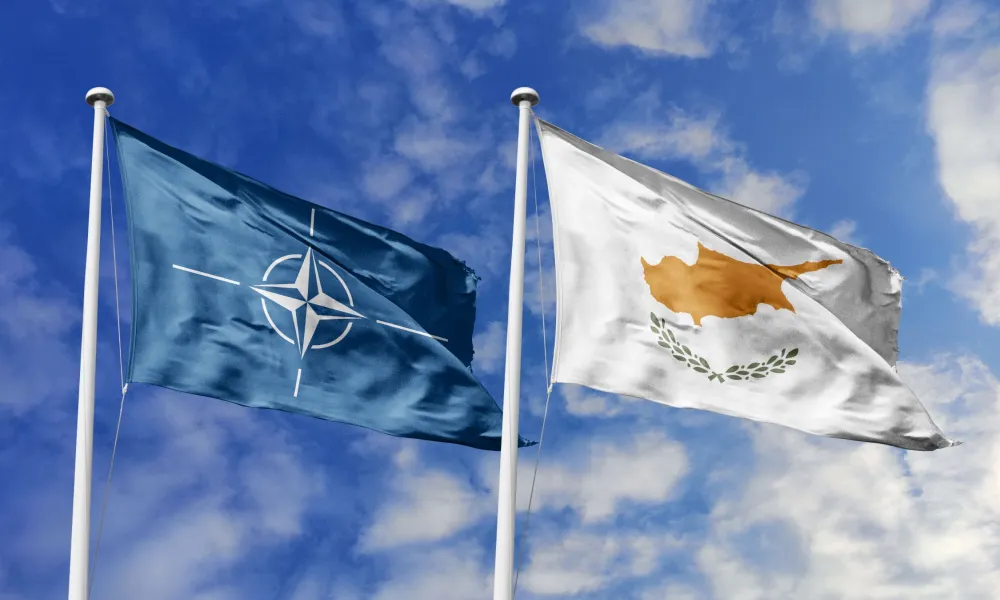
Within this framework, the shared values of Europe and the West, values we embrace and wish to protect from any foreign encroachment, demand the consolidation of our relationship with the Western security system. This includes our full integration into Western defence and security structures and into NATO, through the development of the capabilities needed to establish ourselves as a credible co-producer of security, with specific, measurable terms, defined political conduct, and concrete human and material resources. In other words, more action and less talk, and above all, in a way that positions Cyprus as part of the value chain in the production of security. And we all know what that means in terms of targeted spending, concrete commitments and a clear, coherent narrative.
Otherwise, if Cyprus remains an ally only "on paper" and "in statements" without developing the specific capabilities that would make it a credible and useful co-producer of security, our side will be treated as a net liability. This is a particularly important point, since the defence of the Euro-Atlantic system, which now extends beyond the EU and NATO to include significant countries in the Middle East, Asia, Oceania and South America, is shaped more by strategic necessity than by the defence of shared values, though the latter are of course neither abolished nor diminished.
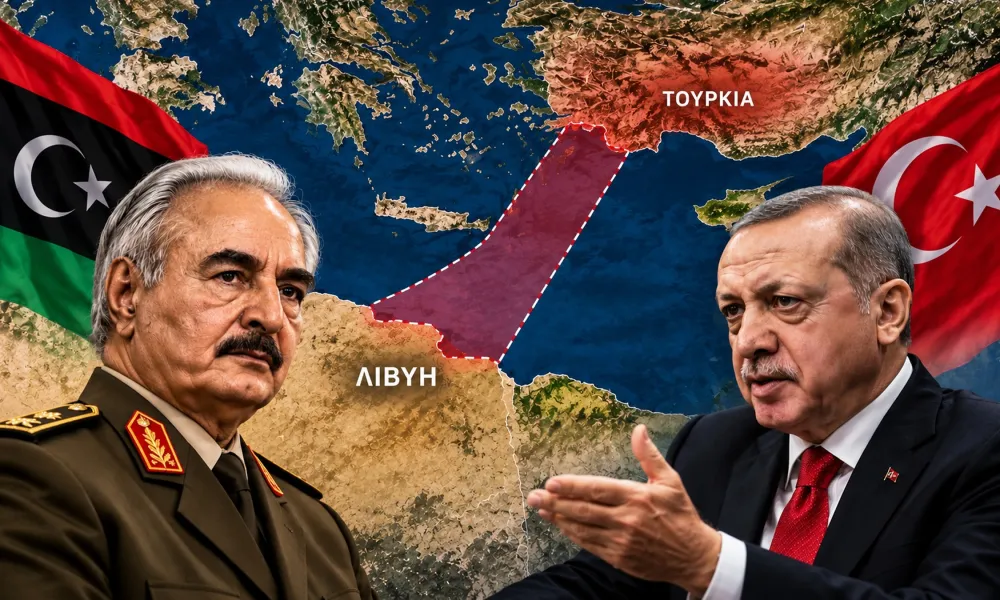
Turkey's example is perhaps the most telling, since it is neither sufficiently democratic nor does it fully embrace Western values. Yet its position within the Euro-Atlantic security system is determined precisely by this strategic necessity, for reasons we all know and need not repeat.
Cyprus must therefore substantially strengthen its politico-military capabilities, define precisely the role it wants to play within the Euro-Atlantic security system in areas where it can hold a comparative advantage, and not settle for its geopolitical position alone, whether as a forward base (an "unsinkable aircraft carrier") or as a zone of strategic depth for its regional partners and allies. These roles are not enough to make us a value-adding co-producer of security.
Once we have developed our capabilities and made the political decision to contribute them wherever and whenever required, to meet both our own needs and those of our allies, our participation in the Euro-Atlantic security system will follow, driven precisely by the strategic necessity that now cuts across the multipolar international system.
As for the Cyprus problem and NATO's potential role within a settlement framework, I believe we are making a serious mistake by linking the two. Cyprus and the world today are not what they were in 1960, and the interests of the three guarantor powers and the two communities are better served by consolidating Cyprus's relationship with the West and pursuing NATO membership. The opposite argument effectively works against Western cohesion and EU security within the unstable, evolving multipolar international system, with the challenges and complex security risks we are witnessing.
The repeated invocation of the argument that our NATO accession would satisfy the security dimension within a settlement framework, however much it may serve genuine political prerequisites, or even address certain reservations, allows Turkey and third parties to pre-emptively bound and limit our own argumentation. This does not serve our interests, because it shifts the subject of the dialogue and grants Turkey, as well as certain UN Security Council members outside the West, within whose framework the peace process is conducted, a say over our sovereign decision to join NATO and the other Western institutional defence and security cooperation mechanisms. This inevitably locks our side into a narrative shaped by Turkish preconditions, as well as by conditions foreign to Western interests, which in the present and near future are likely to become entangled with the EU's efforts toward strategic autonomy, the push for a greater role for European states within NATO, and the broader stance of countries such as Turkey, and perhaps the United States, toward the Western security system.
For this reason, Cyprus, by making use of its position within the EU, its role within the 3+1 framework (Greece, Cyprus, Israel, the United States), and the evolving stance toward NATO of countries such as the United Arab Emirates, can build a sovereign case in favour of its own NATO accession. It need only become a credible and capable co-producer of security and harness the momentum created by the practical application of the strategic necessity described above.