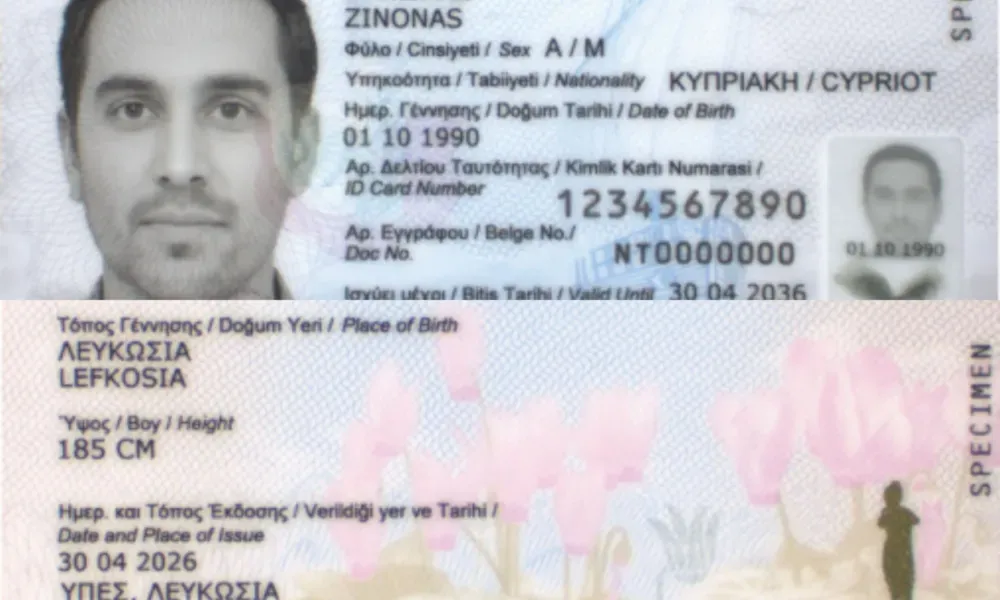

The debate over removing parents' names from Cyprus' new identity cards is not really about the cards themselves. It is about the way the political system now operates and the balance of forces shaping public discourse. More importantly, it highlights how attempts at modernisation can be overtaken by populism, while political opportunism increasingly trumps consistency and evidence-based policymaking.
The Interior Ministry's original decision did not deprive anyone of their identity or diminish the institution of the family. At its core, it was an administrative change aligned with modern principles of data protection and the removal of information deemed unnecessary for identifying citizens. People are entitled to disagree with that decision. What is harder to justify is the transformation of a technical administrative adjustment into an ideological battleground.
The far right, particularly ELAM, has sought to frame the issue as a defence of tradition and the family against what it describes as an unacceptable attack on a sacred institution. That position is unsurprising. More striking, however, has been the reaction of parties such as DISY and DIKO.
Neither party voiced major objections when the change was first introduced. Yet once the issue acquired political momentum, both appeared willing to align themselves with arguments they had previously shown little interest in advancing. The reason is clear: fear of alienating a conservative audience. Rather than defending a policy choice or challenging it with reasoned criticism, they chose to adapt to the political mood.
That is where the real concern lies. When political parties respond not according to the merits of a policy but according to perceptions of electoral risk, they cease to shape public debate and instead begin following it. In doing so, they allow the most strident voices to set the agenda.
A healthy democracy cannot function through fear of backlash from its most conservative reflexes. Political leaders have a responsibility to explain decisions, persuade the public and, where necessary, defend policies that advance modernisation and individual rights, even when they are not immediately popular.
When they abandon that role and adopt narratives crafted elsewhere, they become followers rather than leaders. That strategy may deliver short-term political gains. In the longer term, however, it risks undermining efforts to build a more modern, open and inclusive society.