
By Antonis Polydorou
The cabinet reshuffle, the third in less than three and a half years, brought neither major upheavals nor significant surprises. It did, however, clearly reveal intentions, define political camps and confirm the dividing lines along which the political game will be played in the coming period.
It is clear that this reshuffle, too, was carried out with an eye on the 2028 presidential election, and it would have been surprising had it been otherwise. Within this framework, Nikos Christodoulides focused on two objectives.
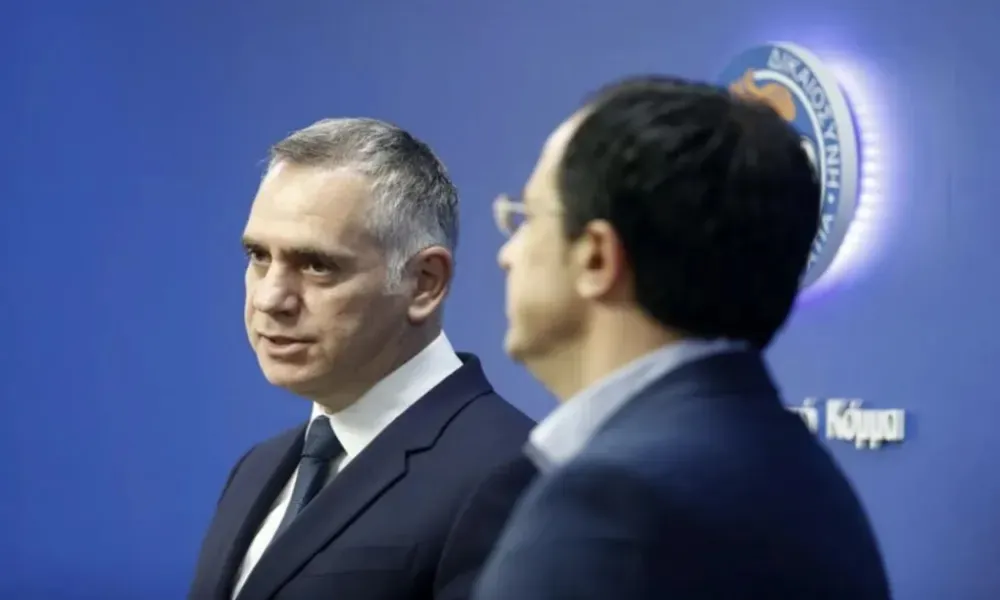
The first was, through appointments, to tie to his 2028 presidential bid the parties that had supported him in 2023. As far as DIKO is concerned, he appears to have succeeded. It is now extremely difficult for Nikolas Papadopoulos to make any choice other than Christodoulides, even though it is clear that he would prefer otherwise, given that almost half of the cabinet now consists of senior DIKO figures only 18 months before the election. A break with the government would effectively amount to a break with himself.
Under the current circumstances, DIKO has a candidate.
The second objective was, through the reshuffle, to preserve and expand his links to DISY. Given that he targeted prominent figures from the party of the Right who would have signalled support from the upper echelons of the party, he achieved this goal to a much lesser extent.
No senior DISY figure is included in the new cabinet, although he has retained those originating from DISY who supported his candidacy from the beginning.
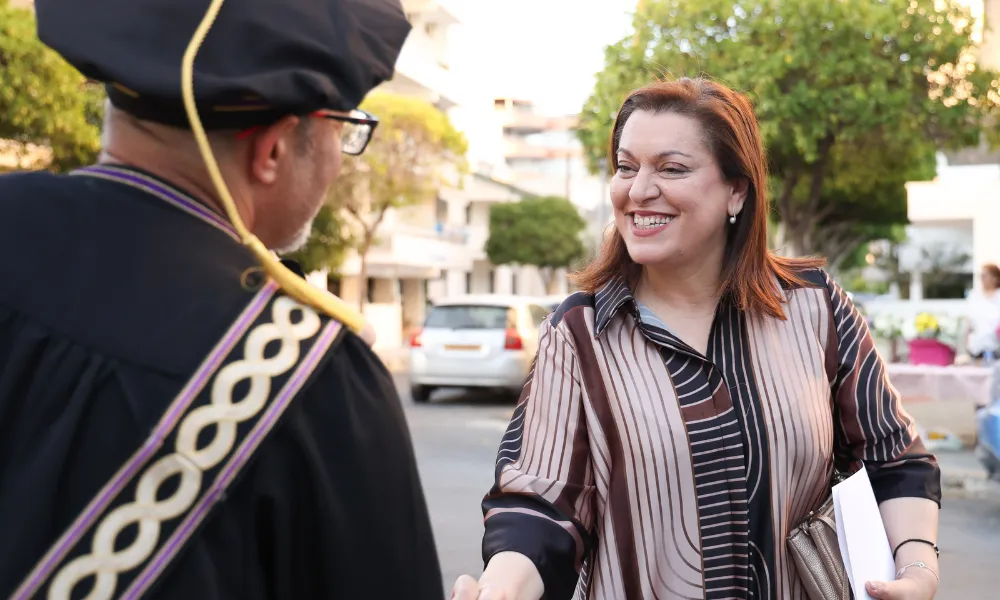
The inclusion of Tina Pavlou in the cabinet carries its own significance, given that she had until now been part of DISY’s shadow council. Viewed from that perspective, Nikos Christodoulides secured a victory over Annita Demetriou, with reports suggesting that she had supported Pavlou’s parliamentary candidacy.
This is, however, a victory of image rather than substance, given the limited political capital the individual in question carries. She is not expected to bring a significant number of votes to Christodoulides’ candidacy in 2028.
Both the apparent locking-in of DIKO and the effort to maintain an open channel with DISY came at a serious cost.
Relations with DIPA and EDEK are today in a worse state than they were before the reshuffle. Even beforehand, there were voices within DIPA, such as that of vice-president Marinos Cleanthous, advocating withdrawal from the government.
Through its public statement, DIPA demonstrated its dissatisfaction over the lack of consultation, while making pointed references to the extensive consultations that took place with DIKO.
In EDEK, existing frustrations over a lack of coordination with the Presidential Palace have been amplified by the fact that the party is now left without a ministry, while DIPA, despite securing a smaller electoral share, retains two ministries.
It is clear that significant reactions now exist within these parties, creating serious doubts about whether they will be able to move in a coordinated manner towards supporting Nikos Christodoulides in 2028 or, even if they do so, whether they will be able to mobilise their supporters effectively.
If one looks at relations between Nikolas Papadopoulos and Christodoulides, the same dynamic exists, albeit to a lesser degree, within DIKO itself.
The cost of courting DISY
Nor does the attempted outreach to parts of DISY come without consequences.
On the contrary, this continuing effort by Nikos Christodoulides to penetrate the party, together with the reactions it provokes, is creating polarisation and conditions for internal consolidation against him.
This was already visible in the parliamentary elections.
Even individuals who viewed Christodoulides positively or sympathetically may now feel that he constitutes a threat to the party’s cohesion. This could create a protective shield among DISY voters in the first round, reducing defections to Christodoulides while simultaneously creating a rupture with the party base ahead of a potential second round.
The biggest cost is his image
The principal cost, however, concerns Christodoulides’ image.
He entered the political stage carrying a black notebook that was supposed to bring the most qualified experts into government. He presented himself as independent and outside the party system, as the politician who would end partisan dealings and promote meritocracy.
He was the embodiment of the new, presented as the answer to a discredited old political order.
Those, ultimately, were the qualities that got him elected in 2023.
With the third reshuffle, he has undone every one of those promises.
The black notebook has become political horse-trading. The technocrats have become politicians, many of them senior political figures with little or no connection to the portfolios they are assuming.
From a vehicle of renewal, he has become a vehicle of old-style party politics.
And from a supra-party figure, regardless of what he may claim, with half the cabinet now coming from the governing party, he risks becoming DIKO’s candidate.
Everything that distinguished him before the election is gradually disappearing.
Most importantly, however, he is now comprehensively tearing up the contract he effectively signed with society in 2023.
And that can only constitute a huge and lasting blow to his credibility.
Whatever credibility he had left.