
Flight HCY522 of Helios Airways crashed at Grammatiko shortly after noon on 14 August 2005.
One hundred and twenty-one people died.
But the story of that flight did not end when the Boeing 737-300 violently struck the ground in Attica. It continued in inquiry rooms, courtrooms, ministerial offices, in decisions that were taken and, above all, in those that were never taken.
Twenty-one years later, the question is not only how the aircraft fell from the sky. That, to a large extent, we know. The more difficult question is how a state, an airline, a regulatory authority and a chain of human errors all converged at the same point and at the same time.
And how, after 121 deaths, an entire country continued to discuss responsibility without ever feeling that responsibility had truly been assigned.
Even today. Whatever tragedy we may have lived through since.
Not a single resignation
In the days following the crash, another institutional dimension of the tragedy began to emerge.
We reported it in Politis.
Reports by European and international organisations had documented serious weaknesses in the Department of Civil Aviation.
Inadequate staffing.
Insufficient oversight.
An inability to effectively supervise airlines.
British consultants had warned of first-level risks that pointed directly towards disaster.
And yet, when the tragedy occurred, no political responsibility was assumed.
Not a single resignation.
Not a single apology carrying the meaning: this happened under our supervision and we accept the burden of responsibility.
Civil Aviation was in free fall.
Political accountability, however, proved remarkably resistant to gravity.
No accident is inevitable
When Akritas Tsolakis delivered the findings of the Greek investigation in May 2006, he uttered a phrase that encapsulated the entire case:
"No aviation accident is destined to happen."
Indeed.
The report did not describe an inexplicable act of fate.
It described a chain.
- The engineer failed to return the pressurisation switch to auto.
- The crew failed to detect it during prescribed checks.
- The warning signal was not correctly identified.
- The airline displayed organisational weaknesses.
- Boeing itself was forced to address ambiguities and shortcomings in the warning system.
- The Department of Civil Aviation showed longstanding deficiencies in oversight and staffing.
There was no single guilty party.
There was a system that failed at multiple points simultaneously.
Systems do not kill on their own.
Systems are created by people, managed by people, supervised by people and corrected, or left uncorrected, by people.
A report left in a drawer
The Tsolakis report was followed by the Single-Member Investigative Committee chaired by Panayiotis Kallis.
For months, journalists and victims' relatives listened during the hearings to testimony that generated anger and bewilderment.
The Kallis report was delivered in January 2007.
It was never published.
The official explanation was that publication could affect ongoing criminal proceedings.
Six years after the disaster, information from the report that I revealed in Kathimerini, where I was working at the time, showed that the committee had recommended criminal investigations not only into Helios officials but also into seven Civil Aviation officials who were involved in licensing and supervising the airline.
They were never brought before a court.
In total, responsibility was identified for 12 individuals.
Only five were prosecuted.
Those put on trial were:
- Andreas Drakos, Executive Chairman of Helios.
- Dimitris Pantazis, Chief Executive Officer.
- George Kikkides, Director of Flight Operations.
- Janko Stojmenov, Chief Pilot.
- Helios Airways, as a legal entity.
Not included was engineer Alan Irwin, although he appeared in the indictment in Greece.
There were also seven officials from the Department of Civil Aviation for whom Kallis recommended criminal prosecution because of their involvement in the airline's licensing and oversight.
They never appeared in court.
Nor did they face disciplinary consequences.
Responsibility had been identified.
But not all of it reached the dock.
No acceptance of responsibility
The criminal proceedings ultimately concluded in Greece.
There were convictions in a misdemeanour court, which were later converted into financial penalties, and the case closed judicially in 2012.
In Cyprus there was no equivalent final conviction, as the issue arose that the same individuals could not be tried twice for the same facts.
And somewhere along the way, the concept of accepting responsibility acquired an almost metaphysical character in this country.
Everyone speaks about it.
Everyone demands it.
Everyone proclaims it.
But when the moment comes to meet it face-to-face, it has already disappeared.
Helios, Mari and the rest
Helios was not the last tragedy to follow this path.
Then came Mari.
Then came the financial collapse.
Then came the collapse of the cooperative banking sector.
Then came the investment programme.
Committees.
Reports.
Hearings.
Front-page headlines.
Assurances that "everything will be investigated".
And every time, in the end, citizens were left with the same feeling:
That responsibility evaporates the closer it gets to the top.
For this reason, the real wound of Helios is not confined to aviation.
It concerns trust.
The belief that when a state fails so catastrophically, someone will stand before the public and say:
"This is where we failed. These are those responsible. These are the changes we are making. This will not happen again."
Whitewashed tombs
I will never forget it.
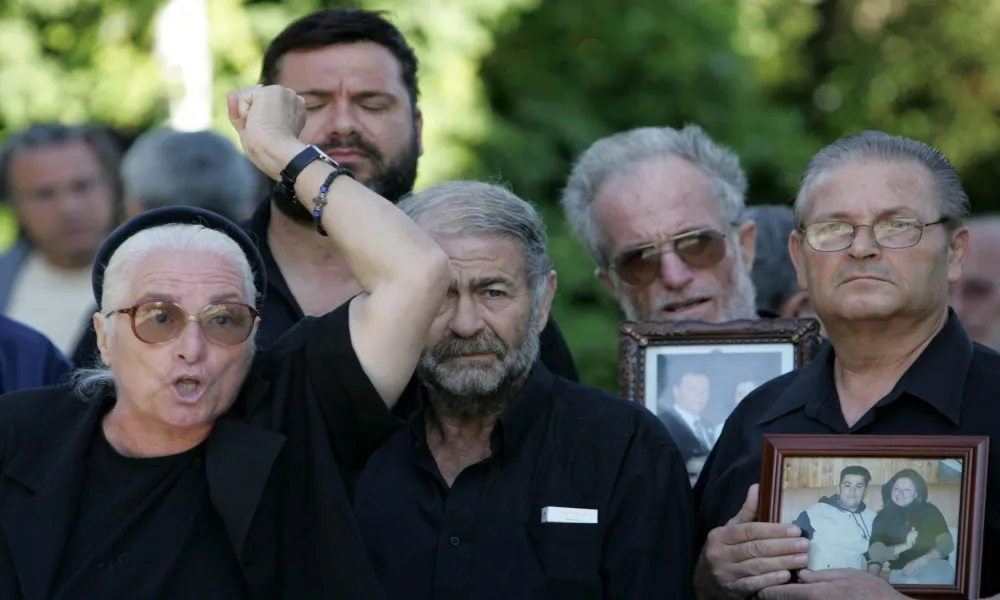
On 6 September 2005, relatives of the victims gathered outside Parliament.
People dressed in black held photographs of children they had lost.
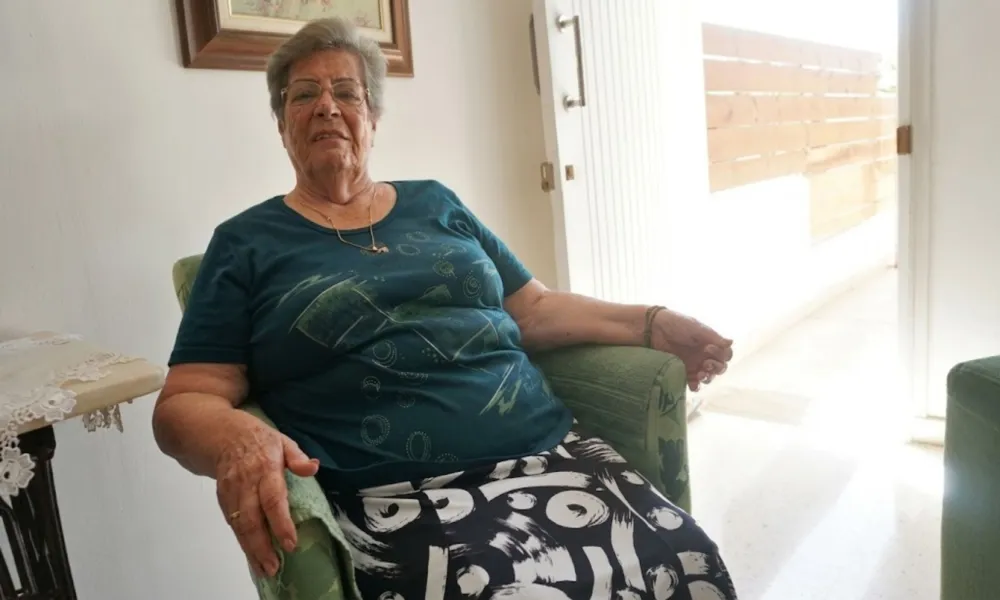
Among them was Georgia Charalambous.
She had lost her son, Tassos Anastasiou.
He was 36 years old.
I still remember her voice.
"I mourn my son, I mourn all the children of the world," she cried.
Ten months later I met her at her home.
It was dusk.
That hour when daylight slowly gives way to darkness and the sky takes on a deep purple, almost funereal colour.
Photographs of Tassos were everywhere in the living room.
At one point she turned to me and uttered a phrase I have never forgotten:
"Whitewashed tombs, full of decay."
Twenty-one years later, I often return to those words.
To tombs that are white on the outside, clean and immaculate, while concealing rot within.
To people and, above all, institutions dressed in words such as transparency, cleansing, investigation and accountability while behind them lie inertia, self-protection and oblivion.
Behind them hide rotten people, corrupt and hypocritical.
Perhaps, in the end, this was the harshest prophecy of a mother seeking justice for her child.
The dead are still waiting
The first public act of the new Transport Minister last Sunday was to deliver the memorial address for the victims of Helios.
It is therefore worth knowing that, 21 years later, the recommendations recorded after the tragedy remain largely on paper.
The creation of an independent Civil Aviation Authority has still not been implemented.
Four governments have come and gone since the disaster.
Nor has there been progress on establishing a state-owned company to provide air traffic control services.
At Boeing, by contrast, thousands of 737-300 aircraft were recalled immediately after the Cyprus tragedy in order to correct the shortcomings identified by investigators.
So that no other plane would crash.
So that no more people would die.
So that no more families would suffer.
In Cyprus, it is not enough that no political or institutional figure is ever truly held accountable.
No one appears to feel responsible for implementing corrective measures or changing the culture of the state.
It is no coincidence that tragedies here never seem to end.
Helios.
Mari.
Everything that kills us.
Everything that crushes human life, our existence and the future of this country.