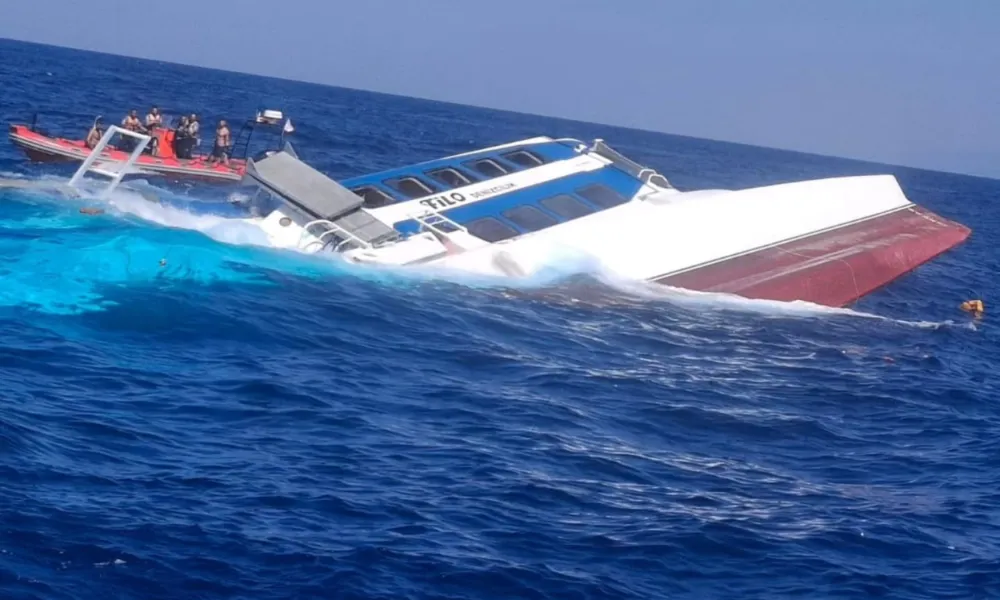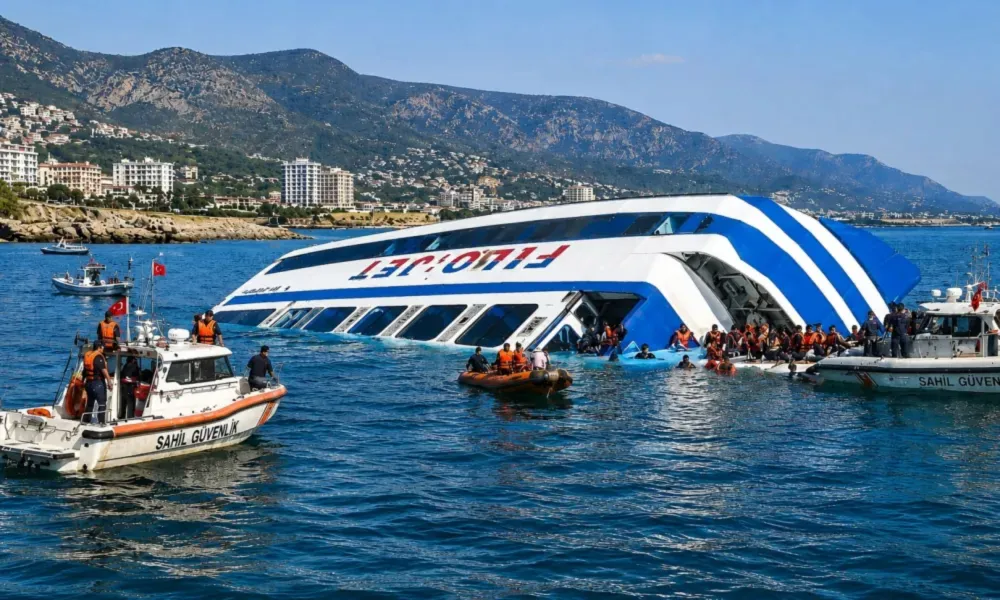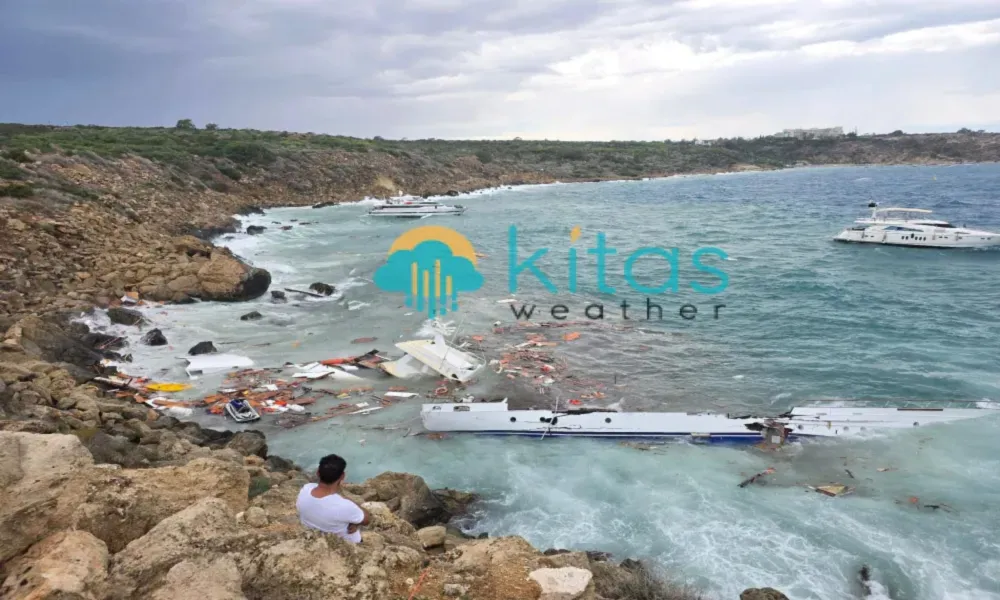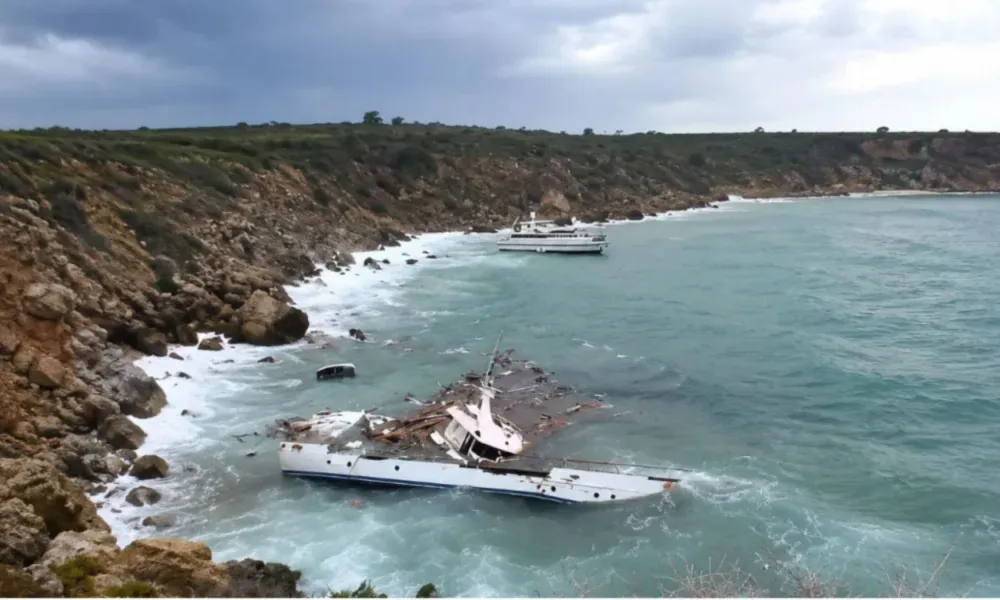

The ferry disaster off Kyrenia did not only expose the suffering of those caught at sea. It also highlighted, once again, a deeper and far more troubling reality of Cyprus: the inability to recognise that, beyond political disagreements, lines of confrontation and questions of recognition, there is a common homeland and people who may need one another's help.
On Sunday, the Government of the Republic of Cyprus conveyed its readiness to assist in the rescue operation. There was, however, no response from the other side. Much the same occurred during last summer's devastating wildfire in the Limassol district, when the Turkish Cypriot community offered assistance that was not accepted by the Republic's side.
This recurring pattern of refusals resurfaced in the aftermath of the Kyrenia tragedy. When the Republic of Cyprus declared its readiness to contribute to rescue efforts, the response from the Turkish Cypriot side was not what many might have expected in the face of a human disaster.
To be fair, the message received was that no such assistance was required. That may indeed have been the case. In this instance, the available resources of both Turkish forces and the Turkish Cypriot authorities appear to have been sufficient and ultimately contributed to the rescue of the vast majority of passengers. Even so, a significant contradiction remains.
Distrust
The issue is not simply that an unrecognised entity may view assistance from the Republic of Cyprus with suspicion.
What is more troubling is that a similar mentality appears, in a different form, on the side of the internationally recognised state in the government-controlled areas, which one might expect to be more open to cooperation in such circumstances.
Distrust is not the monopoly of either side.
It has become a shared reality.
And that may be even more dangerous.
A vicious circle
The result is a vicious circle marked by the logic that "we do not accept their help because we do not trust them" and, at the same time, "we do not trust them because they do not accept our help."
In these mutual refusals, something obvious is lost.
In a disaster, there is no Greek Cypriot rescuer and Turkish Cypriot rescuer. There is a person trying to save another person. There is a group of people capable of helping protect a forest and saving homes from a wildfire.
That should be the minimum point on which agreement is possible.
What confidence-building measures?
There is constant discussion of Confidence-Building Measures (CBMs).
Yet trust is not built through statements, negotiating tables or carefully crafted political messaging.
Trust is built when another person is in need and you extend a helping hand without first calculating the political cost of doing so.
Cyprus is a small country.
Small enough that members of the two communities live only a few kilometres apart, face the same dangers, the same wildfires, the same floods and the same maritime tragedies.
And yet, people continue to behave as though they belong to two different worlds.
The situation is neither productive nor encouraging. It is also worth noting the hostility displayed by part of the Greek Cypriot community in the aftermath of the ferry disaster.
Division beyond politics
Division today exists not only because of the presence of occupation troops.
It is no longer confined to institutions and politics.
It is gradually taking root in the minds of citizens.
A country cannot heal its divisions if its people learn to reject even the helping hand of the other side.
The real question, therefore, is not only how Cyprus will solve the Cyprus problem or overcome occupation and division.
It is whether, before a settlement is reached, there will still be unifying elements left on which a shared future can be built.
Because if suspicion prevails even in the face of death, then society is not building confidence.
It is building partition every day, both in practice and, above all, in the minds of its people.