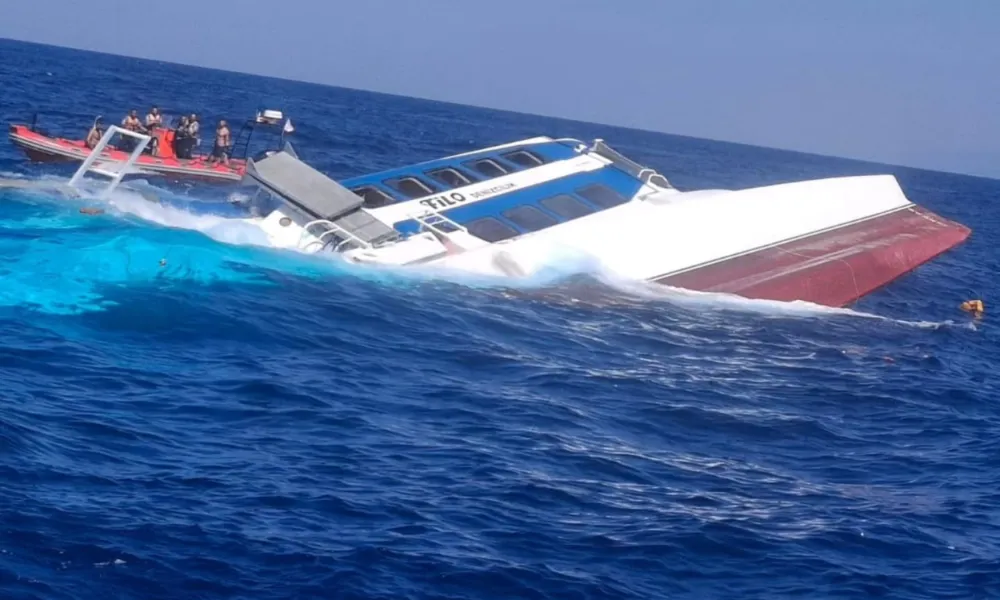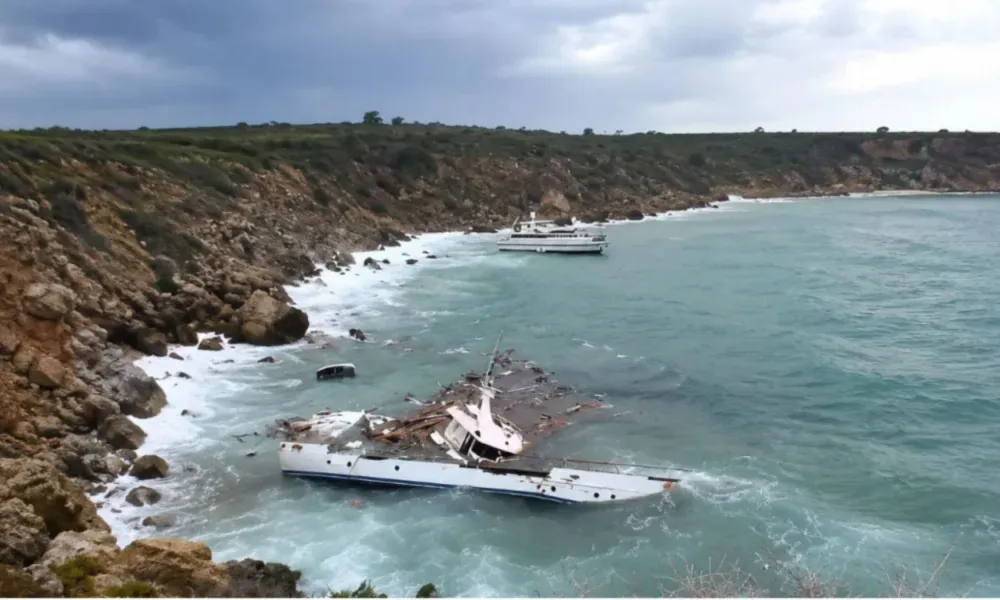

The inhumane celebrations by certain individuals on social media following the deaths of Turkish victims in the deadly ferry disaster off Kyrenia caused revulsion among a large section of society. Some concluded that these were simply bad people. However, it is relatively easy to dismiss such comments as the work of terrible individuals. The more difficult question is to ask who taught these people to think in this way.
No person is born believing that someone deserves death because he is Turkish. Such attitudes are shaped by nationalist collective narratives that penetrate families, schools, the media and other institutions. They are the product of seeds planted within society by extremist politicians seeking to climb to positions of power. The inhumane reaction of these individuals exposed the ugly face of nationalism.
Certainly, people have a responsibility to think independently and to resist extremist ideologies and messages of hatred. They cannot simply be regarded as victims of a socially constructed racist perception of certain nations. Nor should we believe that it is inevitable for a person to become merely the product of his social environment. Adults, in particular, bear individual responsibility.
But how easy is it for someone to think differently in a society where anti-Turkish sentiment remains strong?
It is extremely difficult to process historical grievances and overcome hatred when there is a historical background. Especially when self-criticism is absent and official history is presented in a one-dimensional manner, constantly reinforcing the divide between "us" and "them". The way history is taught conditions people to see an enemy before they see a fellow human being.
As a society, we have become trapped in a vicious circle. Collective memory is transformed into inherited hatred and future generations inherit an enemy.
That shared sentiment is then exploited by some who seek to build political careers.
Who will break this cycle?
From time to time, efforts are made by certain politically aware citizens and politicians. Yet strong resistance emerges each time from nationalists and from all those who have learned to use hatred to their own advantage.
This effort cannot succeed unless it eventually becomes a genuine objective of the state and finds strong allies within society.
The goal is not to erase history, nor to absolve Turkey of responsibility for the invasion and the deaths of 1974.
The challenge is to learn to distinguish between the state that invaded Cyprus in 1974 and the people living in Turkey today.
What connection does a Turkish fisherman today have with the soldiers of 1974?
We cannot regard a person as guilty simply because he was born in Turkey.
Nor would we accept being held responsible for crimes committed in the past.
Such distinctions are demanded by critical thinking.