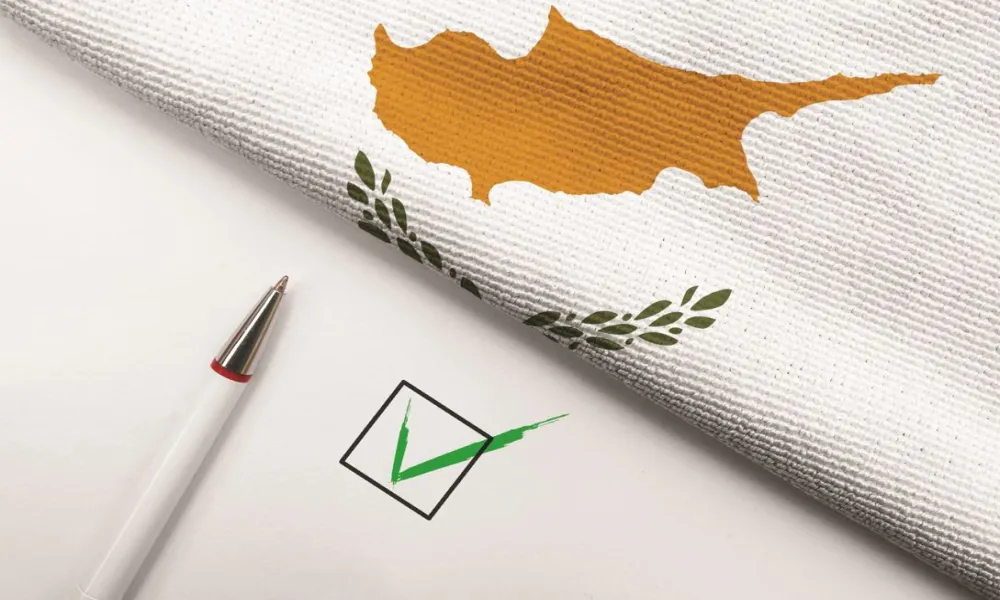

Cyprus' political forces are preparing intensively for the country's most important electoral contest, the 2028 presidential election. The process will effectively begin on 28 November, when DISY selects its presidential candidate. Former party leader Averof Neophytou and former minister George Pamboridis are competing for the nomination.
The final balance of forces and the true shape of the presidential race, however, will not become fully clear before AKEL decides which candidate it will support, something expected in the spring. March is also expected to see the formal announcement of candidacy by incumbent President Nikos Christodoulides. That is when the anticipated "battle of the three poles" of power is expected to begin.
The contest begins
During nearly four years of Christodoulides' administration, despite multiple problems and challenges, political confrontation lacked a clear centre of gravity and a genuine contest of ideas. It often appeared devoid of substance: "What did the President say, and how did the parties react?" Most issues related to day-to-day political management.
That may now change as the countdown to the ballot box begins.
DISY's candidate, and later AKEL's preferred candidate, will mobilise political forces, formulate policy positions and challenge Christodoulides politically. Only in this way can the democratic process be tested in practice. In that sense, 28 November may mark the transition from a politically correct environment to the real arena of political confrontation.
The DISY candidate will face as his main opponent incumbent President Nikos Christodoulides, who is supported by DIKO and indirectly by ELAM. His opponent is on the right and presents himself as an advocate of social liberalism aligned with the principles of the European People's Party. Consequently, he competes with DISY for a similar pool of voters.
The party's presidential nominee therefore has little choice but to give greater substance to policy positions and highlight clear points of differentiation: the economy, the cost of living, inequalities, corruption, reforms and, in the background, the unresolved Cyprus problem.
The privileges of power
Like every incumbent president, Christodoulides has the legitimate personal ambition of seeking re-election in order to "complete his work" within a ten-year timeframe.
The President of the Republic of Cyprus, however, enjoys powers that are considerably greater than those usually available in other European countries. The presidential system allows him to govern without direct dependence on parliamentary authority. The extensive powers granted by the constitution enable him to control the state apparatus through a broad system of appointments to executive positions.
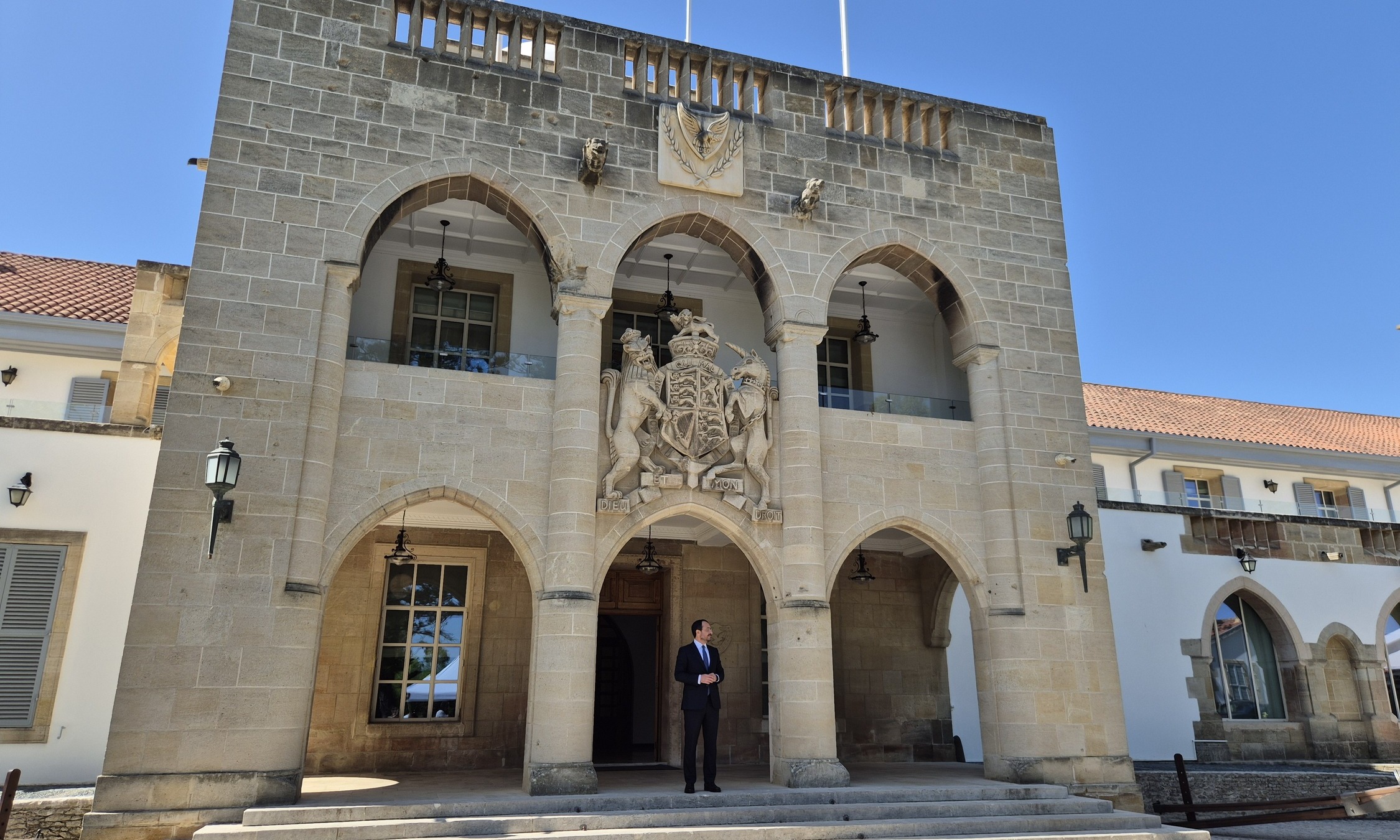
Christodoulides has made full use of these presidential privileges. The wider public sector has expanded by 8%, with 6,000 additional employees between 2022 and 2026. Hundreds of executive officials and board members have also been appointed or replaced.
The Christodoulides administration maintains that it safeguards meritocracy, but public perception remains highly negative. According to a RAI poll published on 8 November, 82% of respondents expressed dissatisfaction with the government's performance on meritocracy and tackling corruption.
Without a credible opposition, and despite numerous problems, Christodoulides often appears to be competing with himself and with the promises he made before the election, many of which have been abandoned or only partially fulfilled.
The RAI poll showed that 65% of respondents were dissatisfied with the government's overall performance, while only 33% expressed satisfaction. These are particularly negative approval ratings, given that historically the corresponding figures for sitting presidents tended to exceed 50%.
AKEL's position
AKEL is Christodoulides' ideological opponent. Since the troubled end of the Christofias presidency in 2013, amid the financial crisis, however, the historic left-wing party has lost three consecutive presidential elections.
It was defeated twice by DISY during the Anastasiades era and, in 2023, by Christodoulides. Despite some recovery in the May parliamentary elections, AKEL's overall position has not improved substantially, as it now sees Christodoulides governing alongside DIKO and other smaller forces that it once regarded as potential allies.
Christodoulides understands the weakness of the left and has directed his political efforts primarily towards DISY.
In reality, his election affected DISY's political standing more than AKEL's. Under the leadership of Annita Demetriou, DISY repeatedly wavered under the influence of former President Nicos Anastasiades, who was perceived as favouring Christodoulides.
In the summer of 2025, Demetriou reportedly received a proposal under which DISY would join the Christodoulides government and receive half of the ministerial posts. She did not take such a step because she understood its implications, but she remained undecided, effectively "standing in two boats". This may be the real reason she withdrew from the race for the party's presidential nomination.
In May's parliamentary elections, DISY won 27%, demonstrating resilience against pressure, particularly from the far-right nationalist ELAM. At present, predictions within DISY remain difficult, but many believe the party's presidential candidate must enjoy strong internal backing and provide a clear political identity if DISY is to return as a party of government.
DIKO and ELAM
Both DIKO and ELAM have left open the possibility of supporting Christodoulides.
DIKO leader Nikolas Papadopoulos has referred the matter to the party's collective decision-making bodies, although party members who were appointed ministers have already publicly backed Christodoulides, pre-empting internal party decisions.
Papadopoulos has not ruled out pre-election cooperation in support of Christodoulides even alongside ELAM, despite the fact that part of DIKO's traditional support base holds strong anti-far-right views and may not follow such a course.
ELAM, for its part, is also seeking a share of power as part of its effort to normalise its political presence fully. Its dominant objective remains preventing a reunification settlement based on a federation.
The party must now choose whether to test its own electoral strength or take the risk of a direct confrontation with DISY in the first round.
Christodoulides nevertheless appears capable of bringing together both DIKO and ELAM in pursuit of power, despite their obvious historical and ideological differences.
Polls and public image
Since the summer, various opinion polls have circulated, some originating from non-transparent sources and lacking accepted standards of methodology, presenting different scenarios for the presidential election.
Christodoulides continues to record significant negative ratings regarding public satisfaction with his administration, even if some indicators have improved slightly compared with previous surveys.
At the same time, these polls show him advancing to the second round with a strong chance of re-election. Christodoulides is assessed as the sitting president, while his potential challengers have yet to be selected.
He also benefits from the powerful communications apparatus of the Presidency. On television channels, both public and private, even the most routine presidential activities often receive disproportionate airtime.
This image of political dominance is increasingly reinforced through inaugurations, sponsorship programmes, regional tours and even visits to schools, where future voters aged 17 will be eligible to vote in the presidential election.