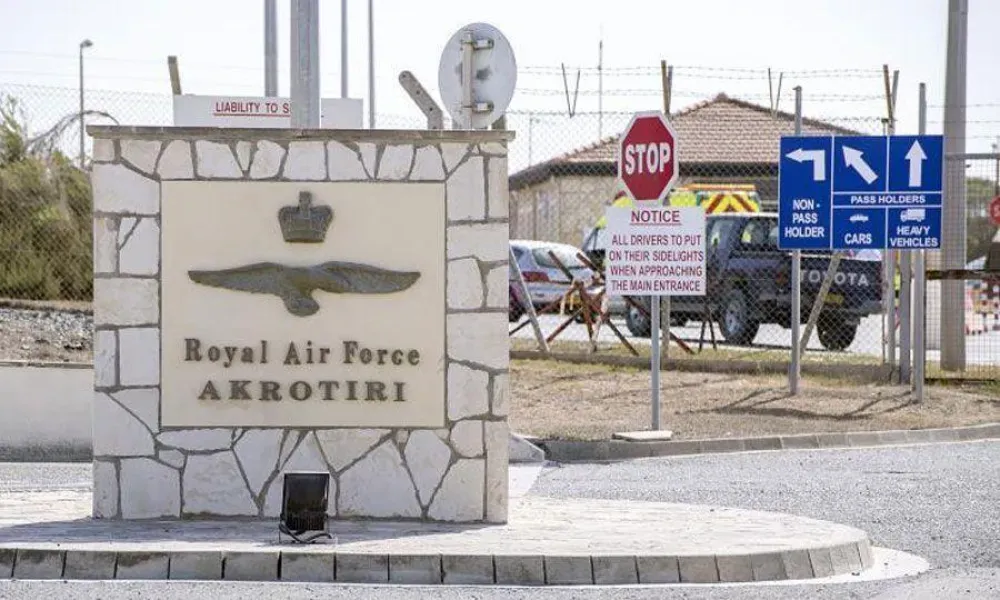

Cyprus President Nikos Christodoulides said that “all protocols are in place” following the drone strike at RAF Akrotiri. According to officials, the readiness protocols include both defence and civil protection measures aimed at safeguarding critical infrastructure and ensuring the safety of citizens and in this context the National Security Council meets to assess threats and coordinate ministries and agencies. The same source told Politis to the point that the situation demands for heightened alertness and readiness among defence, police, and intelligence services, monitoring and coordination with the UK government and British Base authorities, and situational monitoring by Cyprus’ civil defence and intelligence services.
Following the strike, the Cyprus Ministry of the Interior in an announcement titled “Actions of the Civil Defence Force in the Akrotiri area”, describing the situation as "tense and fluid" in the areas said the Cyprus Civil Defence was activated immediately and dispatched units to the area to provide assistance to residents. In coordination with the Mayor of Kourion, the Deputy Mayor of Akrotiri, and the British Bases administration, Civil Defence teams took precautionary measures to inform the public about the option to relocate to temporary accommodation at the Limassol Reception and Hospitality Centre, where officers and volunteers have been on site from the first moments to assist those who wish to use the facility.
Additional teams remain in the Akrotiri municipal district to provide guidance to residents and support transport to temporary shelters, while patrols continue to assist citizens as needed. The Civil Defence force remains in constant communication and coordination with local authorities and the British Bases administration to support ongoing efforts.
The Ministry of the Interior Due to what the ministry said the competent authorities immediately activated required security protocols after the incident, due ro Due to what the ministry described as a tense and fluid situation,.
Shelters can be located through the SafeCY application or via the Civil Defence Operations Control Centre at 22 403 451 or 22 403 452
The public is being informed on a precautionary basis that, if necessary, sirens will sound in affected areas and announcements will be made through various channels, including radio and television, to direct people to the nearest shelter. If there is no shelter nearby, citizens are advised to stay in a safe indoor area within their home or workplace, such as basements, underground parking areas, or rooms with solid walls. Staying indoors is considered safer than remaining outside. Trained neighbourhood wardens will also be positioned in areas of increased need to guide and assist residents.
For those in areas without nearby shelters, the instructions are:
• Find a space inside your home away from windows, doors and glass in the event of an alarm.
• Keep with you a portable radio, torch and basic supplies such as water, dry food and a first aid kit.
• In the event of an alarm, lie face down and cover your head with your hands.
• If outdoors and unable to reach a shelter in time, lie flat on the ground, preferably in a shallow ditch.
• Remain calm and follow the instructions of the competent authorities.
For short-term shelter use, citizens are advised to identify the nearest shelter in advance and prepare an emergency box containing water, dry food, first aid supplies, a torch, batteries, a radio, medication, important documents, some cash, and baby food if needed. In the event of an alarm, residents should proceed to the nearest shelter following the authorities’ instructions, remain calm, and maintain access to available sources of information.
The Ministry of the Interior said it is closely monitoring developments under the national “Estia” plan and remains in coordination with all competent services, ready to contribute with all available means.