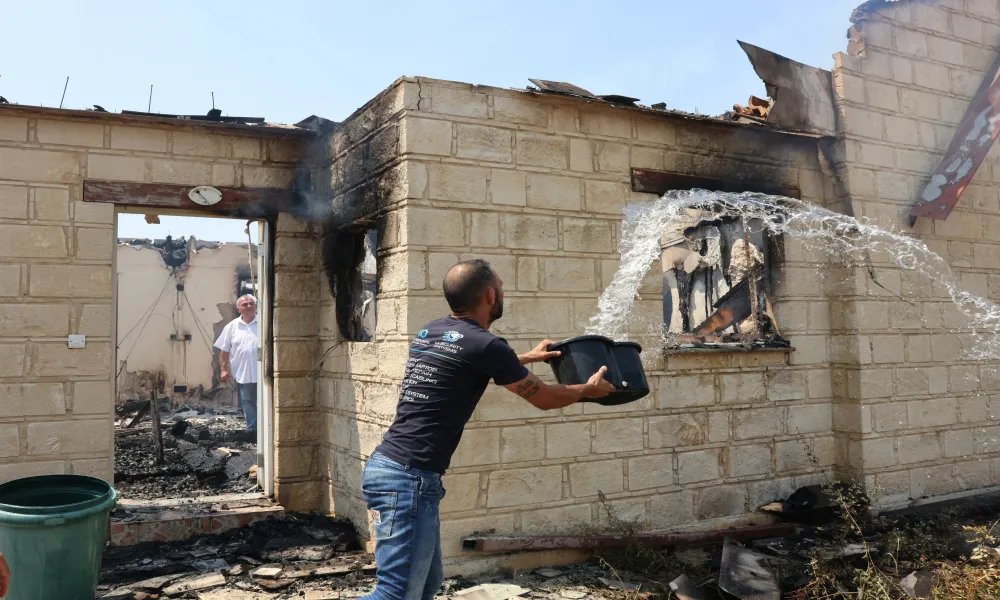

The parliamentary Committees on Interior, Agriculture and Environment sharply criticised Agriculture Minister Maria Panayiotou and the responsible services regarding their handling of the deadly wildfire that struck mountainous Limassol last summer.
The three committees, during joint sessions held on 5 and 29 August and 18 September 2025, extensively discussed the causes and consequences of the wildfire in the presence of all heads and officials from the competent state services.
It is recalled that the fire broke out on 23 July 2025 in the community of Malia in mountainous Limassol and spread across the wider area. The blaze burned more than 120 square kilometres of land, an area equivalent to 1.3% of the island’s total territory, causing severe environmental damage, destroying homes and property belonging to dozens of families, and tragically resulting in the deaths of two citizens.
In their lengthy report, the three parliamentary committees examined the operational readiness of the 37 services involved, the shortcomings in the existing central coordination mechanism for dealing with fires, the adequacy of aerial firefighting resources, deficiencies in evacuation procedures, the loss of human life due to failures in road closures and blockades, and delays in implementing support measures for those affected. The report prepared on the matter was submitted yesterday to the plenary session of the House of Representatives.
The report concludes that the findings, observations and conclusions were either unanimous or adopted by majority. Among the 39 conclusions, the most significant are the following:
-
Serious weaknesses and deficiencies were identified in the existing wildfire management mechanism.
-
Significant contradictions were found between public statements made by ministers and state officials during the first days after the destructive fires and their later positions before the parliamentary committees, as well as the refusal of some to answer questions repeatedly posed by MPs.
-
In particular, the initial response time to the fires was 15 minutes rather than six, as officials had claimed in the first days after the outbreak. The first response involved basic firefighting means from a neighbouring community, which did not allow for earlier and therefore more effective intervention. According to data submitted by the Cyprus Fire Service, the call reporting a grass fire on the road from Malia to Arsos was received through a private phone at 13:28. According to the Chief of the National Guard, the order to activate aerial resources was given at 13:49, while the first aerial drop took place at 14:18, meaning 50 minutes after the fire was first detected.
-
According to a response from the former Minister of Justice and Public Order to a question by the chairman of the parliamentary Committee on Interior, the Cyprus Police had responsibility for closing roads. However, the Chief of Police avoided explaining why the road on which the two citizens lost their lives was not ultimately closed, referring instead to an internal police investigation.
-
The Minister of Agriculture, Rural Development and Environment, systematically avoiding answering the substance of the questions posed by committee members and other MPs present, attempted to shift responsibility for coordination to the Chief Fire Officer of the Cyprus Fire Service.
-
The same official also refused to explain the absence, at the critical time, of the Director General of the Ministry of Agriculture, who was attending an event in Australia marking the “Black Anniversaries”, despite being responsible for coordination on fire-related issues and serving under the political authority of the minister.
-
Despite repeated attempts by the Environment Commissioner, the minister never held a meeting with her regarding the issue, for reasons that were not explained, instead referring her to officials of the Ministry of Agriculture.
-
Based on statements made before the committees, the Minister of Agriculture, Natural Resources and Environment did not adequately fulfil her duties overall. Furthermore, despite her presence during the discussions, she did not facilitate the work of the committees or the proper exercise of parliamentary oversight.
-
Difficulties were also identified in communication and coordination with Civil Defence, resulting in delays in providing guidance to communities and in evacuation procedures that were uncoordinated or fragmented. In particular, the Civil Defence Commander did not provide sufficient explanations for the serious deficiencies observed in some communities during evacuations from fire-affected areas.
-
The lack of clear operational guidance led to situations in which community council presidents were forced to act independently to evacuate areas, highlighting the need to strengthen crisis-response mechanisms at the local level and to establish an institutionalised central crisis management mechanism.
-
The committees also noted the need to clarify the responsibilities of the bodies involved in order to ensure effective planning, coordination and immediate intervention.
-
At the same time, they emphasised the need to develop a comprehensive strategy to address the broader environmental crisis, which increases the risk of wildfires.
-
The committees further consider it necessary to install modern fire detection and monitoring systems, map residential areas for evacuation purposes, and upgrade operational plans to ensure timely alerts, intervention and effective response.
-
Despite public statements by the Executive Branch regarding the state’s operational readiness, evidence and documents submitted before the committees revealed serious shortages in equipment, firefighting resources and personnel.
-
Despite the government’s announcements regarding compensation, serious pending issues remain concerning certain categories of affected residents in fire-stricken areas.
“She Should Have Already Resigned”
Aristos Damianou, MP for AKEL and chairman of the parliamentary Committee on Interior, spoke of the heavy responsibilities borne by the Agriculture Minister.
“There are unbearable responsibilities for the Minister of Agriculture, especially since it is known that the Minister of Justice is no longer in the position he held at the critical time. Taken cumulatively — from the devastating fires to the extremely poor handling of the foot-and-mouth disease issue and the broader problems the country faces with water management — the Agriculture Minister should already have resigned,” Damianou said.
“As a result of the unanimous report of the three parliamentary committees, the findings alone regarding the destructive wildfires should essentially lead to the resignation or dismissal of the competent Minister of Agriculture,” he stressed.