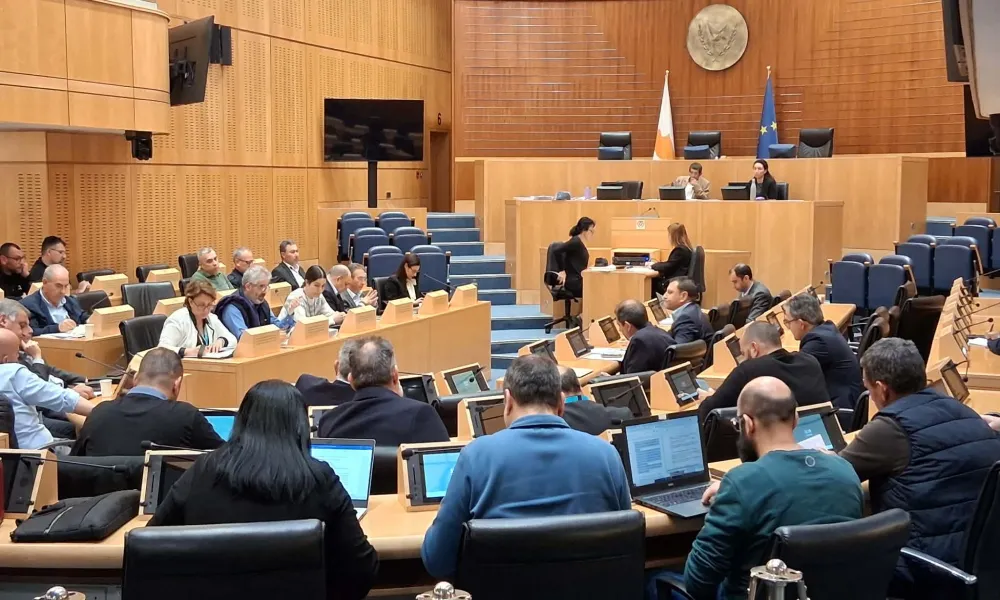
Cyprus’ House of Representatives is moving to introduce significant changes to its internal procedures, aiming to implement them with the new parliamentary composition following the May elections. Proposals submitted by AKEL, through parliamentary spokesperson Giorgos Loukaides, appear to have secured the necessary majority. They include a revised system for electing the House Speaker and the introduction of live broadcasts of committee sessions. A final discussion is expected on Thursday at the House Rules Committee, chaired by Speaker Annita Demetriou, before the proposals are submitted to the plenary for approval as legislation.
Simpler two-round election system proposed
The current process for electing the House Speaker is widely seen as complex, involving up to four rounds of voting and allowing for shifting alliances and political manoeuvring. Under the proposed changes, the Speaker would be elected through a simplified two-round system. Immediately after MPs are sworn in, candidates would be nominated by fellow MPs. A first vote would then be held, requiring an absolute majority of the total number of MPs, meaning 29 out of 56 votes. If no candidate secures that threshold, a second round would take place between the two leading candidates. The winner would be decided by a simple majority. In the event of a tie, a repeat vote would be held. If the tie persists, the Speaker would be selected by public draw. Only positive votes would be counted in each round.
Current system allows up to four votes
The existing procedure, in place since 1985 under Article 73.1 of the Constitution, is based on the principle of parliamentary autonomy. It involves separate votes for each candidate, starting from the nominee of the smallest party. In the first round, a candidate must secure an absolute majority. If unsuccessful, a second round requires 2/5 of the votes. A third round is decided by plurality, and if needed, a fourth round resolves any tie. Each vote is treated as a separate process, allowing MPs to change their position between rounds.
Live broadcasts of committee sessions
The proposed reforms also include the live broadcasting of parliamentary committee sessions during discussions of self-initiated topics and the initial stages of draft laws. Broadcasts would be carried out under the responsibility of the House, with the Speaker approving the process, timing and format, provided that a majority of committee members consent.
The changes are intended to streamline parliamentary procedures and enhance transparency, particularly in committee work, which has traditionally taken place outside public view. If approved, the new framework will mark the first major overhaul of the Speaker election process in more than 40 years.