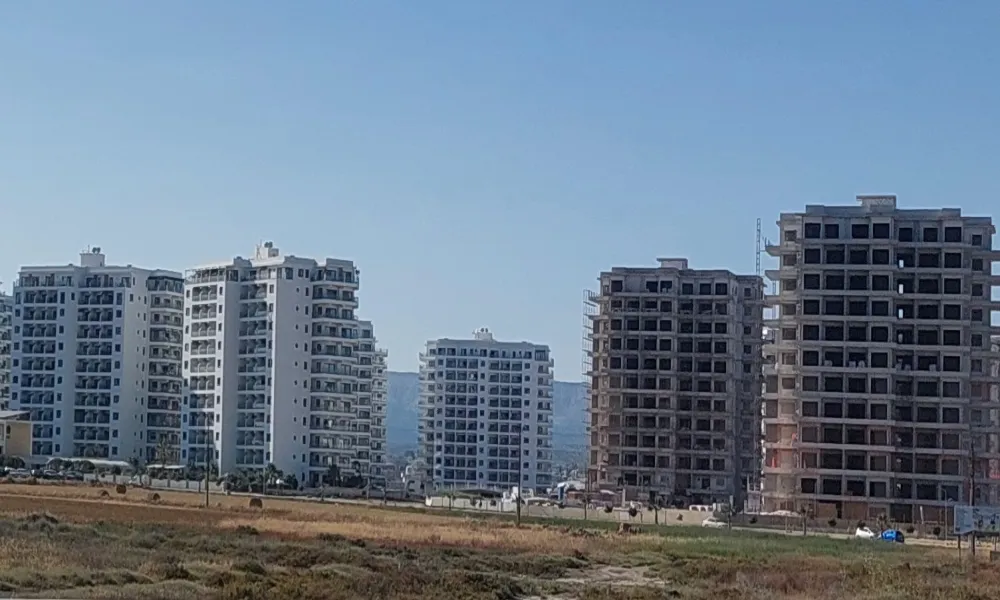

The recent legal proceedings on both sides of the island relating to property issues have changed the dynamics on the island, both at the leadership level and within sections of society.
The arrest of five elderly Greek Cypriots in the north on July 19 on seemingly thin charges hinted at a retaliatory move in response to the prosecution of foreign nationals in the Republic of Cyprus over the usurpation of Greek Cypriot properties in the north.
The leaderships on both sides of the island used strong language to describe the actions of the other, ‘terrorism’ and ‘fascism’ both making an appearance. Ersin Tatar complained to anyone who would listen, mainly the UN, about the prosecution of those associated with the development of Greek Cypriot land in the north, while Nikos Christodoulides even brought up the issue of the five Greek Cypriots with Washington, on the other side of the Atlantic.
After nearly two months in detention, the five were released on bail this past week, their travel documents taken, as they await both civilian and military legal proceedings.
Their ongoing ordeal, and that of those either in prison or facing trial south of the Green Line, comes as a reminder that the normalisation of the status quo on the island is a façade. There is nothing normal about it.
Crossings see a drop, only ‘necessary’ travel advised
How has this affected day-to-day relations among Greek and Turkish Cypriots? It’s hard to say, given that police numbers won’t tell you the length or purpose of crossings at checkpoints. Do people still cross to meet with friends, to see places, or to buy cheaper products on the other side?
According to police statistics, the number of Greek Cypriot crossings in July increased year-on-year. A total of 130,727 crossings by Greek Cypriots going north were recorded in July 2025, compared to 116,429 the same month the year before.
However, the tide turns somewhat in August and September. On August 2, President Christodoulides made this statement about the five in detention:
“I want to urge our Greek Cypriot compatriots who deem it necessary to travel to the occupied areas to be doubly and triply cautious, especially at this time when we are witnessing this piratical behavior on the part of the occupying regime.”
For the month of August there were 8,266 less GC crossings compared to August the year before. And for September 1-11, GC crossings north reduced by 4,970 compared to the same period in 2024.
For Turkish Cypriots crossing south, the numbers also increased in July, reaching 168,588, compared to 160,455 in July 2024. August also saw an increase of 7,448 crossings compared to the same month the year before. However, by September 1-11, there was a 4,593 drop compared to the same period in 2024.
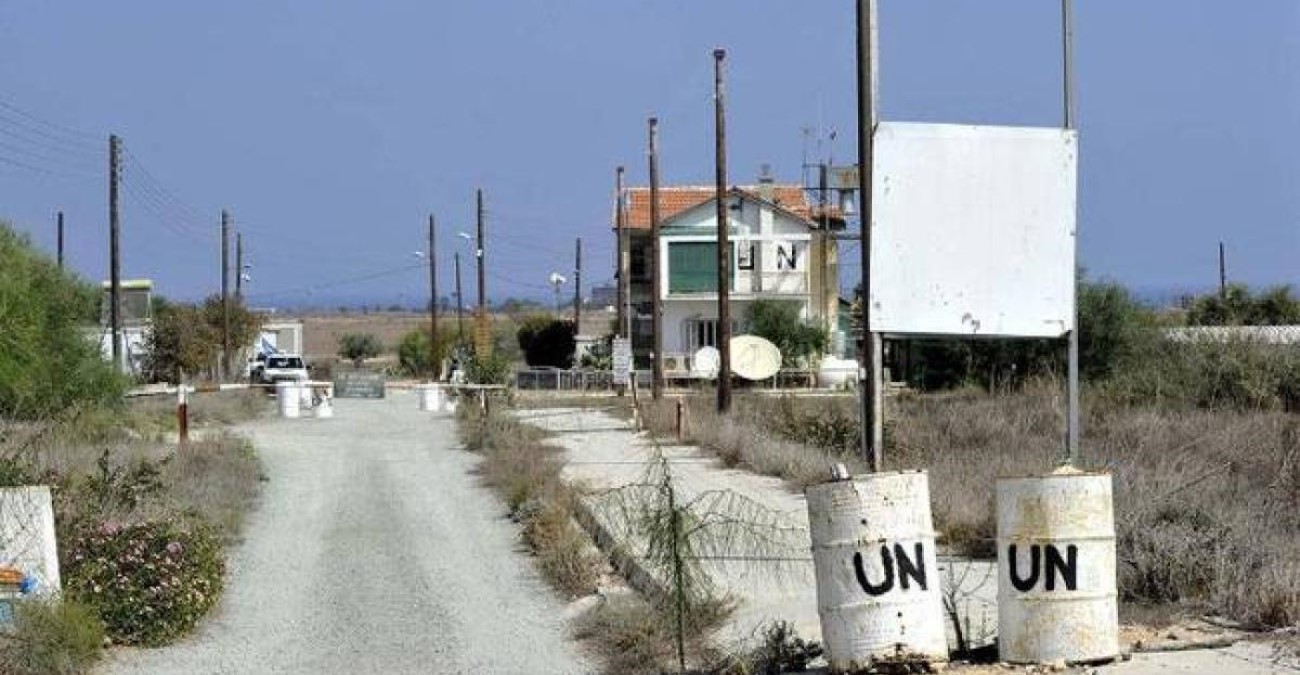
The times they are a-changin
The numbers are not so drastic to suggest a major shift, but talking to several people with a history of interactions across the island, the message was clear. Things are not the same. A lot of anecdotal evidence was given of people expressing fear of crossing, given the uncertainty of the situation and the politicisation of one of the thorniest issues in the Cyprus problem – property.
Most, not all, said they were concerned about the risk of crossing. Most did not wish to be named, in itself a sign of the times.
Some referred to rumours that the detention of the five GCs was a direct result of the arrest and prosecution by the Cyprus Republic of Israeli/Turkish/Portuguese national and developer in the north, Simon Aykut. They suggested that Aykut enjoyed good relations both with the TC leadership and Ankara.
It was even implied that one of the five GCs might have been on a list of witnesses for the prosecution in the Aykut case.
Asked to comment, a source from the Legal Service said they were aware of such reports but could neither confirm nor deny them.
Property issue now ‘hostage’ to politics
Human rights and property lawyer Achilleas Demetriades told Politis that “the issue of property has become hostage to the political situation”.
“It’s being played as a political game, whereas it used to be just a human rights issue, which nobody touched upon. Now it’s become political and because of this, it’s been blown out of proportion,” he said.
Demetriades pointed to the recent arrest by TC authorities of Murat Metin Hakki, a lawyer believed to represent the property interests of the GCs detained in the north, as proof of the political angle.
“People are scared to go to the other side now. They’re worried the same thing may happen to them. It’s created this uneasiness. It’s bad enough to be called names for going north, or applying to the IPC (Immoveable Property Commission), now there’s even more of a stigma,” he said.
The lawyer argued that the move will ultimately blow up in the face of the TC authorities. The law governing the IPC says “you have to guarantee passage of GC applicants to the IPC”.
“This will backfire. If they feel intimidated to come, I’m sure this will escalate to the European Court of Human Rights. IPC applicants will have to take some action,” he added.
‘A blind hit’
One Greek Cypriot, who wished to remain anonymous, stays with his family in his ancestral village in the north every summer. This year, they did not go, he told Politis.
Referring to the five GCs facing charges, he said: “It was a blind hit. Anyone can think they are next. What crime did these people commit?”
He added: “I know dozens of people personally who no longer cross. I’ve also told people not to cross. It’s a matter of principle.”
Asked whether the move was retaliatory, he replied that the Cyprus Republic has not charged a single Turkish Cypriot over property usurpation.
That may be the case but reports circulating in Turkish Cypriot media suggest that the Cypriot authorities have a list of TC contractors wanted on charges of exploiting GC properties. The rumour alone is enough to keep some away from the checkpoints.
In one case, Politis was told of a TC travel agent who went on holiday via Larnaca airport. On hearing reports of this list, they changed their flight to return via Ercan airport in Tymbou.
‘What were we supposed to do, wait another 50 years?’
Another GC citizen actively involved in bicommunal activities who did not wish to be named said it is impossible to live in the north and not have some connection to GC property, considering the vast majority of land is GC-owned.
He referred to a friend of his living in the north, a TC contractor who also works on bicommunal projects.
“He told me they didn’t touch Greek Cypriot land for decades until the Annan Plan, after which some started developing it. He asked me: ‘What were we supposed to do, wait another 50 years?’ He’s scared to cross now.”
The activist bemoaned the fact that some GCs took the opportunity on social media to discourage crossings or even interaction with TCs. He pointed to an effort, even at higher levels, to scare people from crossing.
“They say more arrests will follow, that Tatar has a plan and a list. If there was a list, I’d be on it.”
Although “serious people” have warned him to be cautious, and not to cross north with his phone, the activist said he still crosses two to three times a week.
“There is concern that if they arrest you and take your phone, they might find a photo from the last 15 years of something related to a military instalment. But even a photo of Saint Hilarion castle would have a military camp next to it.”
However, this has not deterred him or other GCs in his circle.
Anna Marangou, who takes busloads of GCs on ‘Historic Tours’ of Medieval Nicosia and Famagusta in the north, said she has seen no impact on her bookings for the month.
“I haven’t seen any change” in the desire or fear to cross, said Marangou.
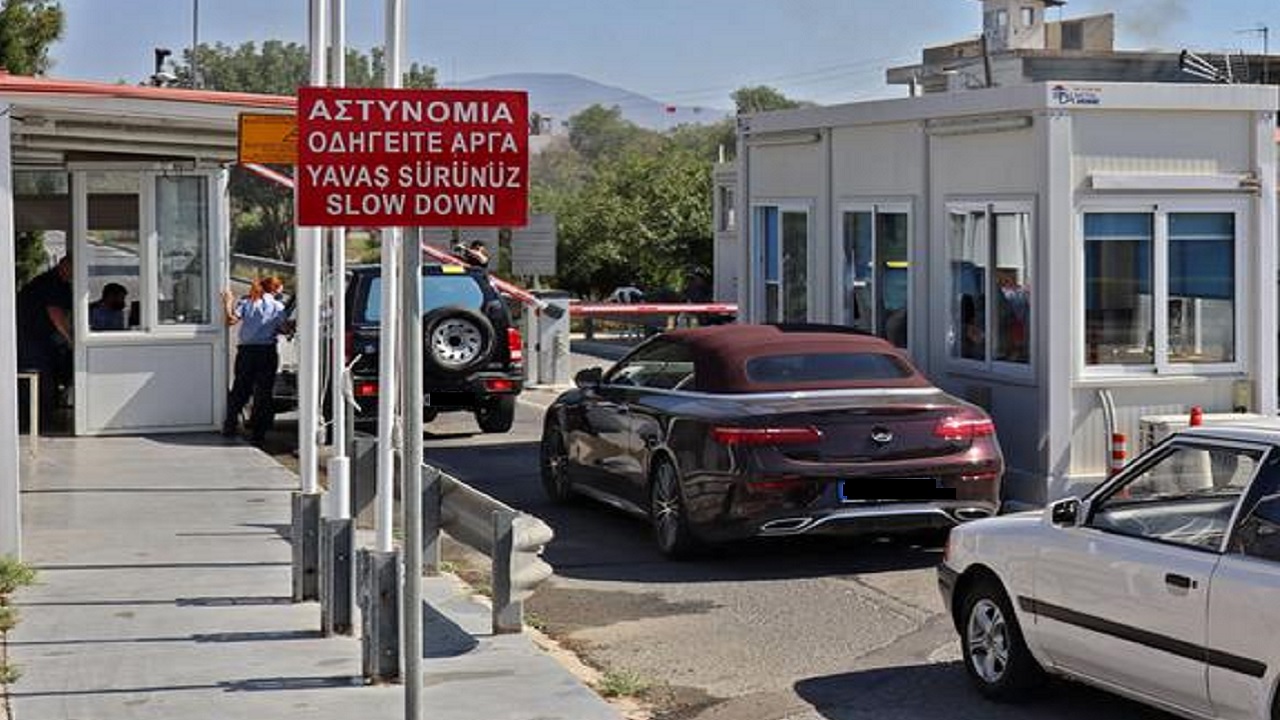
Though she has heard people say they no longer wish to waste time in queues at the Agios Dhometios checkpoint to fill up their fuel tank when the price difference is negligible.
‘Lawfare’ on property poisoning relations
Political scientist and co-chair of the bicommunal Cyprus Academic Dialogue, Sertaç Sonan was clear that the latest developments were bad for intercommunal relations and could get worse.
“What the Greek Cypriots have started is poisoning relations between the two sides. They pushed the Turkish Cypriot side to retaliate. Obviously, these five (GCs) have been arrested in retaliation,” he said.
“It’s going to escalate further, unless one side stops. Both cases are political, starting with Simon Aykut. Unless negotiations start, we will continue to see this weaponization of the law, or lawfare, if you will.”
He argued that legislation used in the Cyprus Republic to go after ‘usurpers of Greek Cypriot properties’ is very broad, covering even TCs displaced from the south who now live in GC properties in the north.
“As an individual, if you are violating this law, who can guarantee you’re not going to get arrested going south?”
Sonan noted that Aykut himself had crossed many times back and forth without any issue, until it became an issue.
“Many people have doubts and question marks in their mind. This is no way for the two communities to trust each other.
“The opening of the crossing point is the biggest milestone since 1974, it helped a lot to build confidence between the two societies. Now, these court cases are undermining all this,” he said.
The academic argued that the current climate affects pro-reunification people as they were the ones crossing the checkpoints more anyway.
“The solution to the property issue is a Cyprus problem solution. The current strategy only helps to undermine the rapprochement process and further poison the climate,” said Sonan.
He further noted that the two leaders on the island have not even managed to open a checkpoint in the last five years. With Track 1-level relations at their lowest point in years, this impacts upon everything else in Cyprus, including grassroots efforts.
“Crossing points are already a torture, just look at Agios Dhometios.”
Sonan argued that when he crosses south, he sees a well-functioning country.
“You cannot convince me that when a government runs everything so smoothly, they cannot run the crossing points… It’s intentional, they’re slowing things down,” he said.
In addition to not knowing how they will be treated if they cross the checkpoints, Sonan noted that pro-rapprochement TCs don’t even know whether they will be blocked from travelling to Turkey either until they get there.
“It’s a double whammy.”