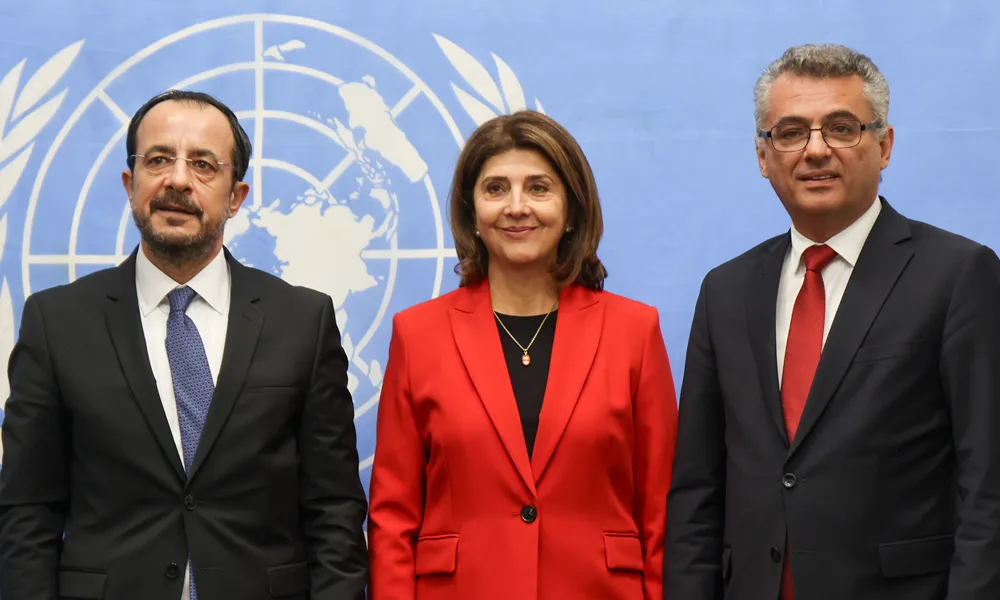
For the first time in a very long time, the two leaders engaged in negotiation last Thursday. Not so much on the key aspects of a comprehensive settlement that would end 51 years of division, but on a two-page document that the UN would hand out to the media pack waiting outside for hours in the chill.
It was not an easy document to prepare, hence the long wait, two hours over schedule. But it reflected a delicate balancing act, giving both sides something to hold on to as they take very tentative steps to come in from the cold.
Engagement over substance
The UN statement referred to both core aspects of the Cyprus issue and the parallel effort to improve the climate on the island through confidence-building measures (CBMs). A number of CBMs were referred to but none of them groundbreaking. They agreed to work on crossing points, finalise trade in halloumi and construct pipelines for irrigation from Mia Milia treatment plant – a project already started a month ago. They committed to producing tangible results for the benefit of both communities to ensure success at the next informal 5+1 meeting with the guarantor powers. They also noted that CBMs were important but could not be a substitute for a solution.
One sentence from the statement stood out:
“The two leaders agreed that the real aim is the solution of the Cyprus problem with political equality as described in the UN Security Council Resolutions.”
The reference to political equality touched upon the first of four proposals raised by Turkish Cypriot leader Tufan Erhürman on the methodology of a future peace process. While not fully satisfying his demand to lock in a mutual understanding of political equality before talks can start, Erhürman acknowledged that it went some way to doing so.
As for President Nikos Christodoulides, he wanted to stress that the last time a leaders’ statement referred to UNSC Resolutions as the basis of a solution was five years ago. The importance here being that – after five years of Ersin Tatar’s non-negotiation policy – nowhere in Security Council Resolutions does it refer to a two-state solution.
Political equality
Long-suffering Cyprus problem observers will know that the reference point for political equality is UNSC Resolution 716, which recognises the basis of a Cyprus settlement as a bicommunal and bizonal federation (BBF) comprising of two politically equal communities, as defined by the UN Secretary-General in his report on March 8, 1990:
“While political equality does not mean equal numerical participation in all federal government branches and administration, it should be reflected inter alia in various ways: in the requirement that the federal constitution of the State of Cyprus be approved or amended with the concurrence of both communities; in the effective participation of both communities in all organs and decisions of the federal Government; in safeguards to ensure that the federal Government will not be empowered to adopt any measures against the interests of one community; and in the equality and identical powers and functions of the two federated States.”
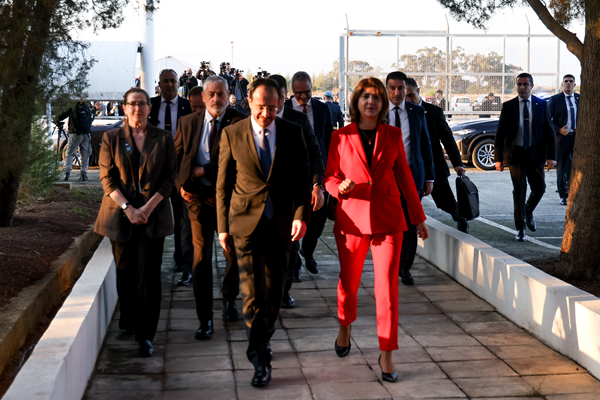
Without referring to a two-state solution or a BBF, without annoying government partners in Nicosia, and without putting Ankara on the back foot, Christodoulides and Erhürman created a space for themselves last Thursday, to walk cautiously forward if they wish, and somewhat closer.
But time is not on their side. Cyprus takes on the EU Presidency in the first half of 2026, and perhaps more importantly for Christodoulides, has parliamentary elections in May. By the end of the year, UN Secretary-General António Guterres – a European with significant experience on the Cyprus issue – will take his final bow at UN headquarters as his successor is chosen. In early 2028, presidential elections will be held. And so on, and so on.
EU Special Envoy Johannes Hahn did not mince his words when he came to the island, meeting with both leaders and UN Personal Envoy María Angela Holguín Cuéllar separately. Pointing to the opportunity arising after a difficult period, he said: “The time is now to deliver.” Even more interestingly, he addressed the president directly, saying: “Europe very much counts on you to find a good relationship with the Turkish Cypriot leader in order to pave the way, not only for the resumption (of talks) but for a final positive solution.”
If the leaders miss this train, it really is difficult to imagine what means of transport will roll into the station next, and when.
What next?
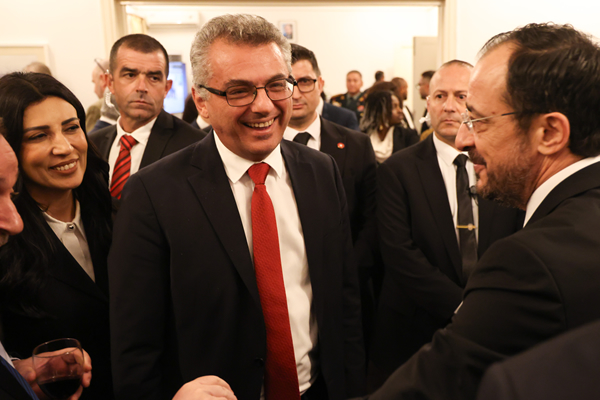
The positive from the last meeting was the sentence on political equality based on UNSC Resolutions. However, the fact the two could not agree on a single concrete and complete CBM, despite the positive change in air, shows that the road is long. We’ve been here before, many times.
Each leader must prove that they are serious and capable of changing the so-called ‘status quo’ at the negotiating table. The international community has given them space to do so, while keeping the candle burning in the last eight years since Crans-Montana.
Erhürman has a very delicate act to play in pursuing a federalist agenda while keeping Turkey on side. Hence his strong insistence on adopting a four-point methodology to ensure future talks are not conducted in vain. At the same time, Christodoulides needs to show that having Tatar as an interlocutor for five years was not an ‘easy alibi’ but a hindrance.
Both sides need to show good will and good faith moving forward, not necessarily with haste, but without waiting for Godot either.
Former negotiators not impressed
Politis spoke to two former negotiators and sparring partners with a wealth of experience on the minute intricacies of a negotiation process that has seen many a diplomat fall on their sword trying to conclude.
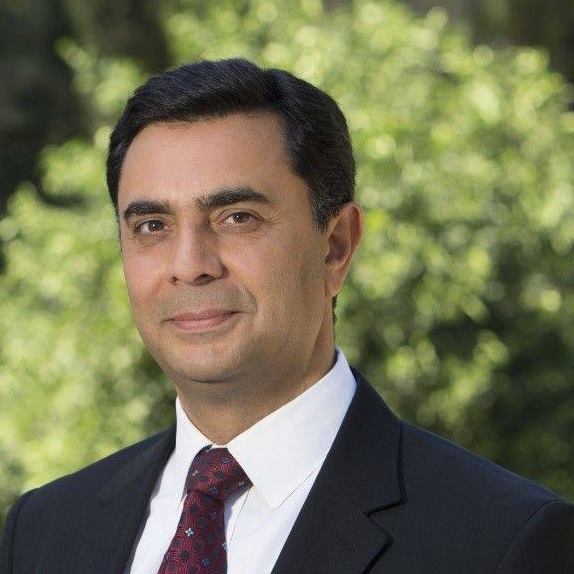
Former negotiator under both Mehmet Ali Talat and Mustafa Akıncı, Özdil Nami, argued that the fundamental problem between the two sides, preventing meaningful talks, is that Christodoulides wants to jump into substantive talks where as Erhürman says they need to figure out a new process first.
“It seems the Greek Cypriot side is extremely reluctant to focus on process design, and Mr Erhürman is extremely reluctant to say anything regarding substance without seeing this new process design.”
Nami added: “This renders these meetings fruitless, evidenced by fact that the joint statement was quite weak. Reference to political equality as it has been stated in past UNSC Resolutions means that we are still at point zero.”
He argued that political equality as defined by UN resolutions is not disputed by anyone. The sides have gone much further than that to define the term significantly in negotiations leading up to Crans-Montana.
Nami said until the fundamental difference on process design is resolved, creating a common path towards a comprehensive settlement, the two leaders will not make headway on meaningful CBMs either.
“Despite the UN statement, I don’t see a very bright, optimistic picture in the future,” he said.
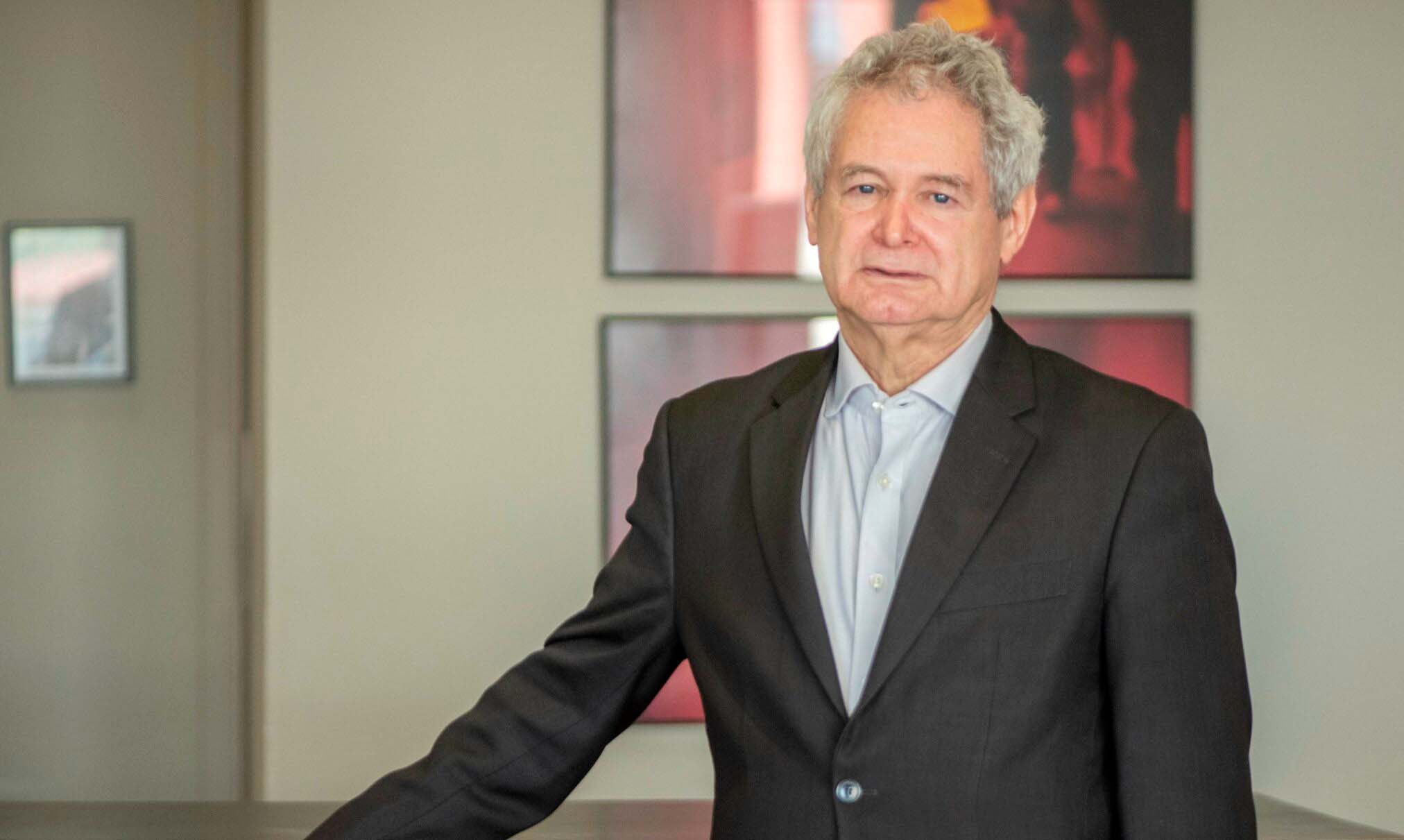
Former negotiator under Nicos Anastasiades, Andreas Mavroyiannis agreed that the statement did not contain much substance. He warned that the leaders should not exert their energy on CBMs during these meetings, especially if they approach them in a zero-sum manner, horse-trading one for another.
He acknowledged some progress compared to previous meetings with Tatar, but at the same time, “nothing really important” came out of the last meeting. Even the reference to a BBF was indirect, he argued.
Effective participation
Erhürman’s first proposal on methodology is to confirm political equality from the outset, to avoid wasting time when substantive negotiations start. The real problem in negotiations on political equality is the notion of effective participation of Turkish Cypriots in governance, said Mavroyiannis. Does it mean one ‘positive vote’ in all decisions or a limited number?
This was not fully agreed in Crans-Montana, he said. Though what was agreed and submitted by the Greek Cypriot side in writing on July 5, 2017, was acceptance of a rotating presidency, on two conditions: that the Turkish Cypriots accept cross-voting (which they did, says Mavroyiannis), and a six-year rotating presidency of two years each, starting with a Greek Cypriot president.
The Greek Cypriot side also sought for the President and Vice-President (VP) to run on a joint ticket but Akıncı did not approve, and Anastasiades agreed to drop the demand.
The two outstanding issues on political equality, said Mavroyiannis, were both resolved in an oral agreement during the trilateral meeting between Anastasiades, Akıncı and Guterres in Berlin on November 25, 2019.
1. If the President and VP cannot agree on a joint decision, the issue goes to a deadlock-resolving mechanism.
2. A positive vote is required on collective decisions, not on all issues but on those where there is a fundamental interest of either community – provided the two sides agree in advance on what constitutes a fundamental interest.
Mavroyiannis argued that if the sides stick to what was previously agreed, Erhürman’s request is essentially agreed in essence. Nami agreed that this point was not insurmountable.
Reconfirming past convergences
Point two on the methodology list is also not a deal-breaker. Nami noted that Christodoulides’ call to start from where the talks broke off in 2017 goes some way to meeting this criteria, though he believes clarification is needed where some statements injected an element of doubt, such as what does the Greek Cypriot understand to be the ‘Guterres Framework’.
Mavroyiannis agrees that there are no fundamental contradictions in the two sides’ understanding of ‘past convergences’.
“For both sides, it’s very clear where we stopped. It can only be an issue if somebody retreats from that,” he said, noting that Christodoulides has in the past raised doubts on some of the six points in the Guterres Framework.
The former Greek Cypriot negotiator said if both sides accept what they’ve submitted in the past, including Akıncı’s oral agreement in 2019, then this point is also surmountable.
Timeframe
Both negotiators agreed that setting a timeframe – the third point on Erhürman’s list – is not a real problem. “It shouldn’t be a problem, as long as it’s in writing, in black and white,” said Nami.
“Nobody’s asking for open-ended negotiations,” said Mavroyiannis.
The tricky one
The final and most challenging proposal on methodology raised by the Turkish Cypriot leader is to ensure there is no return to the status quo should the talks fail, especially if the Greek Cypriots are seen as responsible.
Nami argues the Turkish Cypriots have the moral high ground on this. “Mr Erhürman is saying what will happen to us if Greek Cypriots reject us once again. […] I find it odd that Mr Christodoulides refuses to discuss it, categorically rejecting it.”
Here his former interlocutor disagrees. “We can never accept to sign terms of a divorce before the wedding,” said Mavroyiannis.
Turkish Cypriots can state their own position from the outset to say what they want if the talks fail, but they cannot ask Greek Cypriots to recognise them if the talks fail.
“If they are asking us to take measures so they will eventually have what the EU promised them, such as, direct trade, then fair enough. But not to go so far as to say, ‘you will recognise me’,” he said.
Mavroyiannis said direct trade was a feasible measure to introduce, and should be pursued in such a case, provided the safeguards are in place to avoid the projection of a separate entity.
“Why not, it creates better conditions for a solution,” he said.
He argued that trying to punish the other side through petty moves doesn’t work. The Greek Cypriot side should not seek to make life more difficult at the crossing points or put obstacles to Green Line trade, he said.
“We need to be very generous on this, because it helps a lot, always with full respect to EU rules and regulations,” said Mavroyiannis.
Political will
Asked if the will was there to go all the way, Mavroyiannis said: “With the current government, and the configuration of power, you feel sometimes they don’t have the political will. I stand to be corrected. I hope they have it, but I don’t see.”
When asked if Erhürman had Ankara’s backing, Nami replied: “The internal political situation in Turkey makes it difficult to openly talk about a BBF, so he’s being careful about that. But in a sense, Mr Erhürman has done his coordinating work and is pushing forward. I hope he has a counterpart willing to engage in a serious manner and finish the job.”