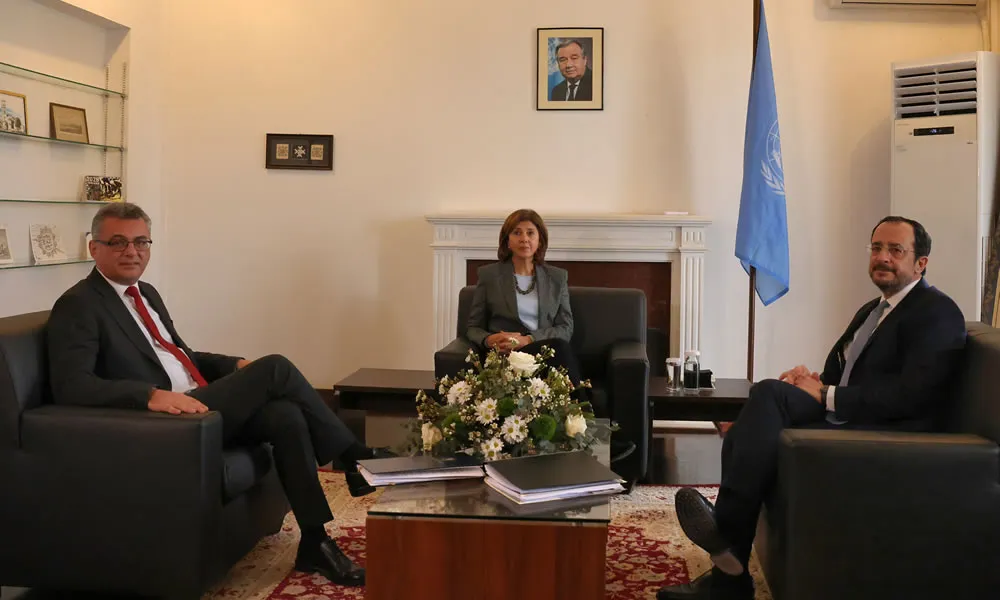

The third leaders’ meeting ended on Wednesday without result and with no plans for an enlarged ‘5+1’ meeting with the guarantor powers.
The UN Secretary-General’s Personal Envoy María Ángela Holguín Cuéllar hosted Nikos Christodoulides and Tufan Erhürman at the old Nicosia airport for around two hours, after which she issued a tepid statement on the importance of dialogue.
Holguín said the leaders shared their proposals on how to start substantive negotiations and reviewed efforts on confidence-building measures (CBMs), noting some advances made. Efforts will continue on both CBMs and starting peace talks, she added.
Holguín waiting for more
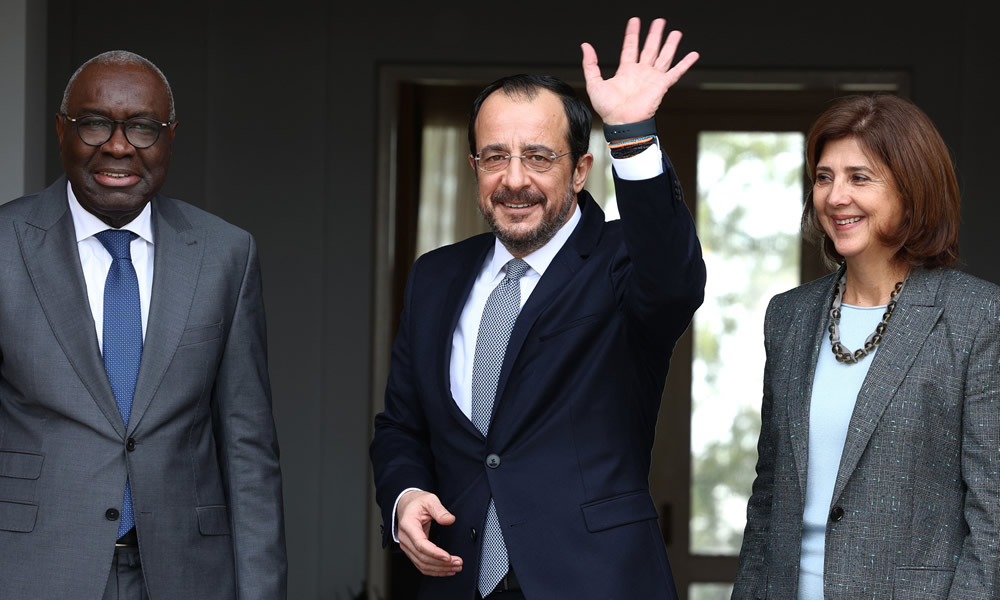
Speaking to the press, the former Columbian foreign minister highlighted the importance of the leaders exchanging views during this “pre-negotiation” phase. Asked about a new meeting, she replied: “It depends on them, because we need results on the CBMs, I am waiting for something more.”
Holguín noted that every process has its own dynamic, but this one is “a little bit more slow”.
Regarding “advances” on CBMs, she noted that the sides could see progress on halloumi and road duties in the next three to four weeks.
On Tuesday, the UN personal envoy had sent a very clear message to both leaders, calling on them to take tangible steps forward on CBMs, while noting the lack of progress did not justify a new ‘5+1’.
Holguín also said the trilateral would focus on Erhürman’s four-point proposal on methodology. This irked both leaders who shared their displeasure with her by phone. Both seem to believe the matter is not up for further negotiation.
Asked by Politis on Wednesday if the leaders had heeded her call for progress, Holguín replied: “Not yet.”
Regarding the prospect of a new ‘5+1’, she said: “For the moment, there is not going to be one.”
Methodology issue ‘resolved’
Asked to comment on the question of methodology before heading to the trilateral on Wednesday, President Christodoulides told reporters he had already responded to each of Erhürman’s four points and considers them “resolved”.
On past convergences, he said: “We are seeking the resumption of talks from where they were interrupted, ensuring the acquis of the negotiations”. On a timeframe for talks, Christodoulides argued if past convergences are accepted, then 80%-90% of issues are resolved. “If they are not accepted and we start from scratch, how can we talk about timeframes?” Regarding no return to the status quo if the talks fail, he said: “No one accepts this, not even the international community.” On political equality, he argued this was settled in the previous meeting, with the joint communiqué of December 11, which referred to political equality as described in the UN Security Council resolutions.
Christodoulides’ five-point proposal
Speaking to reporters after the two-hour trilateral, the president said he had reiterated the points on methodology in the discussion. Specifically on political equality, he said the Greek Cypriot side has never disputed it.
“The problem in the past, with the previous Turkish Cypriot leader, was that political equality was presented as sovereign equality, which is not provided for anywhere,” he said.
Christodoulides also shared his five-point proposal on CBMs and the resumption of negotiations, which is as follows:
1) To reaffirm the solution framework, as reflected in the joint communiqué of December 11.
2) To reaffirm past convergences by asking the UN to prepare a document on the convergences up to Crans Montana. Those concerning internal aspects will be shared with both communities, “and those agreed by both sides should remain in the document”.
3) Those relating to external aspects of a solution will be shared with all five parties (including guarantor powers), “and those agreed by all five should likewise remain in the document”.
4) The UN Secretary-General will convene a formal, enlarged conference to announce the resumption of negotiations based on the convergences document.
5) At the conference, four new crossing points will be announced: Kokkina, Louroujina, Mia Milia and Athienou-Pyroi-Aglandjia.
On new crossings, the president appeared to change his position somewhat. On Mia Milia, he said he was ready to move forward “even today” while for Athienou–Aglandjia, he was ready to accept the UNSG’s proposal presented at the last ‘5+1’ meeting last July. The caveat here is that the new position is adopted as part of his five-point package.
Christodoulides said he was also ready to announce additional unilateral measures supporting Turkish Cypriots at the conference.
Finally, the president said he proposed to the Turkish Cypriot leader to meet in the next two weeks, even without Holguín present.
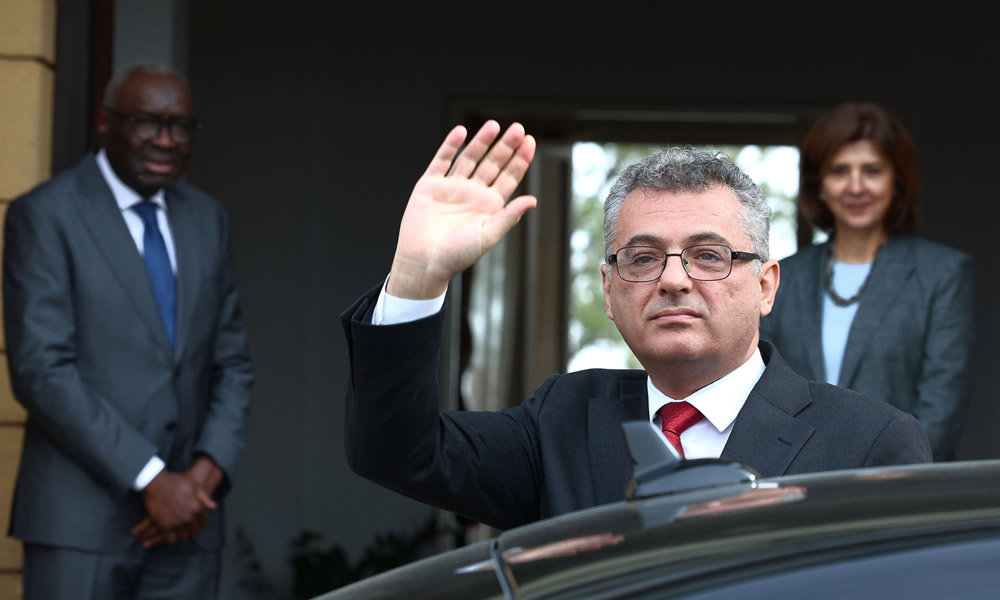
‘Useful but not productive’
For his part, Erhürman described the trilateral as “not very productive, but useful,” saying it contributed to increased mutual understanding.
“I proposed that the two leaders meet without the UN, and it was accepted,” he said, adding that Christodoulides agreed to meet within the next two weeks. The Turkish Cypriot leader highlighted the need for dialogue to continue if the process is to move forward.
Regarding his methodology proposals, Erhürman argued they were not “preconditions” but issues of procedure and principle that had to be agreed before talks can start, as one sets rules before a football match begins.
On political equality, while this has been accepted in principle, there is no clear stance on a rotating presidency and effective participation, which also must be accepted in principle, he said. The frequency of a rotating presidency can be decided in negotiation, he added. The same for a timeframe. It must be accepted in principle, while the exact duration can be decided once negotiations begin, said Erhürman.
On Christodoulides’ five-point proposal, he said there was nothing new, apart from a shift in position on crossings.
‘President’s proposal undermines past convergences’
Speaking to Politis, former negotiator Andreas Mavroyiannis warned that the president’s proposal puts all past convergences in doubt. Previously, when he and his counterpart Ozdil Nami were tasked with confirming past convergences, if one side wanted to make changes, the other side had to agree, otherwise the existing convergences remained untouched.
“With the president’s proposal, the principle of starting from where we left off is overturned. Everyone must agree. If one side doesn’t agree to existing convergences, then the convergences are lost. The guarantor powers will also have a say.”
Mavroyiannis warned this could lead to further delays, noting that the current UNSG’s term ends in 11 months.