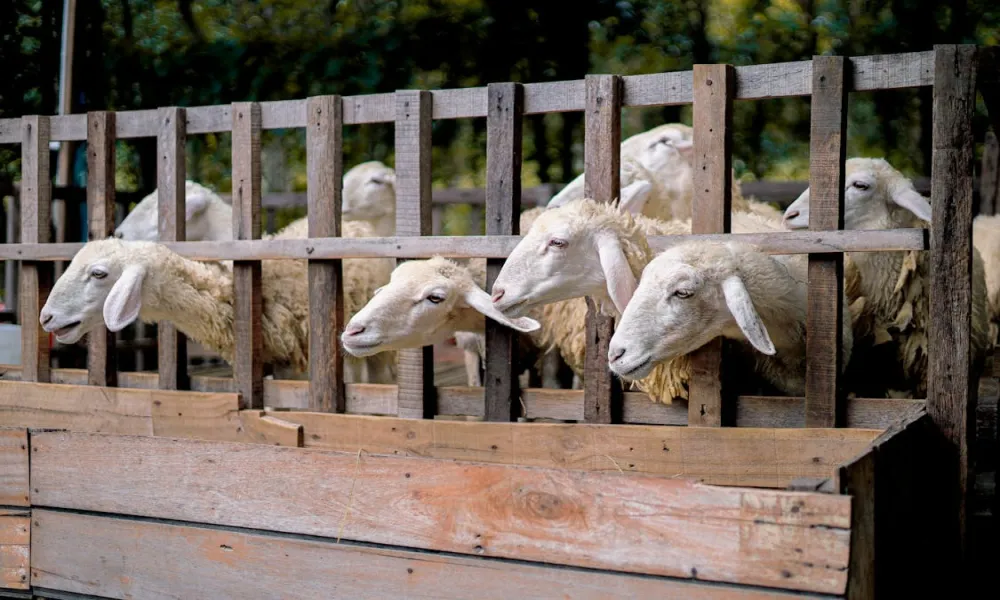

Monday was not a good day for Cyprus’ agricultural sector. News broke of new cases of foot-and-mouth disease (FMD), outside of the Larnaca district, specifically in Dali and possibly Geri. At the same time, the European Commission designated all the government-controlled areas a “further restricted zone” over FMD, with exemptions in place for halloumi exports.
All this just a few days after European Commissioner for Health and Animal Welfare Oliver Várhelyi, on a visit to Cyprus, ruled out exemptions in implementation of EU protocols for tackling the outbreak. In other words, despite livestock farmers’ pleas, there was no alternative to mass culling in infected livestock units – a key measure under EU disease control rules aimed at preventing wider transmission.
Dozens of livestock units have already been affected, with approximately 14,000 cloven-hoofed animals culled. Authorities estimate this number could exceed 20,000.
Also on Monday, the government announced a package of support measures for farmers to soften the blow, including compensation for losses but also support for livestock replacement. One forward-looking measure stood out. The creation of a scientific committee of experts tasked with upgrading and modernising the livestock sector following the crisis, led by geneticist and academic Stavros Malas. Part of the group’s role is to develop long-term strategies to strengthen Cyprus’ livestock sector and make it more stable and resilient.
Strategic gaps
But both in the handling of the outbreak and the forward positioning of the country to strengthen and protect the industry from future shocks, one fact appears to be repeatedly ignored. Cyprus is an island. And the EU body of laws that apply in the government-controlled areas are suspended in the north. They stop at the ceasefire line. Whatever measures the government takes – either preventive or reactive – will remain incomplete unless this gap is addressed somehow. Take the spread of the highly contagious viral disease on the island as a case in point.
Origin story
According to the UN Food and Agriculture Organisation (FAO), the FMD serotype SAT1 epidemic was first reported in Iraq in March 2025. It reached Turkey in May, triggering unprecedented measures such as nationwide closures of all animal markets in July. Ankara undertook massive vaccination efforts, deploying thousands of veterinarians to vaccinate millions of cattle and sheep.
The outbreaks caused billions in losses with up to one-third of Turkey’s livestock believed to have been infected in 2025. Genetic changes in the virus strains further complicated containment efforts for the Turkish authorities, requiring updated vaccines.
Although some of the outbreaks from 2025 have been brought under control, according to the FAO regional risk assessment, FMD SAT-1 is actively circulating in Turkey, requiring ongoing vaccination, movement controls, surveillance and serotype monitoring, and responses to new genetic variants.

Beyond the pain and suffering of the animals, as well as the impact on the livelihoods of livestock producers, there is also the significant economic damage caused by such outbreaks through reduced production, trade restrictions and the cost of control measures such as vaccination or culling.
As the FAO puts it: “While FMD poses no direct risk to human health, the disease has severe economic consequences, disrupting food security, livelihoods, and trade.”
Beyond Iraq and Turkey, there have also been reports of FMD from Azerbaijan, Bahrain, Egypt, Iran, Israel, Kuwait, Lebanon and of course, Cyprus.
The island
FMD was first detected on the island on December 13, 2025, in the north. Two months later, on February 20, 2026, the Cyprus Republic veterinary service announced the first case in the government-controlled areas in Livadhia.
Rumours suggest the virus came through animal feed imported from Turkey, smuggled from north to south, but this has not been officially established. The government has come under criticism for not doing enough from the announcement of the outbreak in the north to sensitise Greek Cypriot livestock producers of the dangers and to take measures to minimise risk.
The Turkish Cypriot representative responsible for agriculture in the north Hüseyin Çavuş Kelle was quoted in the media saying that the Turkish Cypriot authorities took all necessary measures from the moment the outbreak occurred in Turkey in May 2025. He also claimed the first cases in the north came from nine calves smuggled from the government-controlled areas. Çavuş argued that all cattle in the north have been vaccinated twice, while the vaccination of small animals is ongoing. Quarantine measures have been in place since the start of the outbreak, he said, adding that no cases of the disease have been found in any other area.
Just 48 hours after the disease was detected, 250,000 vaccines were initially secured from Turkey, followed by another 500,000 doses from the EU, he said.
When the outbreak occurred in the Larnaca district, the Turkish Cypriot authorities returned 60,000 EU vaccines to the Cyprus Republic.

Apart from the discrepancy in narratives on the likely source of the disease, another major difference between the two halves of the island is the protocol implemented. The Cyprus Republic, as an EU member, has no choice but to implement EU protocol, which involves significant culling, even of seemingly healthy animals. The Turkish Cypriots implement a policy of vaccinations and quarantine.
The future
A common understanding on the problem and how to address it will help contain current outbreaks and prevent future ones.
Pressure is growing to implement EU protocol across the island to ensure the long-term health of the sector and prevent a return of the disease.
Head of the Association of Sheep and Goat Producers Sotiris Kadis told CNA that farmers want the same EU-imposed culling measures to also apply in the north. “If this does not happen, we are all in a minefield,” he said.
Kadis further argued that the uneven implementation of restrictive measures increases the risks, noting that his farm in Athienou is 10km from the latest outbreak in the government-controlled areas but just 1.5km from the north.
But without dialogue – and not just at the technical level – there can be no common understanding.
Will Turkish Cypriots impose a temporary ban on animal feed and livestock imports from Turkey without securing alternative supply chains? If culling is the most effective measure, will Turkish Cypriots adopt it? Will the EU sweeten the pill with compensation and livestock replacement support? Will the government’s new scientific team of experts discuss long-term approaches with Turkish Cypriot experts?
Even if Greek Cypriot farmers become the most highly sensitised producers in the EU, fully up to date on biosecurity practices, without cooperation with Turkish Cypriots, can that prevent a recurrence on the island? If either community acts alone, it’s likely even the best policies will remain incomplete.
Technical Committee
Speaking to Politis to the point, the co-chair of the bicommunal Technical Committee on Health, Leonidas Phylactou said that a subcommittee has been set up to deal with veterinary issues. Experts from both communities discuss technical issues and coordinate actions such as the exchange of EU vaccines.
Phylactou reminded that neither the technical committee nor subcommittee is an executive body that can take decisions. But it provides a space for communication, an exchange of views and technical agreement on measures which then get passed on for political approval.
Although representatives attend in their personal capacity, the relevant authorities are automatically briefed on the outcome of the meetings.
Phylactou noted that a similar subcommittee of experts was set up during the covid pandemic, achieving significant success in implementing uniform measures.
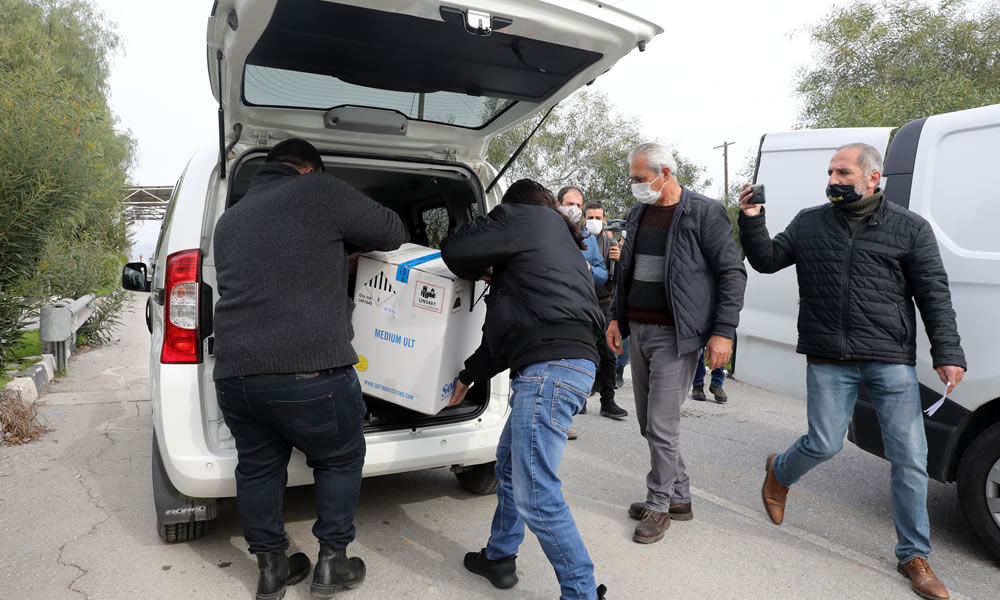
“There was a lot of coordination on the crossing points, covid certificates, measures implemented on both sides, vaccinations that we handed over,” he said, adding, “Unfortunately, people forget but it went very smoothly.”
On the current crisis, the co-chair said the subcommittee has mostly been used to exchange information on measures adopted by each side. He noted that the Turkish Cypriots focused on mass vaccinations to limit the spread of the disease.
“The goal is to find a common approach,” he said.
Given that the Cyprus Republic has little wiggle room to opt out of EU protocols, this effectively means convincing the Turkish Cypriots to adopt EU policies which are believed to be the most radical solutions to stopping FMD.
Even if the scientific experts reach a common agreement on the best way forward, the next stage involves convincing political decision-makers. For this, Phylactou believes the EU needs to get involved. A discussion needs to be had on potential economic measures but also securing EU checks on implementation in the north.
According to Phylactou, if a common approach is not agreed and implemented, the risk of a recurrence grows.
The veterinary subcommittee is due to meet in the coming days to discuss the issue of a common approach.